Is Sandbag Training Harder Than Dumbbells?
Yes, generally, for the same marked weight, because a sandbag’s load shifts constantly and resists a fixed grip, forcing stabilizer muscles to work that a rigid dumbbell doesn’t engage nearly as much. A 40 pound sandbag feels heavier and more fatiguing than a 40 pound dumbbell doing a comparable lift, not because the load changed but because your body has to keep fighting the sand shifting inside. Neither tool is objectively harder across the board, the difficulty depends on what you’re training for.
Why the same number on the label doesn’t mean the same workout
Dumbbells are rigid with a fixed center of mass, so once you’ve got one positioned, it stays predictable through the entire rep. A sandbag’s filler shifts position as you move, which means your stabilizer muscles are making constant micro-adjustments a dumbbell never requires. This is also why a sandbag workout can feel unexpectedly exhausting even at a weight well below what someone normally lifts in dumbbells for the same exercise.
What this does to grip and core demand
Most sandbag exercises involve bear-hug carries or handle grips that demand sustained grip endurance and continuous core bracing well beyond what a standard dumbbell handle asks for, since the load is actively trying to shift rather than sitting still in your hand. Over time, that extra grip demand is part of why regular sandbag training tends to noticeably improve forearm and hand endurance compared to a dumbbell-only routine.
Where dumbbells still have the advantage
Precise, incremental progressive overload is far easier with adjustable dumbbells, since you can add small, exact amounts of weight. For isolation exercises like bicep curls or lateral raises, the predictability of a dumbbell is actually an advantage rather than a limitation, since instability there adds risk without adding benefit. Adjustable dumbbells in particular make it easy to track exact progress week to week, which matters for anyone following a structured strength program with specific numbers to hit.
Where sandbags have the advantage
Full-body compound movements like cleans, carries, shouldering, and get-ups benefit from the unstable load, since it trains the kind of real-world lifting you’d actually encounter moving furniture or loading something irregular. The slight give in the sand also tends to be gentler on joints than the hard impact of setting down a rigid dumbbell. Sandbags are also easier to store in a small space than a full rack of fixed-weight dumbbells, since one bag can be adjusted by changing how much filler it holds.
The injury-risk tradeoff
A sandbag shifting unexpectedly mid-rep can pull you off balance at an awkward moment in a way a fixed-shape dumbbell won’t, so starting lighter and prioritizing technique matters more with sandbags than it does with a comparable dumbbell weight. Wrapping the sandbag’s straps or handles securely before a heavy lift reduces the chance of an unexpected shift mid-rep catching a lifter off guard.
What actually makes training harder, load or instability
Both contribute, but differently. The same marked load feels harder with a sandbag because of instability, yet most lifters can’t load a sandbag as heavy as a matched pair of dumbbells for the same lift, so raw strength numbers tend to be lower with sandbags even though the perceived effort is higher. For someone training purely for a one-rep max number, dumbbells or barbells remain the more direct path, while sandbags are better suited to building the kind of strength that transfers to unpredictable real-world lifting.
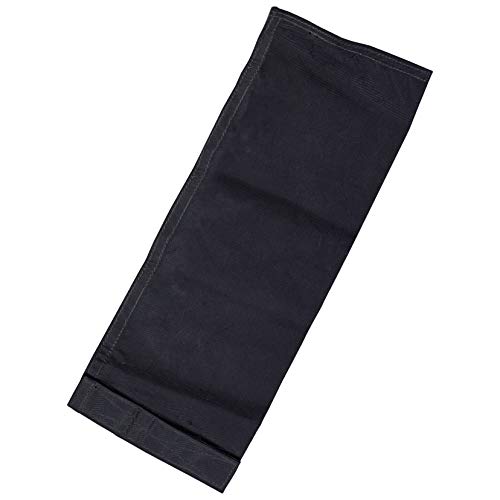
Brute Force Sandbags Training Sandbag
A filler-bag-based adjustable training sandbag built with reinforced handles for carries, cleans, and shouldering work.

Bowflex SelectTech 552 Adjustable Dumbbells
A dial-adjustable dumbbell pair that swaps between several weight settings without needing a full rack of fixed dumbbells.
Frequently asked questions
Is sandbag training good for beginners?
It can be, as long as beginners start with a lighter fill weight than they’d expect to use in dumbbells, since the instability itself adds difficulty on top of the raw load.
Can you use a sandbag for squats?
Yes, bear-hug or shouldered sandbag squats are a common variation, though the shifting load means form needs more attention than a standard barbell or dumbbell squat.
Does sandbag training build more functional strength than dumbbells?
It tends to carry over better to real-world unstable lifting tasks, since the training stimulus more closely resembles moving an awkward, shifting object rather than a fixed, balanced one.
How heavy a sandbag should a beginner start with?
Starting noticeably lighter than a comparable dumbbell weight, often by a third or more, is a reasonable approach until the instability demands become familiar.
Do sandbags damage floors?
A sandbag set down carelessly can scuff flooring over time, similar to any heavy equipment, though the give in the filler usually makes it gentler than dropping a hard dumbbell.
Can sandbag training replace a full dumbbell routine?
Not entirely, since isolation work and precise progressive overload are harder to achieve with a sandbag, so most programs that use sandbags still keep some dumbbell or barbell work for those purposes.
Is sandbag training good for core strength?
Yes, the constant bracing needed to control a shifting load engages the core more continuously than many standard dumbbell exercises do.
How do you fill a training sandbag?
Most use separate inner filler bags, often filled with sand or another dense media and sealed, which then get loaded into an outer duffel-style shell with handles.
Are sandbags safer than kettlebells?
Neither is inherently safer, they carry different risks, a kettlebell’s swinging momentum versus a sandbag’s shifting internal weight, so technique matters for both rather than one being a clearly safer choice.
Does the shifting sand affect muscle growth differently than a fixed dumbbell load?
The added stabilizer demand can contribute to overall strength and control, but for pure hypertrophy in a specific muscle, the more consistent loading of a dumbbell is usually considered more efficient.
Why do sandbags feel heavier than their stated weight?
Because the perceived effort includes fighting the shifting load, not just lifting the raw weight, so the same number feels more taxing than an equivalent fixed-weight dumbbell.
Can you superset sandbag and dumbbell exercises in the same workout?
Yes, many programs combine both specifically to get the stability benefits of sandbag work alongside the precise loading of dumbbell exercises.
Is sandbag training better for athletes than general gym-goers?
Athletes in sports involving unpredictable loads or contact often favor sandbag work for the carryover, while general strength or physique goals may not need it as a core tool.
How often should you replace a training sandbag?
Once the outer shell shows fraying at the handles or seams, or the inner filler bags develop leaks, it’s time to replace it, since a failing seam under load is a real injury risk.
Do you need special filler bags, or can you use any sand?
Purpose-built filler bags are designed to resist punctures and distribute weight more evenly than loose sand poured directly into a shell, so they’re worth using rather than improvising.
Is sandbag training good for fat loss?
It can support fat loss as part of a broader calorie deficit and consistent training routine, though no single tool, sandbag or otherwise, drives fat loss on its own.
Can injuries happen more easily with sandbags than dumbbells?
The unpredictable shift in load does raise the risk of an awkward movement mid-rep compared to a rigid dumbbell, which is why starting lighter and focusing on control matters more here.
Can you do overhead presses with a sandbag the way you would with dumbbells?
Yes, though the shifting weight overhead demands more shoulder stability and control than a dumbbell press, so it’s worth starting lighter than your usual dumbbell press weight.
Where this leaves you
Sandbags and dumbbells aren’t really competing for the same job. A sandbag trains your ability to control an unpredictable load, which dumbbells can’t replicate no matter how heavy you go, while dumbbells still win for precise, progressive, isolated strength work. Most well-rounded programs end up using both rather than picking a winner. For raw numbers on a lift, trust a barbell or dumbbell. For strength that holds up when a load isn’t cooperating, sandbag work earns its place.
Derek Holt
Derek has a background coaching recreational and amateur athletes and has worked the sales floor at specialty fitness retailers. He focuses on equipment durability, ergonomics and realistic use cases rather than marketing claims.


