Race Vest or Training Pack: Picking the Right Hydration Vest
The Salomon ADV Skin 12 is the strongest overall pick, with a close, bounce-free fit that holds soft flasks securely at speed. The Nathan VaporHowe 2.0 suits men who want a race-day fit with minimal extra storage, while the Ultimate Direction Mountain Vest 6.0 fits runners training for ultra-distance events.
The Salomon ADV Skin 12 leads this list for a compression-style fit that keeps soft flasks from bouncing even at faster paces. Its tighter fit runs smaller than standard sizing, so trying it on with layers underneath matters more than usual. Runners who want a looser race-day cut or more storage for ultra-distance events should check the alternatives below.
We compared fit style, bottle and bladder compatibility, pocket storage and stated capacity across seven hydration vests rather than ranking by brand name alone.
Our top picks

Salomon ADV Skin 12
A compression-style fit wraps closer to the torso than a standard vest, reducing bounce from soft flasks during faster running. Front pockets hold two 500 milliliter soft flasks within reach without stopping. A rear compartment carries a light jacket or extra layers for variable weather.
Pros
- Compression fit holds flasks steady at faster paces
- Front pockets keep hydration within reach while moving
- Rear compartment fits a light jacket for changing weather
Cons
- Tighter fit runs smaller than standard sizing
- Higher cost than simpler minimalist vests
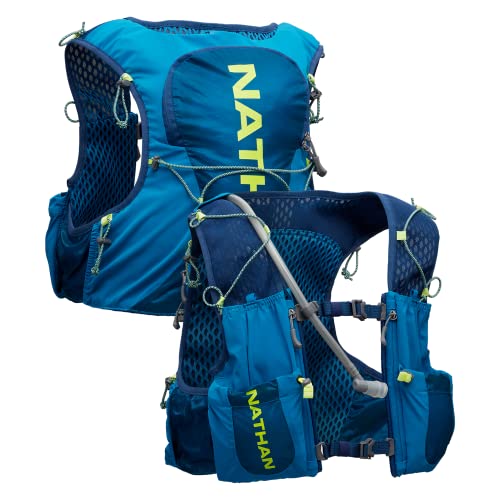
Nathan VaporHowe 2.0
A minimalist race cut strips away extra pockets and padding, keeping weight low for shorter races and tempo runs. Two front flask pockets cover basic hydration without the bulk of a training-focused pack. A rear pocket fits a lightweight shell for unpredictable race-day weather.
Pros
- Low weight suits shorter races and tempo efforts
- Minimal design avoids bulk during fast running
- Rear pocket fits a packable shell for race-day weather
Cons
- Limited storage for longer training runs or ultras
- No bladder compatibility

Nathan VaporAiress 2.0
A women’s-specific harness narrows the shoulder straps and adjusts chest strap placement compared to the unisex VaporHowe. Two front flask pockets match the VaporHowe’s hydration layout. Side compression straps let the fit tighten further for a secure, bounce-free feel.
Pros
- Women’s-specific harness improves fit over unisex designs
- Side compression straps dial in a bounce-free fit
- Lightweight build suits fast racing and tempo running
Cons
- Limited capacity for multi-hour training runs
- No bladder compatibility

CamelBak Nano 10 Hydration Vest
A 1.5 liter Crux reservoir ships included, unlike several race-focused vests on this list that require buying hydration separately. A 10 liter capacity covers more storage than minimalist race vests without reaching full training-pack size. Adjustable sternum straps help dial in fit across different chest sizes.
Pros
- Included reservoir avoids buying hydration separately
- Lower cost than premium race-focused vests
- Adjustable straps fit a range of chest sizes
Cons
- Bulkier fit than minimalist race vests like the VaporHowe
- Less structured compression than the Salomon ADV Skin

Ultimate Direction Mountain Vest 6.0
Eight total pockets, more than any other vest on this list, organize gels, a phone, a jacket and mandatory race gear separately. A larger overall capacity suits multi-hour ultra-distance efforts better than race-day minimalist vests. Adjustable shoulder straps accommodate layers worn underneath during cold-weather ultras.
Pros
- Most total storage on this list for mandatory ultra gear
- Compatible with both soft flasks and a bladder
- Adjustable straps accommodate cold-weather layering
Cons
- Bulkier and heavier than race-day minimalist vests
- More vest than most runners need for shorter distances

Osprey Duro 6
A 1.5 liter reservoir pairs with two front bottle pockets, giving runners both hydration styles on one vest. A zippered front pocket holds a phone separately from wet gear or a reservoir hose. Mesh paneling keeps the back ventilated during longer efforts.
Pros
- Combines reservoir and bottle storage in one vest
- Zippered pocket keeps a phone separate from wet gear
- Ventilated back panel helps on warmer training days
Cons
- Heavier than minimalist race-only vests
- Bottle pockets add some bulk compared to flask-only designs

Salomon Sense Pro 10
Dual-adjustable side compression straps let runners tighten the fit from both sides rather than relying on front straps alone. A 10 liter capacity sits between the minimalist VaporHowe and the bulkier Mountain Vest 6.0. Front flask pockets angle inward for an easier reach while moving at race pace.
Pros
- Dual side compression straps fine-tune a bounce-free fit
- Angled flask pockets are easier to reach mid-race
- Capacity works for both racing and longer training runs
Cons
- No bladder compatibility listed
- Costs more than the CamelBak Nano 10
Before you buy
What to check before buying a hydration vest Fit style decides bounce more than any other single factor, with compression-style vests like the Salomon ADV Skin holding gear tighter than looser unisex cuts. Bottle versus bladder compatibility matters based on personal preference and how fast someone needs to refill mid-run. Pocket count and placement decide how much gear, from gels to mandatory race items, a vest can realistically carry. Weight and bulk should match the actual distance being trained or raced.
Minimalist race vests versus training-focused packs Nathan’s VaporHowe 2.0 and VaporAiress 2.0 strip down to the essentials for race day, when every extra ounce matters over a shorter distance. Ultimate Direction’s Mountain Vest 6.0 and Osprey’s Duro 6 add storage and hydration options built for multi-hour training runs and ultra-distance racing. Choosing between these styles comes down to whether the vest needs to disappear on the body or carry real supplies.
Bottle, bladder or both CamelBak’s Nano 10 and Osprey’s Duro 6 both include a reservoir out of the box, removing the need for a separate purchase. Salomon’s ADV Skin and Sense Pro rely on soft flasks instead, which some runners prefer for easier mid-run refills at aid stations. The Duro 6 stands apart by supporting both styles on one vest, useful for runners who have not settled on a preference.
Men’s and women’s specific fit Nathan sells the VaporHowe and VaporAiress as separate men’s and women’s cuts, adjusting shoulder strap width and chest strap placement for each. Most other vests on this list use a unisex fit with adjustable straps instead of a gender-specific harness. Runners between sizes or with a narrower frame often get a more secure fit from a gender-specific cut than from adjusting a unisex vest alone.
How they compare
| # | Model | Capacity | Best for | Score | Price |
|---|---|---|---|---|---|
| 1 | Salomon ADV Skin 12 | 12 liters | Best Overall | 9.1 | Check price |
| 2 | Nathan VaporHowe 2.0 | 4 liters | Best for Men’s Race Fit | 8.7 | Check price |
| 3 | Nathan VaporAiress 2.0 | 4 liters | Best for Women’s Race Fit | 8.6 | Check price |
| 4 | CamelBak Nano 10 Hydration Vest | 10 liters, plus reservoir | Best Budget | 8.4 | Check price |
| 5 | Ultimate Direction Mountain Vest 6.0 | 8 total | Best for Ultra-Distance | 8.8 | Check price |
| 6 | Osprey Duro 6 | 1.5 liters, included | Best Hybrid Bladder and Bottle Storage | 8.5 | Check price |
| 7 | Salomon Sense Pro 10 | 10 liters | Best for Minimal Bounce Racing | 8.6 | Check price |
Common questions
What is the difference between a hydration vest and a hydration belt?
A hydration vest, like the Salomon ADV Skin 12, distributes weight across the shoulders and chest, while a belt carries weight at the hips, which some runners find bounces more during faster paces.
Do hydration vests work with both soft flasks and bladders?
It depends on the model. The Osprey Duro 6 supports both, while vests like the Nathan VaporHowe 2.0 are built for soft flasks only.
How many liters of capacity do I need for a marathon?
A 4 to 10 liter vest, like the Nathan VaporHowe 2.0 or Salomon Sense Pro 10, generally covers marathon distance, while ultra-distance races call for more storage like the Ultimate Direction Mountain Vest 6.0.
Why does my hydration vest bounce during faster running?
Bounce usually comes from a loose fit or an underfilled bladder. Compression-style vests like the Salomon ADV Skin 12 or side-adjustable designs like the Sense Pro 10 reduce this more than basic unisex vests.
Is a women’s-specific hydration vest worth it?
A women’s-specific harness, like the Nathan VaporAiress 2.0, often fits a narrower frame and chest placement more securely than a unisex vest adjusted down in size.
What comes included with a budget hydration vest?
The CamelBak Nano 10 includes a 1.5 liter Crux reservoir, while several race-focused vests on this list require buying flasks or a bladder separately.
How many pockets does an ultra-distance vest need?
Ultra racing often requires carrying mandatory gear, which is why a vest like the Ultimate Direction Mountain Vest 6.0 includes 8 total pockets compared to the 2 or 3 found on minimalist race vests.
Can a hydration vest be worn over a jacket in cold weather?
Vests with adjustable straps, like the Ultimate Direction Mountain Vest 6.0, accommodate extra layers underneath better than tighter compression-style vests.
What is the lightest hydration vest for racing?
The Nathan VaporHowe 2.0 and VaporAiress 2.0 use a minimalist race cut designed to add as little weight as possible for shorter race distances.
The verdict
For most runners who want a secure, bounce-free fit across training and racing, the Salomon ADV Skin 12 is the strongest overall pick. Runners focused purely on race day should choose the Nathan VaporHowe 2.0 or VaporAiress 2.0 instead for their lighter minimalist build, and anyone training for ultra-distance events should go with the Ultimate Direction Mountain Vest 6.0 for its extra storage and layering room.
Derek Holt
Derek has a background coaching recreational and amateur athletes and has worked the sales floor at specialty fitness retailers. He focuses on equipment durability, ergonomics and realistic use cases rather than marketing claims.