Is an Essential Oil Diffuser Actually Different From a Humidifier?
Yes, they’re built to solve different problems even though both release a fine mist into the air and sometimes look nearly identical sitting on a shelf. An essential oil diffuser is designed to disperse a small amount of water mixed with fragrance oil to scent a room, while a humidifier is built to add meaningful, sustained moisture to dry air across a larger space. A diffuser’s tiny reservoir and low output simply aren’t enough to noticeably change a room’s humidity level, no matter how long it runs or how often you refill it.
What each device is actually built to do
A diffuser uses ultrasonic vibration to break a small water and essential oil mixture into a fine scented mist, with the main engineering goal being fragrance throw across a room rather than any meaningful moisture output. A humidifier, by contrast, is engineered around a measurable mist output rate, usually listed in ounces or milliliters per hour, specifically to raise ambient humidity across an entire room or even a whole small apartment, depending on the model’s stated coverage area and tank size.
Why oil diffusers barely affect humidity
Most diffuser tanks hold somewhere between 100 and 500 milliliters and are frequently run on an intermittent cycle rather than continuously, releasing far less total moisture over a full day than even a small, basic humidifier moving several liters of water into the air during that same stretch of time. The underlying physics simply don’t support a diffuser meaningfully shifting a room’s humidity reading, regardless of marketing claims that sometimes blur the two categories together.
Why running essential oils in a true humidifier isn’t recommended
Oils left to sit in a humidifier’s tank or on its ultrasonic plate can degrade plastic components over time and clog the fine mesh or membrane that produces the mist in the first place. Most humidifier manufacturers explicitly warn against adding oils for exactly this reason in their printed instructions, which is a large part of why dedicated diffusers exist as their own separate product category rather than being folded directly into humidifier designs from the factory.
When you’d actually want a humidifier instead
Dry winter air, frequent nosebleeds, static shock running through a carpeted bedroom, or dry skin and irritated sinuses affecting an entire room all call for the sustained volume of moisture output a humidifier is specifically built to deliver over many hours, not the light, intermittent scenting that a diffuser is designed to provide on its own in short bursts throughout the day.
Can one device do both jobs at once
A handful of hybrid units include a small oil tray built into an otherwise standard humidifier housing, letting owners add a few drops of fragrance alongside the plain water. This is generally a compromise on both fronts though, delivering noticeably weaker scent throw than a dedicated diffuser and somewhat less reliable moisture output than a humidifier built around that single purpose from the ground up without any added tray.
How to tell which one you actually have
Check the listed specs closely before buying or troubleshooting one you already own: a tank under roughly 500 milliliters paired with marketing language focused heavily on essential oil compatibility points strongly to a diffuser, while a mist output rate measured in milliliters per hour or a stated square footage coverage area points clearly to a true humidifier built for humidity control rather than scent.
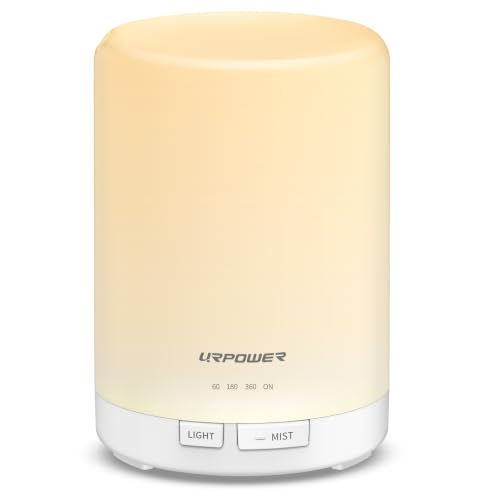
URPOWER 300ML Essential Oil Diffuser
A compact ultrasonic diffuser sized for a bedroom or office, built for scent rather than any meaningful humidity change in the room.

Levoit Classic 300S Smart Humidifier
A larger-tank humidifier designed around actual moisture output, the kind of device suited to dry winter air across a full bedroom rather than light scenting.
Questions worth asking
Can a diffuser raise room humidity if you run it long enough?
Not meaningfully, even run continuously for hours on end. The tank is simply too small and the overall output far too low to make a measurable difference compared to what a dedicated humidifier moves into the same room’s air over an identical stretch of time.
Is it safe to put essential oils in a regular humidifier?
Most manufacturers advise against it directly in their manuals, since oils can degrade internal plastic parts and clog the ultrasonic plate over repeated use, which is exactly why separate diffuser products exist as their own distinct category in the first place.
Which one actually helps with dry skin in winter?
A humidifier is the right tool here, since dry skin is driven mainly by low ambient humidity across the whole room over many hours, not by the light, localized scent a diffuser adds to the air immediately around it.
Can you use tap water in a diffuser the way you can in a humidifier?
Many diffusers specifically recommend distilled or filtered water to avoid mineral buildup forming on the ultrasonic plate over time, which is the same underlying concern that applies equally to most humidifiers left running on hard tap water.
Do diffusers run constantly like humidifiers often do?
Many diffusers are designed to cycle on and off intermittently to conserve their small water and oil mixture over the course of a day, while humidifiers are more often run continuously for sustained, all-day humidity control instead.
Why does my diffuser’s mist stop after a few hours?
That’s usually just the small tank running completely dry, not any kind of malfunction with the unit itself. Diffuser reservoirs are intentionally kept small compared to humidifier tanks, so shorter runtimes between refills are entirely normal and expected.
Does running a diffuser all night use much water?
No, the limited tank size alone caps total water use to a small fraction of what a humidifier would realistically use over that same overnight stretch of continuous running time, even on the diffuser’s highest mist setting.
Can a diffuser grow mold the way a neglected humidifier can?
Yes, standing water mixed with leftover oil residue left too long in a diffuser tank can develop buildup and bacterial growth over time, so regular cleaning genuinely matters for diffusers just as much as it does for humidifiers.
Is one device noisier than the other?
Generally both ultrasonic diffusers and ultrasonic humidifiers run fairly quietly on their own, though larger humidifiers with built-in fans for faster output tend to produce noticeably more audible noise than a small, simple diffuser sitting on a shelf.
Which is better for a baby’s nursery, a diffuser or a humidifier?
Pediatric guidance generally favors plain humidifiers over any device dispersing concentrated essential oils, since infants tend to be more sensitive to fragrance oils accumulating in a small, enclosed nursery space over the course of a night.
Does room size matter for how well a diffuser scents the air?
Yes, a diffuser sized for a small bedroom will noticeably underperform in a larger open living space, since its limited mist output simply doesn’t disperse far enough through a bigger volume of air before fading out.
Can a humidifier make a room smell nice without added oils?
On its own, no, since a basic humidifier just disperses plain water vapor into the air with no fragrance component. Some hybrid models add a small oil tray specifically to also provide that scenting function alongside the moisture.
Are cool mist humidifiers and diffusers using the same core technology?
Many of both rely on ultrasonic vibration to create a fine mist, but the tank size, output rate and intended water-to-oil content ratio are all engineered around very different end goals despite the shared underlying mechanism.
Do diffusers need distilled water the same way some humidifiers do?
Many diffuser manufacturers recommend distilled or filtered water specifically to prevent mineral deposits from building up and shortening the working life of the internal ultrasonic plate, the same reasoning behind similar advice for humidifiers.
If I only want a nice scent, is a diffuser worth buying over candles?
A diffuser avoids an open flame entirely and tends to spread scent more evenly through a room than a single candle can, though the actual fragrance intensity and personal preference still comes down to taste between the two options.
Final word
A diffuser and a humidifier both put a mist into the air, but that’s close to where the real similarity ends. If the goal is scenting a room, a diffuser does that job well and a humidifier never will on its own, and if the goal is actually raising humidity, a diffuser’s tiny tank was never built to get you there, no matter how often you run it or refill it through the day.
Dana Whitfield
Dana spent eight years buying and merchandising for a regional kitchenware retailer before moving into editorial work. She has handled thousands of SKUs across cookware, small appliances and kitchen organization, and focuses on the practical differences that matter once a product is actually in daily use.
You might also need

Air Purifiers That Actually Trap Mold Spores at Home
What a Stand Mixer Actually Saves You in the Kitchen
Is an Air Fryer Actually Worth the Counter Space?
