Air Purifiers That Actually Trap Mold Spores at Home
Alen’s BreatheSmart 75i leads this comparison, pairing an antimicrobial HEPA-Silver filter with 1,300 square feet of coverage for basements and living rooms. Coway’s Airmega 400 suits larger basements past 1,500 square feet. Bathrooms fit the compact GermGuardian AC4825, which adds a UV-C stage inside a 22 inch tower.
Alen’s BreatheSmart 75i tops this lineup for anyone furnishing a finished basement or open living area, since its HEPA-Silver filter carries an antimicrobial treatment that resists mold growth on the filter media itself. Coverage reaches 1,300 square feet, though neither this unit nor any other here treats mold already growing on drywall or grout. Smaller bathrooms and laundry rooms suit the compact GermGuardian AC4825 better, which pairs true HEPA filtration with a UV-C stage inside a 22 inch tower.
Mold spores measure 2 to 10 microns on average, comfortably inside the range true HEPA filtration captures. Coverage claims, CADR ratings and filter stage counts vary enough between brands that picking by price alone risks undersizing a damp room. We compared published specifications, owner reports from bathrooms and basements, and how each unit handles humidity spikes after a shower or storm.
Our top picks

Alen BreatheSmart 75i
An antimicrobial coating on the HEPA-Silver filter keeps mold and mildew from colonizing the filter media itself, a common failure point in humid rooms. SmartSensor auto mode reads real time particle counts and adjusts fan speed without input, useful when humidity spikes fast after a shower. Coverage extends to 1,300 square feet, enough for one unit to handle a finished basement or open floor plan. Owners check filter status remotely through a WiFi app instead of guessing at replacement timing.
Pros
- Antimicrobial HEPA-Silver filter resists mold growth on the filter itself
- SmartSensor auto mode reacts to humidity driven particle spikes
- 1,300 square foot range covers large basements and open floor plans
Cons
- Higher upfront cost than basic HEPA towers
- HEPA-Silver replacement filters cost more than standard HEPA cartridges
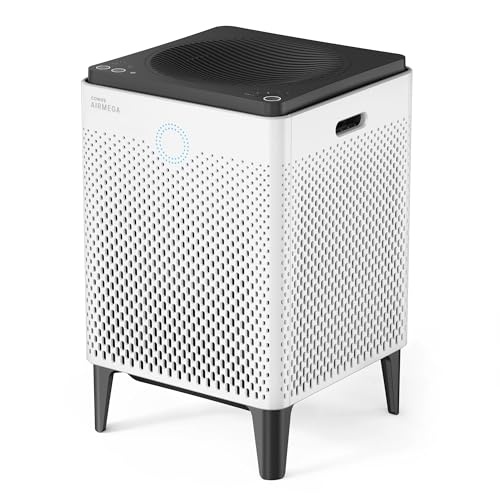
Coway Airmega 400
Coway rates this unit for 1,560 square feet at two air changes per hour, sized for an open basement or great room. A washable prefilter catches larger debris before spores reach the Max2 HEPA and carbon layer underneath. Auto mode ramps fan speed against real time air quality readings without any input from an owner. Runtime tracked through a filter change indicator removes the guesswork around replacement timing.
Pros
- 1,560 square foot rating covers large open basements and living areas
- Auto mode responds directly to air quality changes
- Washable prefilter reduces strain on the main HEPA and carbon layer
Cons
- Large footprint needs open floor space
- Max2 replacement filters cost more than single stage HEPA cartridges

Medify MA-112
Two H13 true HEPA filters sit side by side inside the MA-112, each rated to capture particles down to 0.1 microns, smaller than most mold spores. Coverage reaches 2,500 square feet at one air change per hour, dropping to 1,250 square feet at the faster two air change rate damp rooms need. Four fan speeds let a large basement or open loft run on high without constant adjustment. Doubled filter surface area, versus a single HEPA cartridge, comes from the side by side layout.
Pros
- Dual H13 filters rated well below the mold spore size range
- 2,500 square foot rating suits warehouse sized basements and lofts
- Four fan speeds handle sudden humidity spikes
Cons
- Large size does not suit small bathrooms
- High speed setting adds noticeable noise
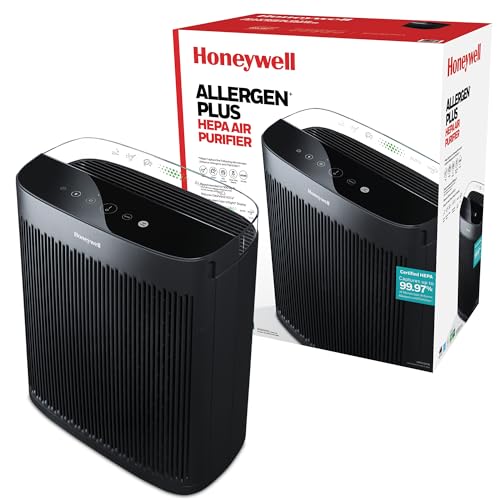
Honeywell HPA300
Rated to capture 99.97 percent of particles at 0.3 microns, the HPA300’s true HEPA filter easily handles mold spore sizes. CADR reaches 300 for dust, pollen and smoke across a 465 square foot room. Turbo speed clears a musty smelling room fast after a leak or damp spell. A washable prefilter extends the main filter’s working life between replacements.
Pros
- Strong CADR relative to its price point
- Turbo setting clears musty odors quickly
- Washable prefilter reduces main filter replacement frequency
Cons
- Boxy design stands out in finished living spaces
- Turbo setting runs loud

Levoit Core 600S
A 410 CADR rating pairs with a 24 decibel sleep mode on the Core 600S, quiet enough for a bedroom near a damp bathroom wall. Its PM2.5 display shows particle levels in real time, flagging spikes when humidity rises after a shower. Coverage tops out near 635 square feet at two air changes per hour. Owners schedule higher fan speeds during peak humidity hours through a WiFi app.
Pros
- 24 dB sleep mode suits bedrooms
- PM2.5 display flags humidity related particle spikes
- App scheduling automates higher speeds when needed
Cons
- 635 square foot coverage falls short of full basements
- Replacement filters cost more than base Levoit models

Winix 5500-2
AHAM Verifide certification backs the 5500-2’s true HEPA claim, unlike brands that self report CADR figures. A carbon layer targets the musty odor that often accompanies mold growth, beyond what HEPA filtration alone addresses. CADR reaches 243 CFM for dust across roughly 360 square feet. An optional PlasmaWave stage adds ionizing filtration that owners can switch off entirely.
Pros
- Independently verified CADR rating through AHAM
- Carbon layer helps with musty odors
- PlasmaWave ionizing feature can be disabled
Cons
- 360 square foot coverage suits bedrooms more than basements
- Auto mode sensor needs a break in period

GermGuardian AC4825
GermGuardian pairs true HEPA filtration with a UV-C light stage inside one 22 inch tower, sized for a bathroom or laundry room. Airborne bacteria and mold spores meet the UV-C light directly, while HEPA filtration handles most particle removal. A charcoal layer cuts the musty smell common in humid rooms. Coverage tops out near 167 square feet, suiting smaller mold prone spaces over open basements.
Pros
- UV-C stage targets airborne mold spores and bacteria directly
- Slim 22 inch tower fits tight bathroom spaces
- Charcoal layer reduces musty odors
Cons
- 167 square foot coverage limits it to smaller rooms
- UV-C bulb needs periodic replacement
How they compare
| # | Model | Filter | Best for | Score | Price |
|---|---|---|---|---|---|
| 1 | Alen BreatheSmart 75i | HEPA-Silver, antimicrobial treated | Best overall | 9.4 | Check price |
| 2 | Coway Airmega 400 | 350 CFM | Best for basements and large spaces | 9.2 | Check price |
| 3 | Medify MA-112 | Dual H13 true HEPA | Best for whole home coverage | 9.0 | Check price |
| 4 | Honeywell HPA300 | 300 CFM (dust, pollen, smoke) | Best value | 8.7 | Check price |
| 5 | Levoit Core 600S | 410 CFM | Best for bedrooms | 8.4 | Check price |
| 6 | Winix 5500-2 | 243 CFM (dust) | Best for allergies | 8.2 | Check price |
| 7 | GermGuardian AC4825 | True HEPA, charcoal and UV-C light | Best for bathrooms | 8.0 | Check price |
How to choose
What Makes a Purifier Effective Against Mold Spores Mold spores typically range from 2 to 10 microns, well above the 0.3 micron particle size used to rate true HEPA filters. Larger particles filter out more easily than the smallest ones tested, so capture rates for spores run higher than a filter’s stated 99.97 percent baseline. CADR matters just as much as filter grade, since low airflow leaves spores circulating before they ever reach the filter media. Airborne spores are all a purifier removes; mold already growing on drywall, grout or wood needs a different fix entirely.
Best Setup for Bathrooms and Damp Areas Hot showers spike humidity fast in a small bathroom, so a compact unit with a strong prefilter and carbon layer, like the GermGuardian AC4825, handles the space without crowding limited floor room. UV-C stages add a second layer aimed directly at spores, though HEPA filtration still removes most particles regardless of the light. Continuous operation, rather than running a purifier only after showers, keeps spore counts lower between humidity spikes. An exhaust fan paired with any bathroom unit matters too, since purifiers filter air but do not pull moisture out of it.
Choosing a Unit for Basements and Larger Spaces Basements typically run damper than the rest of a house, so coverage ratings carry more weight here than in a bedroom. Both the Coway Airmega 400 and Medify MA-112 rate above 1,500 square feet at their faster air change setting, sizing them for open or finished lower levels. A washable prefilter, included on the Airmega 400, catches the dust and debris common in basements before it reaches the HEPA layer. Running a dehumidifier alongside either unit keeps relative humidity below the 50 percent threshold mold needs to spread.
Filter Maintenance in Humid Environments Standard HEPA filters can trap enough moisture in a humid room to support mold growth on the filter media itself, working against the purifier’s purpose. Alen’s HEPA-Silver option addresses this directly, since its antimicrobial treatment resists that growth on the filter surface. Basements and bathrooms call for filter changes closer to the 6 month mark, sooner than the 12 month interval typical in drier rooms. A quick check for visible discoloration or a musty smell during routine changes catches problems before they recirculate into the room.
Common questions
Can an air purifier remove mold spores from the air?
Yes, true HEPA filtration captures airborne mold spores easily, since spores typically measure 2 to 10 microns, well above the 0.3 micron particles HEPA filters are rated against. Spores already growing on a surface need cleaning or remediation instead, since a purifier only catches what is airborne.
What size air purifier works for a damp basement?
Basements over 1,000 square feet need a high CADR unit like the Coway Airmega 400 or Medify MA-112, both rated above 1,500 square feet at their faster air change setting. Smaller basements under 500 square feet can run on a mid range unit like the Honeywell HPA300.
Do HEPA filters actually catch mold spores?
Yes. True HEPA filters are certified to capture at least 99.97 percent of particles at 0.3 microns, and mold spores run larger than that size, so real world capture rates land even higher.
Will an air purifier stop mold from growing in a house?
No, a purifier only filters airborne spores and does nothing for moisture sources like leaks or poor ventilation. Controlling humidity below 50 percent with a dehumidifier or exhaust fan matters more for stopping growth at the source.
Which air purifier works best for a moldy bathroom?
The GermGuardian AC4825 fits tight bathroom layouts inside a 22 inch tower and pairs true HEPA filtration with a UV-C stage aimed at airborne bacteria and mold spores. Pairing it with an exhaust fan removes the humidity a purifier cannot touch.
How often do air purifier filters need changing in humid rooms?
Bathrooms and basements often call for filter replacement closer to every 6 months, sooner than the 12 month interval typical in drier rooms. Moisture trapped past that window can let mold colonize a standard HEPA filter.
Is UV-C light effective against airborne mold spores?
UV-C light can damage the DNA of some airborne mold spores and bacteria as they pass through, adding a layer beyond HEPA filtration. The GermGuardian AC4825 includes this stage, though HEPA filtration still handles most particle removal on its own.
Can an air purifier replace a dehumidifier for mold control?
No, the two do different jobs, since a purifier filters airborne particles while a dehumidifier pulls moisture out of the air. Basements and bathrooms prone to mold typically need both running together for real control.
Are antimicrobial air purifier filters worth the extra cost?
They matter most in rooms that stay humid for long stretches, since a standard HEPA filter can trap enough moisture to support mold growth on the media itself. The Alen BreatheSmart 75i uses an antimicrobial HEPA-Silver filter built specifically to resist that growth.
The bottom line
The Alen BreatheSmart 75i takes the top spot, since its antimicrobial HEPA-Silver filter resists mold growth on the filter itself while covering up to 1,300 square feet. Basements past 1,500 square feet call for the Coway Airmega 400 or Medify MA-112 instead, both sized for damp spaces a compact tower cannot clear. Anyone furnishing a small bathroom should skip the larger units and pick the GermGuardian AC4825, since its 22 inch tower and UV-C stage fit tight spaces the others cannot.
Dana Whitfield
Dana spent eight years buying and merchandising for a regional kitchenware retailer before moving into editorial work. She has handled thousands of SKUs across cookware, small appliances and kitchen organization, and focuses on the practical differences that matter once a product is actually in daily use.