How Often Should a Garage Creeper’s Wheels Be Checked for Wear?
There’s no fixed mileage-style interval for checking a creeper’s wheels, but a practical habit is a quick visual and spin check every few weeks for regular shop use, and immediately after anything that could have damaged them, like rolling over metal shavings, sharp debris, or a chemical spill, since creeper wheels tend to fail suddenly rather than wear down gradually and predictably the way a tire does.
Why creeper wheels wear differently than furniture casters
Garage floors carry grit, metal filings, dropped bolts, and occasional chemical spills that ordinary indoor casters rarely encounter. That debris embeds in softer wheel material or gets caught around the axle, accelerating wear in a way clean-floor use simply doesn’t produce. A creeper rolled repeatedly over the same patch of a shop floor also tends to pick up whatever has settled there over time, even if the floor looks clean to the eye.
What early wear actually looks like
Flat spots develop from parking in one position for long stretches, small nicks or chunks appear from rolling over sharp metal, and a wheel that no longer spins freely by hand is an early sign worth noticing before it turns into a locked or wobbling wheel. A faint grinding or clicking sound while rolling is often the first audible clue that something has changed inside the wheel or axle.
How often to actually check
A light visual and spin check every few weeks makes sense for daily professional shop use, while every couple of months is reasonable for a hobbyist garage used occasionally. The more important trigger is always checking after an incident, like running over something hard or a solvent spill, since acute events cause more sudden damage than slow mileage does, and waiting for a calendar reminder misses that entirely.
Why uneven wheel wear is a safety issue, not just comfort
A locked or uneven wheel can pull the creeper sideways while someone is lying on it holding a tool overhead, which increases the chance of a dropped tool or a pinched hand against the floor during an otherwise routine task. The risk is higher specifically because the person using the creeper usually can’t see the wheels at the moment a pull or snag happens.
Bearing wear versus wheel surface wear
The rubber or polyurethane wheel surface wearing down is different from the internal bearing or axle wearing out. Bearing wear causes a wobble or grinding resistance even when the wheel surface still looks fine, and it usually means replacing the whole caster rather than just cleaning the wheel. Spinning each wheel by hand and feeling for resistance or play is a quick way to catch bearing wear that a purely visual check would miss.
Cleaning as prevention
Wiping debris out of swivel casters and off wheel surfaces after dusty jobs like grinding or sanding keeps grit from embedding into the wheel material in the first place, which extends how long a creeper goes between needing a closer wear check. A quick pass with compressed air around the axle housing after a particularly messy job is often enough to prevent buildup from becoming a real problem later.
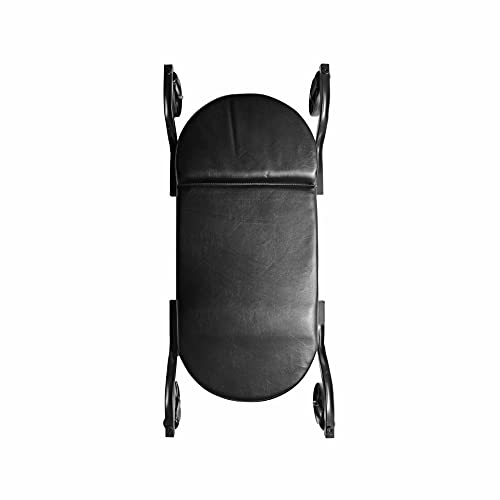
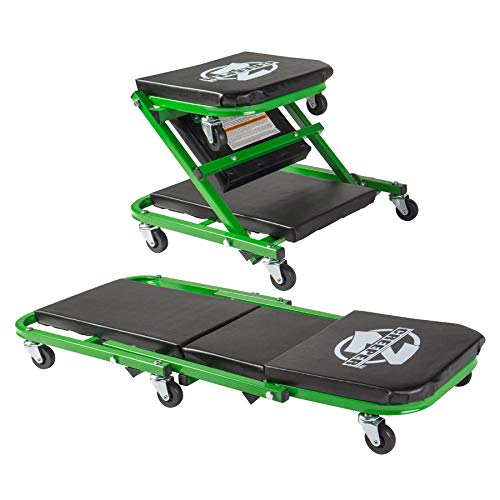
Traxion 2-in-1 ProGear Creeper
A padded mechanic’s creeper with retractable casters commonly used in home and professional garages.
Pro-Lift C-3001 Creeper
A low-profile mechanic’s creeper with fixed casters suited to everyday shop use.
Common questions
How do you know if a garage creeper’s wheels need replacing?
A wheel that no longer spins freely, has visible chunks missing, or pulls the creeper to one side when rolling are all signs it’s time to replace it.
Can creeper wheels be replaced individually instead of buying a new creeper?
On many models the caster assemblies are replaceable individually, which is often cheaper than replacing the whole creeper over a worn wheel.
Do metal shop floors wear creeper wheels faster than painted concrete?
Bare metal or rough concrete tends to wear wheels faster than a smooth painted floor, since more friction and more embedded debris are typically present.
Why does a creeper suddenly pull to one side when rolling?
This usually points to one wheel being more worn, flattened, or jammed with debris than the others, causing uneven rolling resistance across the casters.
Can oil or solvent spills damage creeper wheel material?
Yes, certain solvents can soften or degrade rubber and some plastic wheel materials over time, which is why wiping spills off promptly helps.
Are polyurethane creeper wheels more durable than plastic ones?
Polyurethane generally resists wear and chemical exposure better than basic hard plastic, which is part of why it’s common on higher-end creepers.
Should creeper wheels be lubricated, and if so how often?
A light lubricant on the axle every few months can help swivel casters move smoothly, especially in dusty environments where grit tends to build up.
Can overloading a creeper’s weight rating wear the wheels faster?
Yes, regularly exceeding the rated weight puts more stress on the wheel material and bearings, accelerating wear compared to normal rated use.
Do swivel casters need different maintenance than fixed wheels?
Swivel casters have an additional pivot point that can collect debris, so they often need more frequent cleaning than simpler fixed wheel designs.
Why do creeper wheels sometimes lock up after sitting unused for months?
Dust and grit can settle into the axle or bearing during storage, and without regular movement that debris can stiffen or jam the wheel over time.
Is it normal for creeper wheels to flatten slightly where they rest?
A minor flat spot from long-term stationary storage is common and often works itself out after rolling use, though a severe flat spot may need replacement.
Can a creeper with worn wheels be dangerous to use under a vehicle?
Yes, an uneven roll while lying under a vehicle with tools can increase the risk of a dropped tool or an awkward, pinched movement during the task.
Do cheaper creepers have more wheel problems than higher-end ones?
Budget creepers often use simpler plastic wheels that wear faster under shop conditions than the polyurethane or sealed-bearing casters on pricier models.
Should creeper wheels be checked before every use or just periodically?
A quick glance before use is reasonable for frequent shop work, but a more thorough check every few weeks catches wear that a casual glance might miss.
Can dust and grinding debris be cleaned out of creeper wheel housings?
Yes, a brush or compressed air can clear embedded debris from around the axle and swivel housing, which helps prevent long-term wear and jamming.
Do larger diameter creeper wheels wear more slowly than smaller ones?
Larger wheels generally distribute weight over more surface area per rotation, which can mean somewhat slower wear compared to small, narrow casters under the same load.
Is it worth keeping a spare set of creeper casters on hand?
For a shop that uses a creeper daily, keeping a spare set on hand avoids downtime waiting on a replacement if a wheel fails unexpectedly mid-job.
Can a creeper’s frame or padding wear out faster than its wheels?
Padding and upholstery often show wear sooner than quality casters do, so a creeper’s wheels aren’t always the first part that needs attention.
Does storing a creeper vertically versus flat affect wheel wear?
Storing it flat on its wheels for long periods can contribute to flat spots, while hanging or standing it upright when not in use avoids constant pressure on one spot.
Can a squeaky creeper wheel still be structurally fine?
A squeak is often just a dry bearing or axle needing lubrication rather than a sign of structural failure, though it’s still worth a quick inspection to confirm.
The bottom line
Treat the check as event-driven rather than calendar-driven, since debris, spills, and heavy use cause more wheel damage than mileage alone. A baseline glance every few weeks for regular use, combined with checking immediately after anything that could have damaged a wheel, catches most problems before they turn into a sudden, awkward roll at the wrong moment.
Tony Russo
Tony trained as an automotive technician and spent years in service and parts retail before moving into writing. He focuses on garage tools, car care products and accessories from a hands-on maintenance perspective.