Is a Convertible Car Seat Heavier Than an Infant Seat?
Yes, a convertible car seat is almost always heavier than an infant car seat. Most infant seats weigh between 7 and 11 pounds, while convertibles typically range from 15 to 30 pounds. The difference comes from the convertible’s larger shell, steel-reinforced frame, and the hardware needed to support both rear-facing and forward-facing use.
The short answer and typical weight ranges
Infant car seats are designed to be lifted in and out of the car while holding a baby, so manufacturers keep them as light as possible. A typical infant seat weighs about 7 to 11 pounds without the base. Convertible seats stay installed in the vehicle and are built to protect a child from birth through the booster years, so they are substantially heavier: most fall between 15 and 30 pounds. The overlap is small, and only a few lightweight convertible models come close to the heaviest infant seats.
Why convertibles weigh more
The weight difference comes down to structure and function. A convertible seat has a taller, deeper shell to accommodate a growing child, a reinforced frame that must pass crash tests in both rear-facing and forward-facing orientations, and a five-point harness with more adjustment points. Infant seats have a simpler shell and a carry handle, and many are designed to snap onto a stroller, which further limits how much structure they can add. The convertible’s extra mass is mostly safety-related hardware, not padding.
How the base changes the comparison
Infant seats are often weighed with their base, and that base can add several pounds. When you compare a convertible seat to an infant seat plus base, the gap narrows but rarely closes. More importantly, the base stays in the car, so the part you actually carry is just the seat. A convertible has no removable carry portion, which is why it feels heavier in daily use even when the numbers are close.
What the weight means in daily use
A heavier seat is not automatically a problem. Convertibles are meant to be installed once and left in place, so their weight matters mainly during installation and when moving the seat between vehicles. Infant seats are lifted constantly, which is why even a pound or two matters more there. If you frequently switch cars or travel by air, the weight difference becomes a real practical factor; if the seat stays put, it mostly affects the initial install.
Installation and vehicle fit
Heavier convertible seats can be more awkward to install because of their bulk, especially in smaller back seats. They often require more force to tighten the lower anchors or seat belt, and the taller shell can crowd front-seat legroom. Infant seats with a base are usually quicker to click in and out, but the base itself takes up space and must be installed correctly. Neither type is inherently easier; the trade-off is between a one-time heavier install and a daily lighter carry.
When a convertible makes sense despite the weight
If your child has outgrown an infant seat or you want one seat that lasts for years, the extra weight is usually worth it. Convertibles avoid the cost and waste of buying a second seat, and many now accommodate children from birth, though some newborns fit better in a dedicated infant seat. The weight penalty is a one-time inconvenience rather than a daily burden for most families.

Graco Extend2Fit Convertible Car Seat
A popular convertible seat with a rear-facing weight limit up to 50 pounds and a relatively manageable weight for its class.
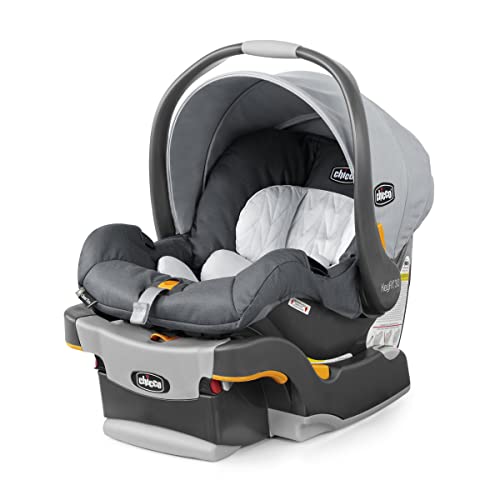
Chicco KeyFit 30 Infant Car Seat
A widely used infant seat that weighs around 9 pounds without the base, typical of the category.
Common questions
How much does a convertible car seat usually weigh?
Most convertible car seats weigh between 15 and 30 pounds. Lightweight models can dip toward 15 pounds, while seats with extra features like extended rear-facing capacity or steel frames often sit in the low to mid 20s.
How much does an infant car seat weigh?
A typical infant car seat weighs about 7 to 11 pounds without its base. The base adds a few more pounds but usually stays in the car.
Is a convertible car seat always heavier than an infant seat?
In nearly every case, yes. The only exceptions are a few very light convertible models compared against heavy infant seats with large bases, but even then the convertible is usually still heavier.
Why are convertible car seats so heavy?
They have a larger shell, a reinforced frame that must protect a child in both rear-facing and forward-facing positions, and more harness adjustment hardware. That structure adds weight compared to a simpler infant seat.
Does the weight of a car seat affect safety?
Not directly. A heavier seat is not safer by default; safety comes from correct installation and proper fit. Weight is mostly a convenience and portability factor.
Can I carry a convertible car seat from the car?
You can, but it is not designed for frequent carrying. Convertibles lack a carry handle and are meant to stay installed, so moving one is a two-handed task.
Is it hard to install a heavy convertible car seat?
It can be more physically demanding than installing an infant seat base, especially in tight back seats. The extra bulk makes it harder to route the seat belt or tighten the lower anchors, but the process is the same.
Do I need a convertible seat if I already have an infant seat?
Eventually yes, once your child outgrows the infant seat. Many families move to a convertible around the first birthday, though some children outgrow infant seats earlier or later depending on height and weight.
Are lightweight convertible car seats available?
Yes, some models are marketed as lightweight, often around 15 pounds. They may trade some padding or features for lower weight, so check that they still meet your safety and fit needs.
Does a heavier car seat mean better crash protection?
No. Crash protection comes from the seat’s design and how well it fits your child and vehicle, not from its weight. A lighter seat that installs correctly can be just as safe.
How often do I need to move a convertible car seat?
Usually only when switching vehicles or adjusting the installation. Since it stays in the car, its weight is a factor mainly on those occasions.
Is an infant seat easier to travel with than a convertible?
Generally yes, because it is lighter and often compatible with a stroller. Convertibles are bulkier and heavier, which makes them less convenient for air travel or frequent car changes.
Can a convertible car seat fit in a small car?
Many can, but the taller shell may reduce front-seat legroom. Check the seat’s dimensions and your vehicle’s back-seat space before buying, since heavier seats tend to be larger overall.
Why do some infant seats weigh almost as much as convertibles?
Infant seats with large bases, extra padding, or premium features can approach the low end of convertible weights. However, the portion you carry is still usually lighter than a full convertible.
Does the base count toward the infant seat weight?
Manufacturers often list the seat weight without the base. The base adds a few pounds but stays in the vehicle, so it does not affect how much you carry.
Will a heavier convertible seat damage my car’s seats?
Not if installed correctly. Use a seat protector if the manufacturer allows it, and follow the car seat and vehicle manuals. Weight alone is not a cause of damage.
Is it worth buying a lightweight convertible to save weight?
Only if you frequently move the seat between cars. For most families, the seat stays installed, so other factors like fit, ease of use, and rear-facing limits matter more.
How long does a convertible car seat last compared to an infant seat?
A convertible typically lasts several years, from infancy through the booster stage, while an infant seat is outgrown in about a year. That longer lifespan is part of why convertibles are built heavier.
Final word
A convertible car seat is heavier than an infant seat in almost every case, and that extra weight is the price of a seat that stays in the car and grows with your child. If you rarely move the seat, the weight barely matters; if you are lifting it daily, an infant seat remains the lighter, more portable choice.
Rachel Simmons
Rachel previously worked in child-product retail and brings a practical, detail-first eye to gear reviews, focusing on safety standards, ease of use and the fine print that matters most for new caregivers.