Which Convertible Car Seat Fits Rear and Forward Facing?
The Graco Extend2Fit rear-faces to 50 pounds, longer than most rivals here. The Britax Boulder Pro adds a steel frame for side-impact protection. The Cosco Scenera Next covers tight budgets and backup-seat duty. All meet FMVSS 213 in both directions.
Keeping a toddler rear-facing past age two beats most parents’ expectations, and the Graco Extend2Fit supports that with a 50 pound rear-facing limit few competitors match. Steel frame side-impact protection points families toward the Britax Boulder Pro instead. A cheap, light backup seat means the Cosco Scenera Next.
Two numbers drive every convertible seat decision: the rear-facing weight cap and the forward-facing weight cap, and marketing tends to lead with whichever number looks bigger. We compared listed harness weight ranges, LATCH versus seatbelt install specs, and owner reports on buckle stiffness and shell width in three-across setups.
What matters most
What should you look for in a convertible car seat? Rear-facing weight limit and forward-facing weight limit matter most, both printed on the seat label and in the manual. A higher rear-facing limit lets a toddler stay rear-facing longer, favored by most pediatric guidance. Harness type, recline positions and install method affect daily convenience more than crash performance, since every seat sold in the US must pass FMVSS 213 regardless of price.
How long should a child stay rear-facing? Manufacturer limits, not a fixed age, should decide the switch. A seat rated to 40 or 50 pounds rear-facing lets most children stay rear-facing well past their second birthday. Switching early because a seat’s rear-facing limit runs low is a common reason families end up buying a second convertible seat.
Convertible car seat vs infant car seat, what’s the difference? Infant seats stay lighter, click into a base, and typically max out around 30 to 35 pounds rear-facing only. Convertible seats install directly with LATCH or a seatbelt and cover both rear-facing and forward-facing stages in one shell. Starting with a convertible seat like the Cosco Scenera Next, rated from 5 pounds, skips the infant-seat stage entirely.
Best convertible car seat for a small or three-across back seat? Shell width, not weight limit, decides fit here. The Diono Radian 3RXT and Cosco Scenera Next both run narrower than average, closer to 17 inches, making three-across installs realistic in sedans and smaller SUVs. Bulkier seats like the Safety 1st Grow and Go or Evenflo Gold SensorSafe suit three-row vehicles with more back seat width.
What we recommend

Graco Extend2Fit Convertible Car Seat
A four-position extension panel adds legroom, so rear-facing use can continue up to 50 pounds. Most seats force a forward-facing switch well before that mark. A steel-reinforced frame and energy-absorbing foam handle side-impact loads, and recline adjusts without rethreading the harness.
Pros
- Extension panel adds legroom for rear-facing toddlers
- 10-position headrest grows with the child
- Machine-washable seat pad
Cons
- Wide base crowds a three-across back seat
- Heavier than seats without the extension panel

Britax Boulder Pro Convertible Car Seat
Steel runs through the shell and base here, paired with SafeCell protection that compresses on impact to absorb crash energy. Deep foam-lined side wings wrap around the head and torso. A no-rethread harness offers 9 height positions from a front-mounted handle.
Pros
- Push-button LATCH tightens without kneeling on the seat
- Deep side wings add head and torso coverage
- No-rethread harness adjusts as the child grows
Cons
- Rear-facing weight cap is lower than the Extend2Fit’s
- Bulky shell doesn’t suit small back seats

Cosco Scenera Next Convertible Car Seat
Under 8 pounds, this ranks among the lightest convertible seats sold, useful for grandparents’ cars, carpools or flights. Coverage spans 5 to 40 pounds rear-facing and up to 40 pounds forward-facing. FAA approval lets it double as an airplane seat.
Pros
- Narrow shell fits three-across installs
- FAA-approved for airplane use
- Low weight simplifies moving between cars
Cons
- Forward-facing weight cap tops out earlier than pricier seats
- Fabric padding is thinner than premium models

Chicco NextFit Zip Convertible Car Seat
A bubble level built into the base removes guesswork from install angle, and nine recline positions handle varied back seat shapes. The zippered cover comes off for washing without unthreading the harness. Steel-reinforced LATCH connectors stay attached to the seat for one-step hookup.
Pros
- Rigid LATCH connectors simplify a correct install
- Zip-off cover is faster to clean than pull-apart pads
- Nine recline angles fit varied back seat shapes
Cons
- One of the heaviest seats in this lineup
- Rear-facing limit trails the Extend2Fit by 10 lbs
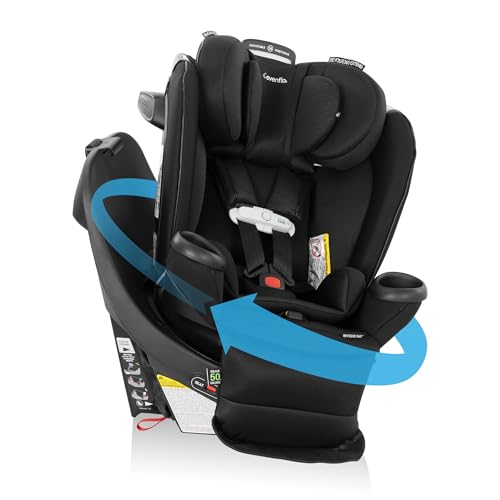
Evenflo Gold SensorSafe Chase Convertible Car Seat
A Bluetooth chest clip pairs with a phone app and alerts if the harness stays buckled after the driver walks away, aimed at reducing hot car incidents. An anti-rebound bar limits forward movement in a rear-facing crash. E3 side-impact testing goes beyond the federal minimum.
Pros
- SensorSafe alert adds a reminder layer beyond habit
- Anti-rebound bar reduces rear-facing crash rotation
- Machine-washable cover
Cons
- App requires phone pairing and periodic battery charging
- Bulkier base than non-sensor seats

Safety 1st Grow and Go All-in-One Convertible Car Seat
This seat shifts from harnessed rear-facing to forward-facing to a belt-positioning booster, spanning roughly 4 to 100 pounds across stages. That range delays a separate booster purchase later on. A machine-washable pad and built-in cup holders round out daily use.
Pros
- One seat covers three growth stages
- Booster mode delays a separate purchase
- Cup holders and machine-washable pad
Cons
- Bulkiest shell in this roundup
- Rear-facing limit is lower than dedicated rear-facing seats
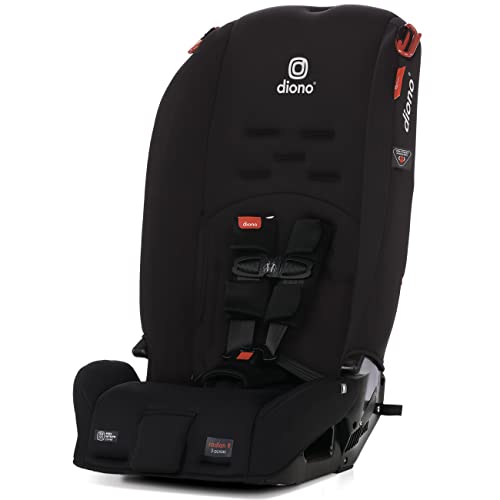
Diono Radian 3RXT Convertible Car Seat
A steel alloy frame and 17-inch width let three of these fit across most back seats, unusual for a seat rated to 50 pounds forward-facing on the harness. It folds flat for travel or storage when not installed, and aluminum-reinforced sides handle side-impact loads.
Pros
- Narrow shell suits three-across installs
- Folds flat for travel or off-season storage
- High weight range delays seat replacement
Cons
- Recline adjustment is more involved than push-button seats
- Higher price than similarly sized narrow seats
Compared at a glance
| # | Model | Rear-facing limit | Best for | Score | Price |
|---|---|---|---|---|---|
| 1 | Graco Extend2Fit Convertible Car Seat | 4 to 50 lbs | Best overall | 9.4 | Check price |
| 2 | Britax Boulder Pro Convertible Car Seat | 5 to 40 lbs | Best for side-impact protection | 9.1 | Check price |
| 3 | Cosco Scenera Next Convertible Car Seat | 5 to 40 lbs | Best budget | 8.7 | Check price |
| 4 | Chicco NextFit Zip Convertible Car Seat | 5 to 40 lbs | Best for easy installation | 9.0 | Check price |
| 5 | Evenflo Gold SensorSafe Chase Convertible Car Seat | 5 to 40 lbs | Best for tracking child presence | 8.6 | Check price |
| 6 | Safety 1st Grow and Go All-in-One Convertible Car Seat | 5 to 40 lbs | Best for extended use into booster stage | 8.3 | Check price |
| 7 | Diono Radian 3RXT Convertible Car Seat | 5 to 45 lbs | Best for narrow back seats | 8.9 | Check price |
Frequently asked questions
How do I know if my convertible car seat is installed correctly?
Check that the seat doesn’t move more than an inch side to side or front to back at the belt path once LATCH or the seatbelt is tightened. Several current seats, including the Chicco NextFit Zip, include a built-in bubble level to confirm the recline angle.
Can I use LATCH and the seatbelt at the same time?
No. Manufacturers direct against combining both unless the seat’s manual explicitly allows it, since doing so can affect how the seat absorbs crash force. Pick one method and confirm it’s rated for the child’s current weight.
What is the difference between a 5-point harness and a no-rethread harness?
Both use five attachment points, but a no-rethread harness raises the shoulder height by sliding a lever instead of removing and rerouting the straps. The Britax Boulder Pro and Chicco NextFit Zip use no-rethread designs; the Cosco Scenera Next requires rethreading.
Is a more expensive convertible car seat actually safer?
Every seat sold in the US meets the same FMVSS 213 minimum regardless of price. Higher-priced seats typically add side-impact hardware, easier LATCH installs or extended weight ranges, but the baseline crash protection standard stays shared across this list.
When should a child move from a convertible seat to a booster?
Once they exceed the convertible seat’s forward-facing harness weight or height limit, typically somewhere between 40 and 65 pounds depending on the model. Seats like the Safety 1st Grow and Go convert directly into a booster instead of requiring a new purchase.
Do convertible car seats expire?
Yes. Most manufacturers set an expiration date, commonly 6 to 10 years from manufacture, printed on a label on the shell. Plastic and foam degrade over time, so check the date before installing a used or hand-me-down seat.
Can convertible car seats be used on airplanes?
Only if labeled FAA-approved for aircraft use, usually noted directly on the seat. The Cosco Scenera Next carries this approval; not every seat in this roundup does, so check the label before flying.
Which convertible car seat is best for grandparents’ cars or carpools?
Lighter, narrower seats move between cars with less effort. The Cosco Scenera Next weighs under 8 pounds, and its narrow shell also fits tighter back seats, which suits a seat that gets installed and removed often.
How much does a convertible car seat weigh, and does that matter?
Weights in this roundup range from about 8 pounds for the Cosco Scenera Next to over 25 pounds for bulkier all-in-one models. Lower weight matters most if the seat moves between cars or through an airport regularly; installed full time in one car, seat weight has little effect on daily use.
Final word
Families chasing the longest rear-facing stretch should choose the Graco Extend2Fit, since its 50 pound rear-facing limit outpaces the rest of this list. Side-impact hardware ranks higher for some, and the Britax Boulder Pro’s steel frame and deep side wings make more sense there. A light, inexpensive backup seat instead points toward the Cosco Scenera Next, which covers the basics without the bulk.
Rachel Simmons
Rachel previously worked in child-product retail and brings a practical, detail-first eye to gear reviews, focusing on safety standards, ease of use and the fine print that matters most for new caregivers.


