How Does a Wet Dry Vacuum Switch Between Liquid and Dust Safely?
A wet dry vacuum does not automatically sense whether it is picking up liquid or dust and switch itself. You manually change the filter to a wet-rated type or remove the dry filter entirely, and on most models you also need to check or adjust a float shutoff mechanism, which is the actual safety feature that stops the motor from pulling liquid too high into the unit.
Why the standard dry filter cannot be used for liquid
Most shop vacuum dry filters, especially pleated paper and many cartridge types, are not designed to get wet, since moisture clogs or damages the paper fibers and drastically reduces airflow. Before vacuuming any liquid, the normal procedure is to remove the dry filter entirely or swap it for a dedicated wet-rated foam filter sleeve designed to handle moisture without breaking down.
What the float shutoff actually does
Inside the canister, most wet dry vacuums have a float mechanism, often a ball or disc that rises as liquid level increases inside the tank. Once the liquid reaches a certain level, the rising float physically blocks the inlet to the motor, cutting off suction before liquid can actually be drawn up into the motor housing itself, which would otherwise risk serious damage or an electrical hazard.
Why this is a mechanical safeguard, not an automatic mode switch
The float shutoff is purely physical and reactive, not a sensor that detects wet versus dry debris and changes vacuum behavior. This means the vacuum does not know in advance that you are collecting liquid, it only responds once liquid has risen to a dangerous level, which is why manually preparing the correct filter setup before starting is still the main responsibility, with the float acting as a backup safety net.
Why some tasks need the filter removed completely rather than swapped
For picking up larger volumes of standing water, many manufacturers recommend removing any filter entirely rather than using even a wet-rated one, since a significant volume of water passing through any filter material can still reduce airflow and slow pickup. This is different advice from picking up a small spill, where a wet filter sleeve is usually recommended to maintain some filtration.
What happens if you vacuum liquid with the dry filter still installed
The dry filter will typically become saturated and may tear, lose structural integrity, or allow liquid to bypass filtration and reach the motor area, risking motor damage. Beyond ruining the filter itself, this defeats the purpose of having a float shutoff as a backup, since a damaged filter can let debris or liquid reach areas the system was designed to protect.
Does switching back to dry use need extra steps too
Yes, after wet use, the canister and hose need to dry out fully and the wet filter needs to be swapped back for a dry filter before resuming dust or debris pickup, both to avoid damp dust clumping inside the system and to prevent mold growth from residual moisture left in a sealed canister.
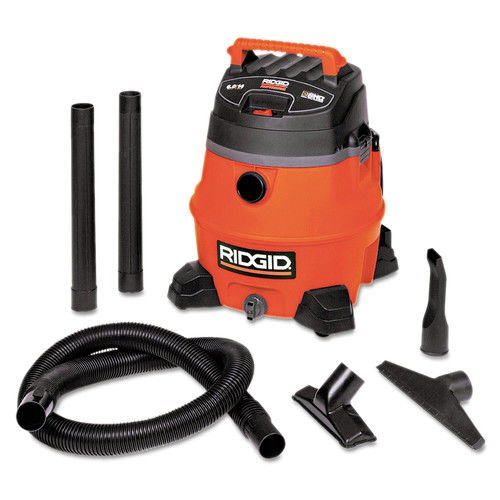
RIDGID WD1450 Wet/Dry Vacuum
A common wet dry shop vacuum with a float shutoff and swappable filter setup, representative of the manual filter-change process most wet dry vacuums require.

Craftsman CMXEVBE17595 Wet/Dry Vacuum
A widely used wet dry vacuum where manufacturer instructions specify removing the dry filter before liquid pickup, illustrating the manual nature of mode switching on this category of tool.
Good to know
Do I always need to remove the filter before vacuuming water?
Many manufacturers recommend removing the standard dry filter for any significant liquid pickup, though a dedicated wet-rated foam filter can be used for smaller, lighter liquid cleanup depending on the model.
What happens if the float shutoff fails to trigger?
If the float sticks or is obstructed by debris and fails to rise properly, liquid can continue past the intended safety point and potentially reach the motor, which is why keeping the float area clean and unobstructed matters.
Can I use a wet dry vacuum for liquid without ever buying a separate wet filter?
Yes, many users simply remove the dry filter entirely for liquid pickup and reinstall it afterward for dry use, which is a common and acceptable approach on many models according to their manuals.
Is it dangerous to vacuum water with the wrong filter installed?
It is not typically an immediate electrical hazard due to the float shutoff, but it risks filter damage, reduced suction, and potential motor exposure to moisture if the filter degrades enough to let liquid through.
Does every wet dry vacuum have a float shutoff?
The vast majority of models marketed for wet pickup include one, since it is considered a core safety feature of the category, though checking your specific model’s manual confirms this rather than assuming.
How do I know when the float shutoff has activated?
Most models show a clear change in motor sound, often a higher pitched whine, and a noticeable loss of suction once the float has risen and blocked the inlet.
Can I keep running the vacuum after the float shutoff activates to pick up more liquid?
No, you need to turn off the vacuum and empty the tank first, since the float will continue blocking airflow until the liquid level drops back down, regardless of how long the motor keeps running.
Does a wet dry vacuum need a different hose for liquid versus dust?
No, the same hose generally works for both, since the hose itself is not the component that changes between wet and dry use, unlike the filter and sometimes the canister bag setup.
Is it safe to vacuum both dust and liquid in the same session without cleaning the tank?
It is better to empty and at least partially clean the tank between switching from liquid to dry debris, since leftover moisture mixed with dust can create clumping or odor issues inside the canister.
Does using the wrong mode void a wet dry vacuum’s warranty?
Motor damage from liquid intrusion caused by skipping the recommended filter setup can potentially fall outside warranty coverage, so following the manufacturer’s specific filter instructions is worth doing for this reason as well.
Can a wet dry vacuum pick up liquid and dust at the same time?
It is not recommended, since the appropriate filter and canister setup for one task is generally not ideal for the other, and most manufacturers specify completing one task’s cleanup before switching setups for the next.
Does tank size affect how often I need to empty it during liquid pickup?
Yes, larger tanks allow more continuous pickup before the float shutoff triggers from a full tank, while smaller tanks require more frequent emptying during heavier liquid cleanup jobs.
Is a foam filter sleeve reusable across multiple wet cleanup sessions?
Yes, as long as it is rinsed clean and allowed to dry between uses, a wet-rated foam filter sleeve is typically designed for repeated use rather than single-use disposal.
Does altitude or tank orientation affect how the float shutoff works?
Normal operation relies on the float rising vertically with the liquid level, so using the vacuum upright as intended is important; tilting or operating it on an incline can affect how reliably the float engages.
Can debris in the tank interfere with the float shutoff triggering correctly?
Yes, if solid debris builds up around the float cage, it can restrict the float’s movement and delay or prevent it from rising properly, which is why keeping that area reasonably clear matters for the safety feature to work as intended.
Final word
The switch between wet and dry pickup on these machines is something you do, not something the vacuum figures out on its own. The float shutoff is a real safety backstop, but it only catches a problem after liquid has already risen too far, which is exactly why setting up the correct filter beforehand is still the part that actually prevents the problem.
Jake Monroe
Jake worked as a residential contractor for over a decade before shifting to full-time writing. He evaluates power tools, hand tools and workshop gear through the lens of someone who has actually used them on job sites, not just read the box.