How Often Should You Replace Tennis Balls for Practice?
For regular practice, most players replace tennis balls every two to three weeks of consistent use, or sooner once the felt visibly flattens and the ball noticeably loses bounce, since pressurized tennis balls lose internal air gradually from the moment the can is opened, not just from wear and impact.
Why tennis balls lose bounce even sitting unused
Pressurized tennis balls are sealed with internal gas at higher pressure than outside air, and that pressure slowly leaks out through the rubber core over time regardless of whether the ball is being hit, which is why a can of balls opened and left unused for weeks still goes noticeably dead.
How actual play accelerates pressure loss
Every impact against a racket or the court surface flexes the rubber core and stresses tiny imperfections in the material, which speeds up how fast internal pressure escapes compared to a ball sitting still, meaning heavy practice sessions shorten a ball’s usable life considerably faster than storage alone would.
What the felt covering actually does and how it wears
The fuzzy felt covering affects air resistance and spin, and that felt flattens and thins with repeated court contact, especially on abrasive hard courts, which changes how the ball moves through the air even somewhat independently of the internal pressure loss happening at the same time.
Why practice balls age differently than match balls
Competitive matches typically use a fresh can specifically to ensure consistent bounce and feel for scoring purposes, while practice sessions reasonably reuse the same set of balls for weeks since consistent peak bounce matters less when the goal is repetition and skill building rather than competitive play.
Signs a ball has reached the end of its useful practice life
A ball that bounces noticeably lower than a fresh one on the same surface, felt that looks matted, thin, or bald in spots, or a ball that feels soft and squishy rather than firm when squeezed are all reliable signs it is past its useful practice life.
Pressureless balls as a different category entirely
Some practice-specific balls are pressureless, meaning they rely on a thicker, denser rubber core rather than trapped gas for their bounce, and those balls do not go dead from pressure loss the way standard balls do, lasting much longer for pure practice use even though they feel and play somewhat differently than standard pressurized balls.
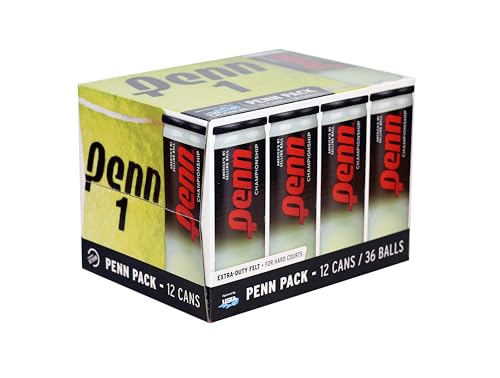
Penn Championship Tennis Balls
A widely used pressurized practice and recreational tennis ball common at clubs and for everyday hitting sessions.
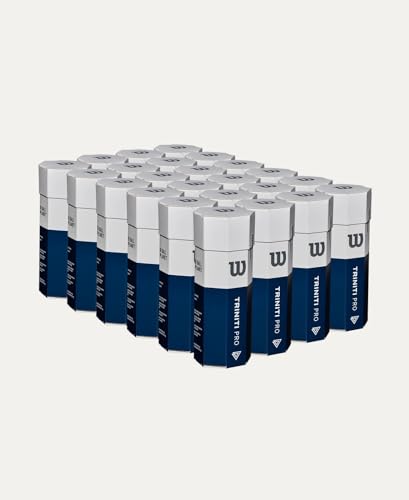
Wilson Triniti Tennis Balls
A tennis ball engineered to hold pressure and bounce consistency longer than standard balls across extended play.
Frequently asked questions
Can you tell a tennis ball has gone dead just by bouncing it?
Yes, a simple comparison bounce against a fresh ball on the same surface is a reliable practical test, a notably lower bounce height is a clear sign the ball has lost significant internal pressure.
Do pressureless tennis balls ever need replacing?
Yes, eventually, though pressureless balls degrade mainly through felt wear and gradual hardening of the rubber core rather than air pressure loss, so they typically last considerably longer in regular practice use than standard pressurized balls.
Does storing tennis balls in a pressurized container extend their life?
Yes, pressurized storage tubes or cans designed to hold balls at match pressure between uses can meaningfully slow the rate of pressure loss compared to leaving balls loose in a bag at normal air pressure.
Is it normal for balls from the same can to wear at different rates?
Yes, balls that happen to land more on edges, lines, or get hit harder during a session will wear and lose pressure somewhat faster than others from the same can, even though they started identical.
Does playing on hard courts wear balls out faster than clay or grass?
Yes, hard courts are more abrasive on felt than softer clay or grass surfaces, which tends to wear down the fuzzy covering faster even if internal pressure loss happens at a similar underlying rate.
Can a dead tennis ball be used safely, just with less bounce?
Yes, a dead ball with low bounce is still safe to hit, it simply plays slower and lower, which is actually sometimes intentionally used for certain drills focused on footwork or timing rather than full-pace rallying.
How many balls does a typical club player go through in a month of regular practice?
This varies widely by how often someone plays, but a player practicing several times a week might reasonably go through multiple cans over the course of a month as balls gradually go flat from regular use.
Does temperature affect how fast tennis balls lose pressure?
Yes, heat speeds up pressure loss through the rubber core, so balls stored or played in hot climates or left in a hot car tend to go dead faster than balls kept at cooler, more stable temperatures.
Is it worth buying a pressure-saving can or tube for storage?
For players who care about maximizing ball life, yes, a pressure-saving storage container is a reasonable investment, though for casual practice where balls are replaced regularly anyway, it offers less practical benefit.
Do more expensive tennis balls last longer than budget ones?
Some premium balls are specifically engineered with denser cores or improved seams to retain pressure longer, so there can be a genuine durability difference, though budget balls are often perfectly fine for casual practice where peak bounce consistency matters less.
Can a tennis ball lose felt without losing internal pressure?
Yes, felt can wear down from abrasive court contact somewhat independently of internal pressure loss, meaning a ball can look worn on the outside while still holding reasonable bounce, or the reverse, looking fine while already playing noticeably dead.
Should balls used for serving practice be replaced more often than rally balls?
Serving practice, especially with hard flat serves, puts significant repeated stress on a small number of balls quickly, so dedicating a specific set of balls to serve practice and rotating them out somewhat sooner than rally balls is a reasonable approach.
Is there a visible difference between a new ball and a two week old ball?
Yes, a two week old ball used regularly typically shows a visibly duller felt color and a noticeably lower, softer bounce when compared directly against a ball straight from a freshly opened can.
Does humidity affect how tennis balls feel or perform?
Yes, high humidity can make felt absorb more moisture, which adds slight weight and can change how the ball feels coming off the racket, separate from the underlying pressure loss happening over time.
Can old tennis balls still be useful for something other than play?
Yes, old flat tennis balls are commonly reused for things like furniture leg padding, dog toys for casual play, or as grip aids for various household tasks, even once they are no longer useful for actual practice.
Do extra duty felt balls last longer than regular duty felt balls?
Yes, extra duty felt is a thicker, more durable covering designed specifically for abrasive hard courts and generally outlasts regular duty felt, which is intended for softer surfaces like clay, in terms of how long the felt itself holds up.
Does the type of racket string used affect how fast balls wear out?
Yes, stiffer, more aggressive string setups can compress and abrade the felt covering somewhat more than softer, more cushioned string setups, though the ball’s own pressure loss over time remains the bigger factor in overall lifespan.
Can balls be reused across multiple practice partners without a problem?
Yes, sharing a set of practice balls across partners or a group lesson is common and does not meaningfully change how quickly the balls wear, since total hits and time elapsed matter more than how many people are hitting them.
Final word
A tennis ball starts losing its usefulness the moment the can opens, pressure leaks whether you hit it or not, play just speeds up the process. For practice, where consistency matters less than for match play, stretching a set of balls to two or three weeks is reasonable, but once the bounce noticeably drops or the felt goes bald, a fresh can is doing more for your session than you’d expect.
Derek Holt
Derek has a background coaching recreational and amateur athletes and has worked the sales floor at specialty fitness retailers. He focuses on equipment durability, ergonomics and realistic use cases rather than marketing claims.