How Often Should You Replace Jump Rope Handles?
There is no fixed timeline, since it depends on the bearing type inside the handle and how often you train. A basic bushing handle used casually might last well over a year before it starts binding, while a ball bearing speed rope handle used for daily high-volume training, like double-unders, can wear out its bearing within several months. The real sign to watch for is the rope no longer spinning freely, or the handle grip cracking or slipping in your hand, not a calendar date.
What is actually inside a jump rope handle
Most jump rope handles contain either a simple plastic bushing, a small sleeve the rope cable spins inside of, or a true ball bearing, a small ring of tiny metal balls that let the cable rotate with far less friction. The bushing or bearing is almost always the first thing to wear out, long before the plastic or rubber handle casing itself shows real damage, since it is the part absorbing constant rotational friction every single swing.
The clearest signs a handle actually needs replacing
A rope that used to spin smoothly and now feels gritty, sticky, or inconsistent as it rotates is the strongest sign the internal bushing or bearing has worn down or picked up debris. Visible cracking in the outer grip, a handle that has become loose where the cable attaches, or a grip that slips in sweaty hands mid-session are the other main signals, separate from how the bearing feels.
Why budget bushing handles and ball bearing handles wear differently
A plastic bushing wears through friction directly against the plastic itself, so it tends to degrade gradually, getting slightly stiffer over time rather than failing suddenly. A ball bearing wears differently, staying smooth for a long stretch of use and then sometimes degrading more abruptly once dirt or lack of lubrication causes the small bearings inside to grind rather than roll freely.
How training intensity and frequency change how fast handles wear out
Someone jumping rope a few times a week for general cardio puts far less cumulative rotational stress on a handle than someone training double-unders or speed intervals daily, where the cable spins at a much higher rate for longer total time. High-frequency, high-speed training wears bearings and bushings down meaningfully faster than casual, lower-speed use.
Maintenance habits that genuinely extend handle life
Keeping the bearing or bushing clean and occasionally applying a small amount of light lubricant, when the handle design allows it, reduces internal friction and grit buildup that accelerates wear. Avoiding dragging the rope and handles across rough concrete or pavement, which introduces grit into the bearing area, also meaningfully slows wear compared to rope setups used mainly on smoother gym flooring.
Whether to replace just the handles or the whole rope
Many jump ropes, especially ones marketed for speed training, use a modular design where the cable or rope detaches from the handle, which means a worn cable can be swapped for a new one while keeping the same handles, or a worn bearing handle can be replaced while reusing the cable. A fixed, non-modular rope typically means replacing the entire unit once either part fails.

WOD Nation Speed Jump Rope
A ball bearing speed rope with a swappable steel cable, built for frequent high-speed training where the bearing takes the most wear over time.
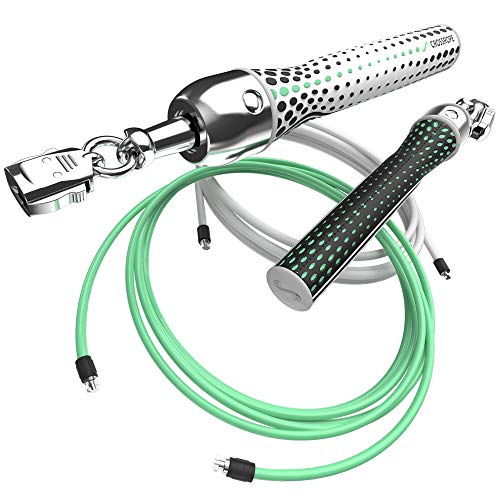
Crossrope Get Lean Set
A system with interchangeable weighted and speed rope segments that connect to the same reusable handles, letting worn cables be swapped without replacing the handles themselves.
Common questions
How do you know if a jump rope handle has a bushing or a ball bearing inside?
Product listings usually state this directly, and a ball bearing handle often feels noticeably smoother and spins with less resistance when you flick the cable by hand compared to a basic bushing handle.
Can a jump rope handle be lubricated to extend its life?
Many ball bearing handles can be lubricated with a small amount of light oil applied where the bearing is accessible, though not all handle designs allow easy access, so checking the manufacturer’s guidance first helps avoid damaging the housing.
Why does my jump rope handle suddenly feel stiff after months of smooth use?
This usually points to dirt or grit working its way into the bearing or bushing, or the lubricant inside drying out, both of which increase internal friction and make rotation feel noticeably rougher than before.
Is it normal for a cheap jump rope handle to wear out within a few months?
Yes, lower cost handles often use simpler bushings without the same wear resistance as a true ball bearing, so frequent users sometimes do go through budget handles faster than they would a higher quality bearing design.
Does the weight of the rope cable affect how fast the handle bearing wears?
A heavier weighted rope puts more rotational load on the bearing or bushing with each swing, which can accelerate wear compared to a lightweight speed cable used at the same frequency.
Can a cracked jump rope handle still be used safely?
A small cosmetic crack in the outer grip usually does not affect function, but a crack near where the cable attaches or where your hand grips tightly can worsen quickly and risks the handle breaking apart mid-session.
Do foam grip handles wear out faster than hard plastic handles?
Foam grips tend to show surface wear, flattening or tearing, sooner than rigid plastic, though the internal bearing or bushing usually wears independently of which grip material surrounds it.
Is it worth buying a jump rope with a replaceable cable instead of a fixed one?
For frequent users, yes, since a replaceable cable design lets you keep well-functioning handles for years while only replacing the cable itself as it wears or if it kinks and frays.
How many hours of jump rope use does a typical bearing handle last?
There is no universal number since it depends heavily on bearing quality and maintenance, but a quality ball bearing handle used regularly in training often lasts well over a year before meaningful performance decline, while a cheap bushing may show wear within months of daily use.
Does storing a jump rope coiled tightly damage the handles over time?
Tight, repeated coiling mainly stresses the cable where it meets the handle rather than the bearing itself, so storing the rope loosely coiled or hung reduces unnecessary strain at that connection point.
Can a worn handle bearing cause the rope to hit your feet more often?
Yes, inconsistent or sticky rotation from a worn bearing can throw off your timing mid-swing, which often shows up as more frequent foot catches even if your actual jump timing hasn’t changed.
Is it safe to open a jump rope handle to clean the bearing myself?
Some handles are designed to be opened for maintenance and clearly built that way, while others are sealed and not meant to be taken apart, so checking the specific product’s design before attempting it avoids breaking the housing.
Do double-under focused athletes replace jump rope handles more often than casual users?
Generally yes, since double-unders require two rope rotations per jump at high speed, which puts significantly more cumulative wear on the bearing over the same number of training sessions compared to casual single-jump cardio.
Does humidity or sweat exposure shorten the life of a jump rope handle?
Sweat and moisture reaching the internal bearing or bushing can contribute to corrosion or grit buildup over time, so wiping handles down after sweaty sessions helps preserve smooth rotation longer.
Can you tell a worn bearing is the problem versus a kinked cable causing resistance?
Spinning just the cable by hand away from the handle can help isolate the issue, since a kinked or frayed cable will show visible resistance or bends independent of how smoothly the handle itself rotates.
Is there a noticeable performance difference between a new and a slightly worn jump rope handle?
Yes, even moderate wear in the bearing can introduce small inconsistencies in rotation speed and feel, which experienced speed rope users in particular tend to notice well before the handle fails completely.
Does replacing just the handles on a modular jump rope actually save money over time?
Often yes, since the handles, particularly quality bearing handles, tend to outlast several cables, so replacing a worn cable alone is typically cheaper than buying an entirely new rope and handle set each time.
Where this leaves you
A jump rope handle rarely fails all at once, it tells you through gritty rotation, stiffness, or a cracked grip long before it actually breaks. Matching replacement to how the rope actually feels during use, rather than a set interval, and choosing a modular design when training frequently, gets the most life out of both the handles and the cable.
Derek Holt
Derek has a background coaching recreational and amateur athletes and has worked the sales floor at specialty fitness retailers. He focuses on equipment durability, ergonomics and realistic use cases rather than marketing claims.