How Often Should You Replace the Air Filter on a Compressor?
For most shop compressors, replace the intake air filter every 200 to 500 hours of run time, or roughly every 3 to 6 months in a clean home shop. In a dusty woodshop or on a jobsite, check it monthly and replace it as soon as it looks clogged. Always follow the manufacturer’s interval for your specific model, since filter type and engine or motor design change the number.
Why the intake filter matters more than most people think
The intake filter is the only thing standing between the compressor’s cylinder and every particle of dust, sawdust, and grit floating around your shop. A clogged filter forces the compressor to work harder to pull air, which raises cylinder temperature, wastes energy, and accelerates wear on rings and valves. On oil-lubricated units, a dirty intake also pulls abrasive dust into the crankcase oil, turning it into a grinding paste. That is why filter condition affects compressor life far more than most owners realize.
The standard replacement interval
Most manufacturers publish a service interval in the owner’s manual, and for reciprocating shop compressors it typically falls between 200 and 500 hours of run time. For a home shop that runs a few hours a week, that works out to every 3 to 6 months. For a compressor that runs daily in a production environment, it can mean monthly or even more often. The hour figure is more reliable than a calendar figure because it tracks actual use rather than shelf time.
How to tell when your filter actually needs attention
Do not rely on the calendar alone. Inspect the filter every few weeks: hold it up to a light, and if you cannot see light through the pleats, it is loaded. Look for visible dust caking, oil mist residue, or a collapsed or torn element. On units with a restriction indicator, service the filter when the indicator shows it is due. A simple squeeze test on foam elements also works: if the foam stays compressed instead of springing back, it has lost its sealing ability and should be replaced.
Cleaning versus replacing: what actually works
Foam pre-filters and some paper elements can be cleaned, but cleaning has limits. Foam can be washed in warm soapy water, rinsed, and allowed to dry completely before re-oiling or reinstalling. Paper and pleated elements should be blown out with low-pressure air from the inside out, never washed, and never blasted at close range because that can tear the media. Even with cleaning, most elements degrade after a few cycles, so plan to replace paper filters at least once a year and foam elements when they lose their resilience.
Factors that shorten filter life
Dusty environments are the obvious one: woodworking, sanding, drywall, and concrete cutting all load a filter fast. But other factors matter too. Running a compressor in a dirty corner near the floor pulls in more debris than mounting it high on a wall. High humidity can cause paper elements to swell and restrict flow. Oil carryover from a worn compressor can coat the filter and turn it into a dust magnet. If any of these apply, shorten your interval rather than stretching it.
What happens if you skip it
A neglected filter is one of the cheapest failures to prevent and one of the most expensive to ignore. Restricted intake air causes the compressor to run hotter, which breaks down oil faster and can lead to scored cylinders or burned valves. It also reduces delivered air volume, so tools feel weak and the compressor runs longer to keep up. In extreme cases, a collapsed filter element can be pulled into the intake and damage the head. The cost of a filter is trivial compared with a top-end rebuild.
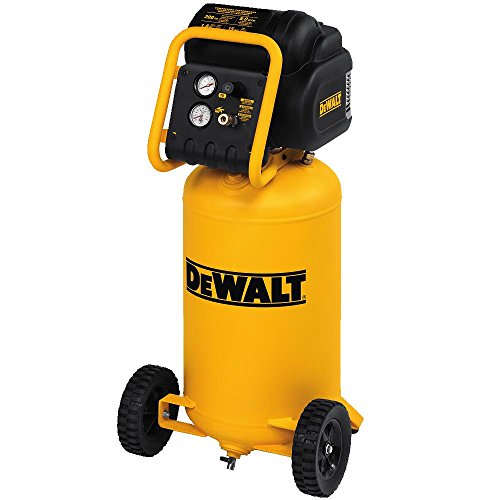
DeWalt D55168 200 PSI 15 Gallon Compressor
A portable oil-lubricated shop compressor with a replaceable intake filter; check the manual for the specific service interval.

Ingersoll Rand SS3F2 3 HP 60 Gallon Compressor
A stationary two-stage compressor often used in small shops; its intake filter should be inspected regularly and replaced on the manufacturer’s schedule.
Common questions
How often should I replace the air filter on my air compressor?
Most manufacturers recommend every 200 to 500 hours of run time, or every 3 to 6 months for a typical home shop. Check your manual for the exact figure, and shorten the interval if you work in a dusty environment.
Can I clean my compressor air filter instead of replacing it?
Foam filters can be washed and reused a few times, and paper elements can be blown out with low-pressure air. But cleaning only extends life so far; paper filters should still be replaced at least annually, and foam once it loses its springiness.
What happens if I never replace the air filter on my compressor?
A clogged filter restricts intake air, making the compressor run hotter and work harder. That accelerates oil breakdown and wear on rings and valves, reduces air output, and can eventually cause costly internal damage.
How do I know if my compressor filter is clogged?
Hold it up to a light: if you cannot see light through the pleats, it is loaded. Visible dust caking, oil residue, or a restriction indicator showing red are also signs it is time to service or replace.
Does the type of filter matter for replacement frequency?
Yes. Foam pre-filters can be cleaned and reused, while paper or pleated elements are usually replaced. Some compressors use a combined filter and separator that must be changed as a unit. Follow the manual for your specific type.
Why does my compressor have both an air filter and an oil filter?
The air filter cleans intake air before it enters the cylinder, while the oil filter cleans the lubricating oil. They serve different systems and have separate service intervals, so do not confuse the two when scheduling maintenance.
Is it normal for the air filter to look oily?
A light oil film can be normal from crankcase vapors, but heavy oil saturation often indicates a problem like overfilling, a worn breather, or excessive blow-by. Investigate the cause rather than just replacing the filter.
Can I run my compressor without an air filter?
No. Running without a filter lets dust and debris straight into the cylinder, which rapidly wears rings and cylinder walls. It is one of the fastest ways to destroy a compressor.
How often should I check the air filter in a dusty woodshop?
Check it weekly or even daily during heavy sanding season, and replace it as soon as it looks loaded. In a woodshop, the calendar interval is almost meaningless because dust loads the filter so quickly.
Do high-humidity environments affect compressor filter life?
Yes. Paper elements can absorb moisture and swell, which restricts airflow. In humid climates, inspect more often and consider a foam pre-filter or a filter designed for damp conditions.
Will a dirty air filter cause my compressor to overheat?
It can. Restricted intake air reduces cooling airflow through the compressor and makes the motor work harder, both of which raise operating temperature. Overheating is a common consequence of a neglected filter.
How do I replace the air filter on a compressor?
Unplug or shut off the compressor and release all tank pressure. Remove the filter housing cover, take out the old element, wipe the housing clean, and install the new filter. Reassemble and check for proper seating before restarting.
Are compressor air filters universal, or do I need a specific one?
They are not universal. Fit and filtration rating vary by model, so use the manufacturer’s specified replacement or a verified cross-reference. A poorly fitting filter can let unfiltered air bypass the element.
What is a restriction indicator on a compressor filter?
It is a gauge that shows when the filter is clogged and needs service. When the indicator moves into the red zone, the filter is restricting airflow and should be cleaned or replaced.
Does replacing the air filter improve compressor performance?
Yes, if the old filter was clogged. A clean filter restores proper airflow, which can increase delivered air volume, reduce run time, and lower operating temperature.
Can I use a car air filter on my compressor?
No. Automotive filters are designed for different flow rates and filtration needs. Using one can restrict airflow or allow fine dust through, potentially damaging the compressor.
How long does a compressor air filter last?
In a clean shop, 6 to 12 months is typical. In a dirty environment, it can be as short as a few weeks. Hours of run time and dust exposure are the real drivers, not calendar time alone.
Should I replace the filter before or after storing the compressor?
Replace it before storage so the compressor sits with a clean filter, and inspect it again before the next season of use. Storing with a dirty filter can let debris settle into the intake.
What is the difference between an intake filter and a breather filter?
The intake filter cleans air going into the cylinder. The breather filter vents crankcase pressure and keeps dust out of the oil. Both need periodic service, but on different schedules.
Do I need to replace the filter more often if I use my compressor for painting?
Yes, if you are spraying in the same area. Paint overspray and solvent vapors can coat the filter and reduce airflow. Check it after each major painting session and replace if contaminated.
The bottom line
The right interval is not a single number: it depends on your compressor, your environment, and how hard you run it. Use the manual’s hour figure as a starting point, inspect regularly, and replace when the filter looks loaded rather than waiting for a calendar reminder. It is one of the cheapest habits that keeps a compressor alive.
Jake Monroe
Jake worked as a residential contractor for over a decade before shifting to full-time writing. He evaluates power tools, hand tools and workshop gear through the lens of someone who has actually used them on job sites, not just read the box.


