How Often Should a Pond Pump’s Filter Be Cleaned for Clear Water?
Most backyard pond pump filters need checking every one to two weeks during the active growing season, and cleaned whenever flow visibly slows or debris is clearly built up, rather than on a fixed calendar schedule, since leaf litter, algae, and fish waste accumulate at very different rates depending on pond size, fish load, and surrounding trees. A pond that’s heavily stocked with fish or sits under deciduous trees in fall will need far more frequent cleaning than a lightly stocked pond in a clear, sunny spot.
What clogs a pond filter and how fast it happens
Biofilm buildup, algae growth, fallen leaves, uneaten fish food, and fish waste all accumulate inside filter media over time, and the rate varies enormously based on how many fish the pond holds and what’s dropping into the water from nearby trees. A heavily stocked koi pond under oak trees in fall can clog noticeably faster than a lightly stocked pond in an open, sunny yard, sometimes needing attention within days rather than the usual couple of weeks.
Signs the filter needs cleaning now, not on a fixed schedule
A visibly weaker fountain or waterfall flow, water that’s starting to cloud despite normal conditions, or a pump that sounds louder or runs hotter than usual are all practical signs the filter is clogged enough to need attention right away, regardless of how recently it was last cleaned.
Seasonal variation in cleaning frequency
Fall leaf drop can clog mechanical filter media rapidly even in ponds that need little attention the rest of the year, while summer heat and strong sunlight often drive faster algae growth that fills biological and mechanical media alike. Winter slowdown in fish activity and plant growth generally means filters need far less frequent attention during cold months.
Mechanical versus biological media, and why you don’t clean both the same way
Mechanical filter media like foam or pads can be rinsed fairly often without much concern, since its job is simply trapping debris. Biological media, where beneficial bacteria colonies actually live and process fish waste into less harmful compounds, needs much gentler handling, since aggressively scrubbing or rinsing it in chlorinated tap water can kill off that bacteria colony and set the pond’s biological filtration back significantly.
What happens if a filter is neglected too long
A severely clogged filter forces the pump to work harder, which can strain or burn out the motor over time, and reduced filtration lets ammonia and other fish waste byproducts build up to levels that are genuinely dangerous for fish, alongside a general collapse in water clarity. By the time fish start gasping at the surface or acting lethargic, the filter has usually already been struggling for longer than anyone noticed.
Fish load and pond size as the biggest variables
An overstocked pond, meaning more fish than the pond’s size and filtration were really designed to support, generates waste far faster than the filter was sized for, pushing cleaning frequency toward weekly, while a lightly stocked, appropriately sized pond can often go several weeks between cleanings without issue. Anyone adding new fish to an existing pond is effectively resetting that balance and should expect to check the filter more often for a while afterward.
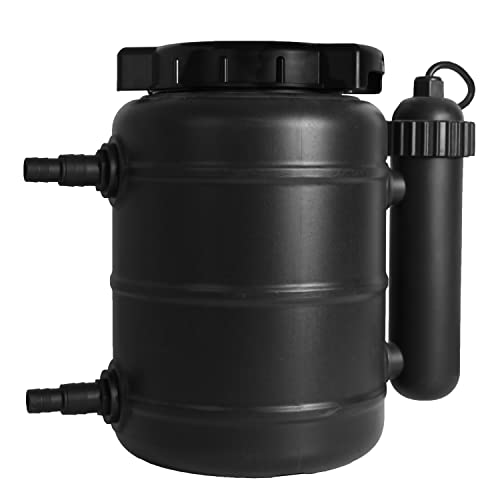
TetraPond Pressurized Filter with UV Clarifier
A pressurized filter combining mechanical and biological media with a UV clarifier stage to help control algae between cleanings.

Aquascape Signature Series Pond Pump
A submersible pond pump built for continuous circulation through a biological and mechanical filter system in backyard ponds.
Common questions
Can a biological filter actually be cleaned too often?
Yes, overly frequent or aggressive cleaning of biological media disrupts the beneficial bacteria colony living in it, which can temporarily reduce the pond’s ability to process fish waste and, in extreme cases, trigger an ammonia spike.
Does adding a UV clarifier reduce how often the filter needs cleaning?
A UV clarifier helps control free floating algae, which can reduce how quickly mechanical media clogs with algae specifically, though it doesn’t eliminate the need for regular cleaning tied to leaves, waste, and other debris.
How do you tell if the pump is clogged versus actually failing?
A clogged pump typically still runs but with noticeably reduced flow and sometimes a louder or straining sound, while a failing pump may not run at all or shows signs like overheating or inconsistent operation even after cleaning.
Does pond size change how often the filter needs attention?
Yes, larger ponds generally dilute waste and debris over more water volume, which can mean somewhat less frequent cleaning relative to a small, heavily used pond of the same fish load.
Do koi ponds need more frequent filter cleaning than goldfish ponds?
Often yes, koi tend to be larger and produce more waste than typical goldfish, and koi ponds are frequently stocked more heavily, both of which increase the rate at which filter media clogs.
What’s the best way to rinse filter media without killing the bacteria colony?
Using pond water or dechlorinated water rather than straight tap water, and rinsing gently rather than scrubbing hard, helps dislodge excess debris while preserving more of the beneficial bacteria living on the media’s surfaces.
Does cleaning filter media in cold water harm the bacteria colony?
Cold water itself isn’t the main concern, chlorine and chloramine in untreated tap water are the bigger risk to the bacteria colony, so water source matters more than water temperature during cleaning.
How can you tell an algae bloom apart from a simply dirty filter?
An algae bloom typically shows as green tinted water throughout the pond, while a dirty filter more often shows as reduced flow or debris visibly clogging the media itself, though the two can certainly happen together.
Can falling leaves be prevented from reaching the filter in the first place?
A skimmer net or surface skimmer attachment placed before the main filter intake can catch a significant portion of leaves and debris before they ever reach the filter media, reducing how often deeper cleaning is needed.
Should the pump be shut off before cleaning the filter?
Yes, turning off the pump before opening or handling the filter housing is standard practice both for safety and to avoid pulling debris or air into the system while it’s being serviced.
Does filter cleaning stress the fish noticeably?
A quick, routine cleaning generally causes minimal stress, but a major cleaning that disrupts water chemistry or requires draining a significant portion of the pond can stress fish more, so gradual, partial maintenance is usually preferred.
How long can beneficial bacteria survive once removed from the pond during cleaning?
Beneficial bacteria can start dying off within a matter of hours once removed from the water and oxygen supply they need, which is part of why minimizing how long media sits out during cleaning matters.
Is tap water safe to use for rinsing filter media?
Chlorinated tap water can harm the beneficial bacteria on biological media, so many pond keepers prefer using pond water itself, or dechlorinated water, specifically for rinsing biological components.
Do all pond pumps have an easily accessible filter?
Most dedicated pond filter systems are designed for relatively easy access, though some all in one pump and filter units are more awkward to open and clean than separate filter box designs.
Is the winter cleaning schedule different from the rest of the year?
Yes, with fish less active and plant and algae growth slowed considerably in cold weather, most ponds need far less frequent filter attention during winter than during the active spring and summer growing season.
Where this leaves you
There’s no magic interval that fits every pond, the fish load, the trees overhead, and the season all push the real answer in different directions. Watching flow and water clarity, and handling biological media gently when you do clean it, matters more than sticking to any fixed calendar.
Sierra Daniels
Sierra's background is in landscape design and nursery retail. She focuses on lawn and garden equipment, outdoor furniture and gear durability, weighing published specs against how materials actually hold up outside.