How Often Should You Clean the Microwave Turntable Track?
The turntable track and roller ring should be wiped down roughly every one to two weeks with normal household use, or sooner if the plate starts spinning unevenly, grinding, or sticking, since food splatter and grease that fall into the recessed track underneath the glass plate are the main reason a turntable stops rotating smoothly.
Why the track collects more grime than the visible interior
The roller track sits in a recessed groove below the removable glass plate, which means spilled food and grease can drip down into it and settle out of sight, while the rest of the microwave’s interior gets wiped more naturally during routine cleaning since it is directly visible. That recessed, hidden position is exactly why it tends to build up more than people realize until a problem actually appears.
What causes a turntable to spin unevenly or stop completely
The small plastic or rubber rollers that sit in the track and support the glass plate need to move freely to rotate it evenly, and dried food debris or sticky residue in the track can physically obstruct that movement, causing the plate to wobble, grind, or stop turning in one direction. This is a mechanical problem caused by buildup, not usually a sign that the turntable motor itself has failed.
How to actually clean the track properly
Removing the glass plate and the roller ring entirely, then wiping both the plate’s underside and the recessed track with a damp cloth or a cloth dipped in warm soapy water, reaches the buildup that a general interior wipe-down misses. Both parts are usually dishwasher safe or easy to rinse separately, which is more effective than trying to clean the track in place while the plate is still sitting on top of it.
Why grease splatter builds up faster than food spills
Fine grease particles released during cooking, especially from fatty or oily foods, settle as an invisible film across interior surfaces including the track, even without an obvious spill happening. That slow grease accumulation, rather than one dramatic mess, is often the real reason a turntable starts sticking even in households that clean up visible spills promptly.
Signs that cleaning is overdue, regardless of schedule
A turntable that grinds, squeaks, rotates unevenly, or has visibly stopped turning smoothly in one direction are all signs that the track needs attention sooner rather than waiting for a scheduled cleaning. Food cooking unevenly because the plate is not rotating fully is a practical, functional sign as much as a cleanliness one.
Why letting steam loosen debris first makes cleaning easier
Running the microwave with a bowl of water for a couple of minutes to generate steam before wiping down the interior softens dried-on food and grease, making it easier to remove from both the visible interior and the recessed track without heavy scrubbing. This steam-first approach is a commonly recommended first step before removing the plate and roller ring for a deeper clean.

Panasonic NN-SN686S Microwave
A widely owned countertop microwave with a removable glass turntable and roller ring assembly, a common example of the standard track design where debris buildup affects rotation.
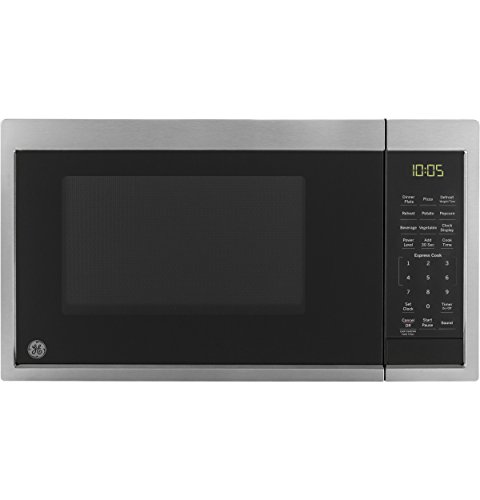
GE JES1095SMSS Countertop Microwave
A countertop microwave with a similar glass plate and roller track design, often referenced for how grease buildup in that recessed area affects turntable movement over time.
Questions worth asking
Why did my microwave plate suddenly stop turning after working fine for months?
The most common cause is dried food debris or grease buildup in the roller track restricting the small rollers from moving freely, which usually resolves once the plate and track are cleaned thoroughly.
Can I run the glass turntable through the dishwasher?
Most manufacturers list the glass plate as dishwasher safe, though the roller ring underneath is sometimes better hand washed depending on the specific plastic or rubber material it is made from, so checking the manual is worth doing.
Is it normal for the turntable to make a slight noise even when clean?
A faint, consistent rolling sound can be normal as the rollers move across the track, but grinding, squeaking, or an inconsistent rhythm usually indicates debris or wear rather than normal operation.
Does a dirty track actually affect how evenly food cooks?
Yes, since microwave cooking relies partly on the turning plate to expose food more evenly to the microwave field, a plate that sticks or rotates unevenly can lead to spots of unevenly heated food.
Can I clean the track without removing the glass plate?
You can wipe around the visible edges with the plate still in, but reaching the full recessed track and the rollers themselves generally requires removing the plate and ring for a more thorough clean.
Is it safe to use vinegar to clean the microwave interior and track?
Yes, a diluted vinegar and water solution is commonly used to clean microwave interiors, and it can help cut through grease residue in the track as effectively as mild dish soap.
Why does my roller ring look fine but the plate still does not spin smoothly?
Even a roller ring that looks clean can have a thin layer of grease reducing friction unevenly, or one of the small rollers could have dried residue on its underside that is not visible from above without flipping it over.
Can a broken roller cause the same symptoms as a dirty track?
Yes, a cracked or physically damaged roller can cause similar grinding or uneven rotation as debris buildup, so if cleaning does not resolve the issue, checking the physical condition of the rollers themselves is the next step.
Does using microwave-safe covers on food reduce how often I need to clean the track?
Yes, covering food reduces splatter reaching the interior and the track underneath, which can meaningfully extend the interval between needed track cleanings.
Is it okay to run the microwave without the glass plate in an emergency?
Most microwaves are designed to be used with the turntable in place for even cooking and should not be run empty of the plate as a regular practice, even though briefly running it without food is sometimes done during cleaning.
How long does steam-softening dried food in the microwave usually take before wiping?
Running a cup or bowl of water for about two to three minutes on high, then letting it sit for a minute, is generally enough for the steam to loosen most dried-on residue before wiping.
Can leftover water or condensation in the track cause rust or other damage?
Standing moisture in the track can promote rust on metal rollers or components over time, so drying the track and rollers after washing, rather than leaving them wet, is a reasonable precaution.
Is it worth buying a replacement roller ring if cleaning does not fix the sticking?
Yes, roller rings are generally an inexpensive replaceable part, and swapping a worn or cracked one out is often cheaper and simpler than assuming a bigger mechanical problem with the microwave itself.
Does the track need different cleaning for a microwave with a square plate versus a round one?
The cleaning approach is largely the same regardless of plate shape, since the underlying issue is still grease and debris in the recessed track and on the rollers supporting the plate.
Can food left in the microwave overnight contribute to track buildup even if there is no visible spill?
Yes, condensation and slow release of oils from standing food can settle into the track over time even without an obvious spill, which is part of why buildup can surprise people who do not recall any specific mess.
Should I clean the track more often if I use the microwave for reheating greasy leftovers often?
Yes, households that regularly reheat oily or fatty foods should clean the track more frequently than the general one to two week guideline, since grease accumulates faster under those conditions.
Is a wobbling plate always a track problem, or could it be the microwave sitting unevenly?
It is worth checking both, an unlevel microwave can also cause a plate to appear to wobble, though a dirty or damaged track and roller setup is the more common underlying cause in most cases.
The bottom line
A sticking or grinding turntable is almost always a cleaning issue hiding in a spot people do not normally look, not a sign the microwave is failing. Pulling the plate and roller ring out every couple of weeks for a proper wipe keeps it spinning evenly and avoids food cooking unevenly from a plate that is not fully rotating.
Dana Whitfield
Dana spent eight years buying and merchandising for a regional kitchenware retailer before moving into editorial work. She has handled thousands of SKUs across cookware, small appliances and kitchen organization, and focuses on the practical differences that matter once a product is actually in daily use.