How Often Should a Memory Foam Mattress Topper Be Rotated?
Most memory foam mattress toppers benefit from rotation every three to six months, turning the topper end to end so the areas that take the most consistent body weight are regularly changed, which slows uneven compression and body impressions from forming in the same spots. Toppers used by heavier individuals or couples who consistently sleep in the same positions often benefit from rotating closer to the three month mark.
Why memory foam compresses unevenly in the first place
Memory foam responds to sustained pressure and body heat by softening and compressing in that specific area over repeated use, and since most sleepers lie in roughly the same position and spot every night, the same regions of the topper take on most of the compression load over time, while the edges and foot area see comparatively little use.
What rotation actually changes versus what it cannot fix
Rotating the topper end to end shifts which section of foam handles the heaviest, most consistent body weight, which spreads wear more evenly across the whole topper rather than concentrating it permanently in one zone. It does not reverse compression that has already set in, so rotation is more effective as ongoing prevention than as a fix for a topper that already has a deep, established body impression.
Why flipping is usually not the same thing as rotating
Most memory foam toppers are designed with the foam layer on one side only, often bonded to a different base layer or cover material underneath, so flipping the topper upside down generally does not work the way it might with a fully reversible mattress, and doing so can expose an unfinished surface not meant for direct body contact.
How body weight and sleep position change the ideal rotation interval
A heavier sleeper or someone who consistently sleeps in the exact same position every night accelerates compression in that specific zone faster than a lighter sleeper or someone who shifts positions more throughout the night, which is why the three month end of the recommended range fits heavier or more consistent sleepers better than the full six month interval.
Why foam density affects how often rotation actually matters
Higher density memory foam generally resists permanent compression longer than lower density foam of the same thickness, so a denser topper can often go toward the longer end of the recommended rotation interval while a softer, lower density topper benefits from the shorter three month schedule to stay ahead of faster-developing body impressions.
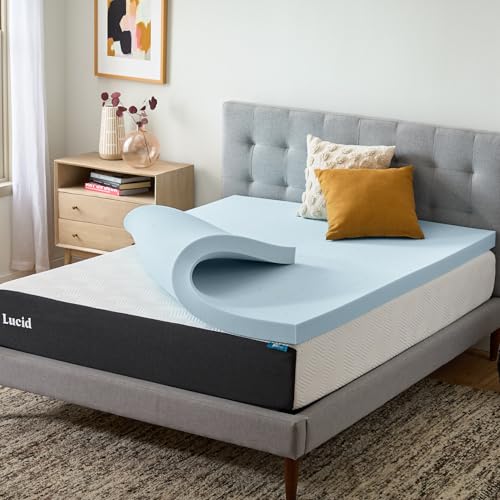
Lucid 3 Inch Gel Memory Foam Mattress Topper
A mid-density gel memory foam topper commonly rotated on a roughly four to six month schedule to manage gradual compression evenly across its surface.

Linenspa 2 Inch Gel Memory Foam Topper
A thinner, softer memory foam topper that compresses somewhat faster under consistent body weight, often benefiting from the shorter end of the recommended rotation schedule.
Questions worth asking
Does rotating a memory foam topper actually extend its usable lifespan?
Yes, by distributing body weight and heat exposure more evenly across the foam over time, rotation generally slows how quickly deep, permanent body impressions develop in any one area, which extends how long the topper performs well overall.
Can a memory foam topper be flipped instead of rotated end to end?
Usually not effectively, since most toppers have foam on only one side bonded to a different base layer, so flipping exposes a surface not designed for body contact rather than providing a genuine fresh sleeping surface the way rotation does.
Does a topper need rotation if two people sleep on it in different spots?
Rotation still helps even in that case, since each person’s specific sleeping zone still experiences concentrated, repeated pressure that benefits from being redistributed periodically, even though the overall wear pattern across the full topper may be somewhat more even than with a single consistent sleeper.
How can I tell if my topper actually needs rotating sooner than planned?
A visible or felt indentation that does not fully rebound within a few minutes after getting up, concentrated in one specific sleeping area, is a practical sign the topper would benefit from rotation sooner than the general three to six month guideline.
Does a mattress protector or cover change how often rotation is needed?
Not significantly, since a protector mainly guards against moisture, stains, and allergens rather than affecting how the foam itself compresses under sustained body weight and heat.
Is rotating a topper the same maintenance as rotating the mattress underneath it?
They are related but separate tasks, since the topper and the mattress beneath it can each develop their own independent wear patterns, so rotating one does not automatically address wear already present in the other.
Does rotating a memory foam topper help with the smell or off-gassing over time?
No, rotation addresses physical compression wear, not residual smell, which is a separate issue tied to the foam’s manufacturing chemistry and typically resolves within the first few weeks regardless of how the topper is later rotated.
Can a memory foam topper be rotated too often, causing any harm?
No, there is no real downside to rotating more frequently than the general guideline suggests, since the main cost is simply the minor effort involved, not any risk to the foam itself.
Does climate or room temperature affect how often a topper should be rotated?
Warmer sleeping environments can soften memory foam slightly more during use, which may mean toppers used in consistently warm rooms benefit from rotation on the shorter end of the recommended range to help offset slightly faster compression.
Is there a difference in rotation needs between gel memory foam and traditional memory foam?
The gel infusion mainly affects heat retention and initial feel rather than fundamentally changing how the foam compresses under weight, so the same general rotation guidance based on density and sleeper weight applies to both types.
Does rotating a topper help reduce motion transfer between partners over time?
Indirectly, since a more evenly worn topper maintains more consistent support and responsiveness across its surface than one with a heavily compressed zone, which can help motion transfer characteristics stay closer to how the topper performed when new.
Should a topper be rotated on a schedule even if no indentation is visible yet?
Yes, proactive rotation on the recommended three to six month schedule is meant to prevent visible compression from developing in the first place, rather than waiting until a noticeable dip already shows up.
Does a topper used on an adjustable base need rotation more or less often than a flat bed?
An adjustable base that is frequently used in an inclined or bent position can concentrate additional stress on specific zones of the topper beyond normal flat-sleeping compression, which can argue for rotating closer to the shorter end of the typical range.
Can rotating a badly compressed topper restore it to its original feel?
Rotation can slow further uneven wear going forward, but it generally cannot reverse compression that has already become permanent in the foam, since that kind of deep, long-term compression set is a structural change in the foam rather than something redistribution alone undoes.
Does the direction of rotation, head to foot versus side to side, matter for a memory foam topper?
Most toppers are designed to be rotated head to foot rather than side to side, since the length-wise rotation is what actually shifts the main compression zones created by a sleeper’s torso and hips, while a side to side flip would not meaningfully change which section bears that weight.
The bottom line
Rotating every three to six months, leaning toward the shorter end for heavier sleepers or softer foam, is a realistic habit that meaningfully slows uneven compression. It works best as prevention started early, not as a fix once a deep body impression has already set into the foam.
Dana Whitfield
Dana spent eight years buying and merchandising for a regional kitchenware retailer before moving into editorial work. She has handled thousands of SKUs across cookware, small appliances and kitchen organization, and focuses on the practical differences that matter once a product is actually in daily use.
You might also need

How Often Should You Replace a Kitchen Knife Sharpening Steel?

How Often Should a HVAC Air Filter Actually Be Changed?
How Full Should You Fill a Washing Machine Load?
