How Often Should You Check Differential Fluid?
Most manufacturers recommend inspecting differential fluid every 30,000 to 50,000 miles, though the right interval depends heavily on how the vehicle is used. Trucks that tow regularly, vehicles driven through water crossings, or anything used off-road should be checked closer to every 15,000 miles since heat and contamination break the fluid down faster. A quick level and smell check takes only a few minutes and catches most problems before they become expensive.
Why differential fluid wears differently than engine oil
Differential fluid, sometimes called gear oil, sits under much higher pressure and shear than engine oil because it is squeezed between meshing gear teeth rather than flowing freely through a pump. That constant pressure breaks down the extreme-pressure additives over time even though the base oil itself can look clean, which is why color alone is not a reliable way to judge whether a change is overdue.
What the manufacturer interval actually assumes
The mileage interval printed in the owner’s manual is built around normal, dry-pavement commuting. Towing, hauling heavy loads, repeated hard acceleration, or frequent low-speed off-road driving generates far more heat inside the differential housing, and heat is the single biggest factor that shortens gear oil life. Anyone doing that kind of driving should cut the published interval roughly in half.
Signs the fluid needs attention sooner than scheduled
A whining or humming noise that changes with vehicle speed, a burnt or sulfur-like smell on the dipstick or fill plug, or a lower-than-expected fluid level are all signs worth acting on immediately rather than waiting for the next scheduled interval. Metal flecks on a magnetic drain plug are also normal in small amounts from gear break-in, but anything beyond a light dusting points toward accelerated wear.
Water crossings and contamination
Driving through deep water, even briefly, can pull moisture past the differential’s vent and seals through pressure changes as the housing cools. Contaminated fluid often turns a milky tan color and loses its ability to protect gear surfaces almost immediately, which is why off-road drivers who ford water regularly should check the fluid far more often than the standard interval suggests.
Limited-slip differentials need a different conversation
Differentials with a limited-slip or locking mechanism often require a specific friction-modified fluid, and using the wrong gear oil can make the limited-slip clutches chatter or behave inconsistently during turns. These units frequently have a tighter recommended change interval than an open differential specifically because the friction modifier additive depletes faster than the base extreme-pressure additives.
How to actually check it without a lift
Most differentials have a fill plug on the side of the housing rather than a dipstick, so checking the level means removing that plug with the vehicle level and confirming fluid sits at or near the bottom of the opening. A finger dipped in fluid also tells you a lot: a gritty texture or a dark, burnt smell both suggest the fluid is overdue even if the mileage says otherwise.

Lucas Oil 10046 80W-90 Gear Oil
A commonly used conventional gear oil for open differentials, often specified for standard rear-wheel-drive trucks and SUVs.
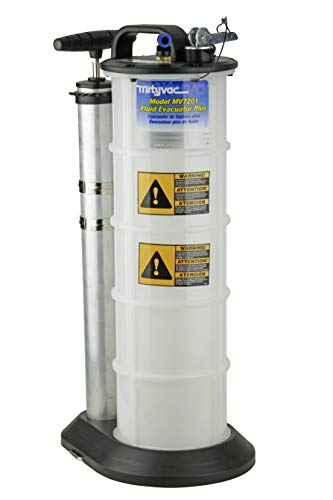
Mityvac MV7201 Silverline Elite Fluid Evacuator
A hand-pump extractor that pulls old differential fluid out through the fill plug, useful on vehicles where the drain plug is hard to access.
Good to know
How do you know if differential fluid is low without a lift?
You can safely check it from under the vehicle with just a jack and stands by removing the fill plug on the side of the differential housing. If fluid does not trickle out slightly when you remove the plug, it is sitting below the correct level and needs topping up.
Can you just add fluid instead of doing a full change?
Topping up a low level is fine as a short-term fix, but it does not restore the additive package in old fluid, so a true full drain and refill is still the right move once the fluid is actually due.
Does synthetic differential fluid last longer than conventional?
Yes, synthetic gear oil generally resists heat breakdown better and can often stretch the change interval, though it is still worth following the severe-use schedule if you tow or drive off-road regularly rather than assuming synthetic makes the interval irrelevant.
Is a whining noise always a differential fluid problem?
Not always. Worn bearings, a damaged ring and pinion gear set, or even a bad wheel bearing can produce a similar whine, so low or degraded fluid is one possible cause to check, not an automatic diagnosis.
Why does differential fluid smell bad even when it is not overdue?
Gear oil naturally carries a strong sulfur smell from its extreme-pressure additives even when fresh, which is different from the sharper burnt smell that signals the fluid has actually broken down from heat.
Do front differentials on four-wheel-drive trucks need checking too?
Yes, a four-wheel-drive truck has a front differential in addition to the rear one, and it often gets overlooked during routine maintenance simply because it is harder to see and used less often than the rear unit.
Can old differential fluid damage the gears permanently?
Yes, once the extreme-pressure additives are depleted, metal-to-metal contact between gear teeth increases, and that accelerated wear on the ring and pinion is not reversible once it happens.
Is it normal to find metal shavings on the drain plug?
A light, fine dusting is normal gear break-in residue, especially on a newer vehicle, but larger metal flakes or a magnetic plug that looks heavily coated points toward active gear wear that should be inspected further.
How much fluid does a typical differential hold?
Most passenger vehicle differentials hold somewhere between one and two quarts, though larger trucks and some rear axles on bigger SUVs can hold slightly more, so it is worth checking the specific capacity for your model rather than assuming.
Will a dealership always recommend changing it more often than needed?
Not necessarily, dealership intervals are usually just following the manufacturer’s published severe-use schedule, though it is reasonable to ask whether your specific driving qualifies as severe use before agreeing to a shorter interval.
Does towing a trailer occasionally still count as severe use?
Occasional light towing usually does not push you into severe-use territory, but frequent towing, especially near the vehicle’s rated capacity, generates enough sustained heat to justify checking and changing the fluid more often.
Can you mix different brands of gear oil when topping up?
As long as the viscosity grade and friction-modifier requirements match, mixing brands of conventional or synthetic gear oil is generally fine, though it is best to avoid mixing if the differential requires a specific limited-slip additive.
Is checking differential fluid something a beginner can do at home?
Yes, checking the level only requires basic hand tools and the ability to safely get under the vehicle, making it one of the more approachable maintenance checks for someone just starting to do their own service.
Why do some differentials need a friction modifier additive?
Limited-slip and locking differentials use clutch packs or cone mechanisms that need a friction modifier to prevent chatter and uneven engagement during turns, which standard open-differential gear oil does not include.
Does cold weather affect how differential fluid should be checked?
Cold fluid is thicker and may give a falsely high reading on a dipstick-style check, so it helps to check the level after the vehicle has warmed up slightly, though fluid that is very hot right after driving should be allowed to cool first for safety.
Should new vehicles have their differential fluid checked earlier than the manual suggests?
Most manufacturers actually recommend an earlier first check or change specifically because initial gear break-in sheds more metal into the fluid than normal use does afterward, so following that first interval matters even on a brand-new vehicle.
What happens if you ignore a known fluid leak at the pinion seal?
A slow leak that goes unaddressed eventually drops the fluid level low enough that the gears run without adequate lubrication, which can turn a simple seal replacement into a full differential rebuild if it continues long enough.
Our take
Differential fluid rarely fails suddenly, it degrades quietly, which is exactly why it gets skipped on maintenance lists that focus on oil changes and tire rotations. A five-minute level and smell check at every service visit catches the slow failures long before they turn into gear noise or a repair that could have been avoided entirely.
Tony Russo
Tony trained as an automotive technician and spent years in service and parts retail before moving into writing. He focuses on garage tools, car care products and accessories from a hands-on maintenance perspective.