How Often Should You Change a Reptile Heat Lamp Bulb?
Most basking bulbs should be replaced every 6 to 12 months even if they still light up, because heat output, and especially UVB output on UVB-specific bulbs, degrades well before the bulb actually burns out. A bulb that looks completely fine can be putting out twenty to thirty percent less usable heat or UVB than it did when new, which is enough to under-heat a basking zone with no visible warning at all. The safest approach is to track replacement dates and verify temperature and UVB strength with a separate thermometer or UV meter rather than trusting the bulb’s appearance.
Why a bulb fades before it actually dies
A filament or UVB-emitting coating degrades gradually with every hour of use, losing output well before the bulb stops producing any light at all. This means a bulb that visibly still works can already be underperforming badly, and nothing about how it looks will tell you that.
Why this matters more for reptiles than for most pets
Reptiles are cold-blooded and rely entirely on an external heat source to regulate body temperature and digest food properly. UVB specifically drives vitamin D3 production, which the body needs to absorb calcium, so a fading UVB bulb can lead to metabolic bone disease over months with no obvious symptom in the early stages.
Different bulb types need different replacement timelines
UVB-emitting bulbs degrade fastest and most manufacturers, including Zoo Med, recommend replacing linear and compact UVB bulbs roughly every 6 months regardless of whether they still light up. Plain incandescent basking bulbs that provide heat only, with no UVB component, typically hold useful output longer, often 8 to 12 months, since there is no UV-emitting coating to break down.
How to actually verify output instead of guessing
A simple digital thermometer placed right at the basking spot tells you the real surface temperature, which is the number that actually matters for the animal. For UVB specifically, a dedicated UV meter such as a Solarmeter gives a precise reading, while a basic visual check of brightness tells you almost nothing reliable about UVB strength.
Signs a bulb needs replacing earlier than scheduled
Flickering, a basking spot temperature that has quietly dropped despite the same wattage and distance, or a reptile that starts basking longer than it used to are all signs the current bulb is underperforming and should be swapped before the usual replacement date.
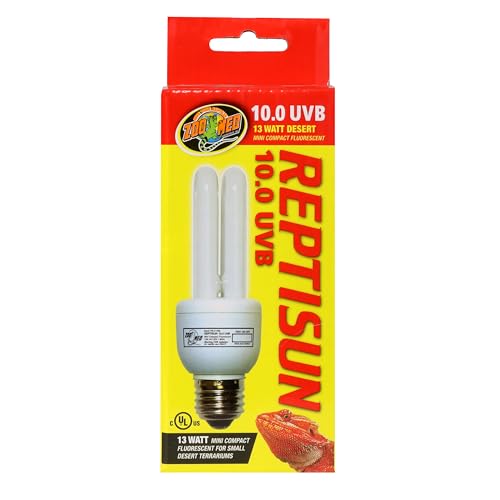
Zoo Med ReptiSun 10.0 UVB Bulb
A widely used UVB-emitting bulb for reptiles, recommended by the manufacturer for replacement roughly every six months regardless of whether it still appears to work.
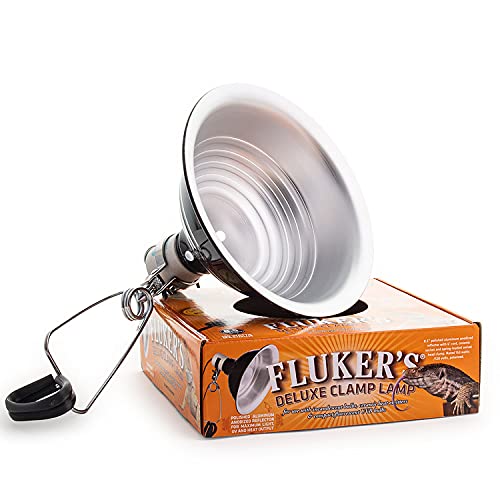
Fluker’s Repta-Clamp Lamp with Dome
A basic clamp fixture used to hold basking or UVB bulbs at a set distance from a terrarium, letting keepers standardize distance when comparing bulb output over time.
Frequently asked questions
Can you tell a bulb is fading just by looking at it?
No, visible brightness is a poor indicator of either heat or UVB output, since both can drop significantly while the bulb still looks the same to the eye.
Why do UVB bulbs degrade faster than plain heat bulbs?
UVB output comes from a special coating inside the bulb that breaks down with use faster than the basic heat-producing filament, which is why UVB-specific bulbs have a shorter effective lifespan.
Does bulb wattage affect how often it needs replacing?
Wattage affects how much heat or light it produces when new, but the rate of output decline over time is driven more by hours of use than by wattage itself.
Is it necessary to use a UV meter, or is a thermometer enough?
A thermometer only confirms heat output, so if the bulb also provides UVB, a dedicated UV meter is the only reliable way to confirm that specific output is still adequate.
What happens if a UVB bulb is left in too long?
The reptile can end up with insufficient UVB exposure for weeks or months without any obvious sign, which over time contributes to calcium metabolism problems like metabolic bone disease.
Do all reptile species need a UVB bulb at all?
Most diurnal, basking reptiles like bearded dragons and many turtles need UVB, while some nocturnal species have lower or different UVB requirements, so checking species-specific care guidance matters.
Can a heat lamp bulb be reused in a different enclosure?
Yes, as long as it is still within its effective output window, though moving it also means re-checking basking spot temperature at the new distance and setup.
Why does distance from the bulb to the basking spot matter?
Both heat and UVB intensity drop off sharply with distance, so even a fresh bulb placed too far away can under-deliver, which is why distance should be checked alongside bulb age.
How long do incandescent basking bulbs typically last before replacement?
Most keepers replace plain incandescent basking bulbs every 8 to 12 months, longer than UVB bulbs since there is no UV-emitting coating involved that degrades faster.
Does the enclosure’s mesh or glass top affect UVB output?
Yes, fine mesh screening and glass can block a meaningful percentage of UVB before it even reaches the animal, which is a separate issue from bulb age but affects the same outcome.
Can a reptile show symptoms before a UVB bulb is officially due for replacement?
Yes, manufacturer replacement intervals are general guidelines, and a bulb can underperform earlier than expected, which is why behavioral signs like excessive basking are worth watching regardless of schedule.
Is it better to replace heat and UVB bulbs on the same schedule?
Many keepers do replace them together for simplicity, but since UVB bulbs typically degrade faster, tracking them separately gives a more accurate picture of when each actually needs changing.
Do ceramic heat emitters need replacing as often as light-emitting bulbs?
Ceramic heat emitters, which produce heat without visible light or UVB, generally have a longer usable lifespan since there is no UV coating degrading, though they still eventually lose some output.
Can overheating happen if an old bulb is replaced with a fresh one at the same wattage?
Yes, a fresh bulb can run noticeably hotter than the old one it replaced, so basking spot temperature should be rechecked immediately after any bulb swap, not assumed to be the same.
Should reptile bulb replacement dates be written down somewhere?
Yes, since there is no visual cue that a bulb needs changing, writing the install date on the bulb or in a simple log is the most reliable way to avoid letting it run too long.
Does bulb brand affect how long output lasts?
Reputable brands with consistent manufacturing tend to hold rated output more reliably over their lifespan than generic off-brand bulbs, though every bulb still degrades eventually regardless of brand reputation.
Can a reptile’s basking behavior change seasonally even with a fresh bulb?
Yes, ambient room temperature shifts with the seasons can change how long a reptile basks even when the bulb itself is performing exactly as expected, so seasonal context matters when reading behavior.
Is it worth keeping a spare bulb on hand before the old one fails?
Yes, since bulbs degrade gradually rather than failing all at once, having a spare ready means a reptile isn’t left without adequate heat or UVB while waiting for a replacement to arrive.
The bottom line
Treat reptile bulbs on a replacement calendar rather than waiting for a visible failure, since the output that actually matters to the animal fades long before the bulb stops lighting up. A cheap thermometer and, for UVB bulbs, a basic UV meter are the only real way to confirm the setup is still doing its job. Many keepers find it easiest to pair bulb replacement with a recurring reminder rather than relying on memory, since the interval is long enough to forget but short enough that skipping it has real consequences for the animal’s health.
Olivia Hartley
Olivia spent several years working at an animal shelter and a pet-supply retailer before joining the editorial team. She researches pet gear with an emphasis on safety, comfort and the fine print that owners often miss.