Which Action Camera Beats GoPro on Value and Detail?
Based on published specifications, the DJI Osmo Action 4 is the strongest all-round GoPro alternative thanks to its larger sensor and steady stabilization. The Insta360 Ace Pro pulls ahead in low light, and the AKASO Brave 7 LE covers core features at a noticeably lower price.
The DJI Osmo Action 4 stands out as the strongest all-round GoPro alternative, built around a larger sensor and steady stabilization. Low light favors the Insta360 Ace Pro, and tight budgets point toward the AKASO Brave 7 LE. All three handle rugged POV footage without locking you into GoPro’s ecosystem.
Marketing often leans on resolution numbers, yet stabilization, low-light behavior and battery life decide how footage actually looks. We compared sensor specifications, mounting compatibility, waterproof ratings and owner feedback to match each camera with the way people actually shoot.
Our top picks
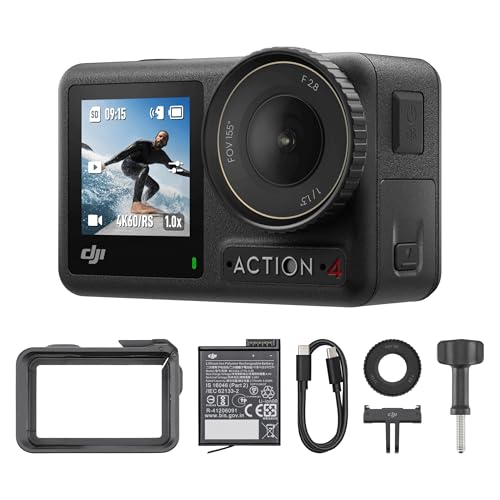
DJI Osmo Action 4
A 1/1.3 inch sensor sets the Osmo Action 4 apart from most rivals, capturing cleaner footage once light fades. Dual touchscreens simplify framing from any angle, and built-in stabilization keeps handheld clips steady without a gimbal.
Pros
- Larger sensor improves low-light detail
- Built-in stabilization smooths handheld shots
- Front screen helps with self-framing
Cons
- Field of view runs narrower than some rivals
- Magnetic mount accessories cost extra
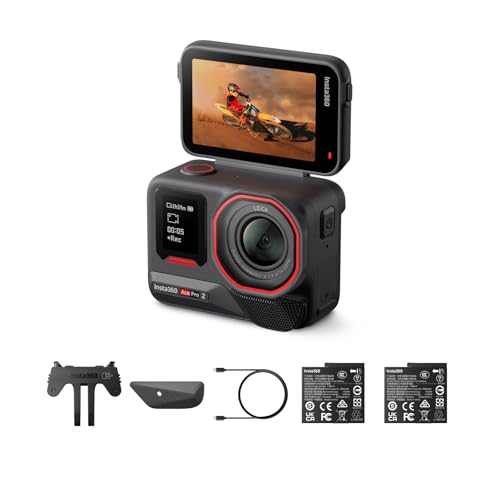
Insta360 Ace Pro
Co-engineered optics and a large sensor push the Ace Pro toward the front of the pack for detail and dynamic range. A flip-up screen turns it into a capable vlogging camera, not just an action cam bolted to a helmet.
Pros
- Strong detail and dynamic range for the class
- Flip-up screen supports vlogging setups
- AI-assisted editing speeds up post-production
Cons
- Body runs bulkier than most action cameras
- 8K recording shortens battery life quickly

AKASO Brave 7 LE
Waterproofing, dual screens and stabilization arrive on the Brave 7 LE well below flagship pricing. Two included batteries and a front display make it a practical entry point for casual outings rather than serious production work.
Pros
- Core features included at a lower price point
- Front screen and remote come in the box
- Two batteries extend a day of shooting
Cons
- Low-light footage looks noticeably softer
- Stabilization lags behind premium models

Insta360 X4
Full 360-degree capture lets the X4 record everything around it, so framing decisions happen after the fact instead of during the ride. That flexibility suits creators chasing invisible-selfie-stick shots or unpredictable action.
Pros
- Reframing after recording adds creative options
- Invisible selfie-stick effect works well for POV
- Battery life leads most cameras in this group
Cons
- 360 editing workflow takes time to learn
- Large file sizes demand extra storage
DJI Osmo Action 3
Pricing dropped once the Action 4 arrived, yet the Osmo Action 3 keeps the same quick-release magnetic mount and dependable stabilization. Cold-weather battery performance holds up better than most cameras at this level.
Pros
- Magnetic mount system speeds up mount changes
- Stabilization stays reliable across conditions
- Cold-weather battery life outperforms rivals
Cons
- Smaller sensor than the Action 4
- Low-light clips show more visible noise

AKASO EK7000
Few extras separate the EK7000 from a bare-bones action camera, and that keeps its price low. A waterproof case and a bundle of mounts ship in the box, so first-time buyers can start filming without added purchases.
Pros
- Price point removes financial risk for beginners
- Case and mount kit included at purchase
- Controls stay simple for new users
Cons
- No built-in stabilization for handheld shots
- Waterproof use requires the included case

Insta360 GO 3
Weighing about 35 grams, the GO 3 clips or sticks to clothing and hats for hands-free POV angles a helmet-mounted camera cannot reach. Its charging case doubles as a screen and remote, which keeps spontaneous filming simple.
Pros
- Compact, wearable design frees up your hands
- Case functions as a viewfinder and remote
- Hands-free angles suit fast-moving activities
Cons
- Resolution ceiling sits below larger cameras
- Standalone recording time runs short
How to choose
What matters most when choosing a GoPro alternative? Stabilization affects footage quality more than resolution specs suggest. A shaky 4K clip looks worse than a steady 2.7K one, especially during handheld or helmet-mounted shooting. DJI and Insta360 apply electronic stabilization that smooths bumps in real time, while budget cameras often handle it more crudely or skip it entirely. Weigh steadiness alongside resolution rather than treating megapixels as the deciding factor.
How does sensor size affect low-light video? Sensor size determines how much light a camera captures before the image turns noisy. Larger sensors, like the ones in the Osmo Action 4 and Ace Pro, keep evening and indoor footage cleaner than smaller-sensor competitors. Cameras such as the EK7000 and Brave 7 LE trade some low-light performance for a lower price. Anyone filming near dawn, dusk or indoors should weight sensor size heavily.
Are these cameras waterproof and compatible with GoPro mounts? Most models here are waterproof to a useful depth without any case, and dive cases extend that range further for scuba or deep water. Mounting compatibility matters just as much: the two-prong finger mount is close to an industry standard, so accessories built for one brand often fit another. DJI and Insta360 layer their own magnetic quick-release systems on top for faster swaps between mounts.
Should you buy a standard, 360 or wearable action camera? Form factor shapes how you shoot more than any spec sheet. Traditional box-style cameras like the Osmo Action 4 and Brave 7 LE suit helmets and handlebars. The X4 captures a full 360-degree view so you can choose an angle after recording, while the featherweight GO 3 clips to clothing for hands-free shots neither style can match. Match the form factor to your activity before comparing resolution or price.
How they compare
| # | Model | Sensor | Best for | Score | Price |
|---|---|---|---|---|---|
| 1 | DJI Osmo Action 4 | 1/1.3 inch | Best overall | 9.4 | Check price |
| 2 | Insta360 Ace Pro | 1/1.3 inch | Best for low light | 9.2 | Check price |
| 3 | AKASO Brave 7 LE | 4K at 30fps | Best budget | 8.7 | Check price |
| 4 | Insta360 X4 | 8K 360 at 30fps | Best for 360 capture | 9.0 | Check price |
| 5 | DJI Osmo Action 3 | 1/1.7 inch | Best value flagship | 8.8 | Check price |
| 6 | AKASO EK7000 | 4K at 25fps | Best cheap starter | 8.2 | Check price |
| 7 | Insta360 GO 3 | About 35g camera | Best compact | 8.4 | Check price |
Frequently asked questions
How do GoPro alternatives compare to GoPro on image quality?
DJI and Insta360 flagships match or exceed GoPro on stabilization and low-light detail, based on their published specifications. AKASO models cover the basics at a much lower price. The right pick depends on whether image quality, unique form factors or budget matters most to you.
Which action camera is best for low light?
The Insta360 Ace Pro and DJI Osmo Action 4 lead this group because their larger sensors gather more light per frame. Indoor, dusk and nighttime footage looks noticeably cleaner on either camera than on smaller-sensor models like the EK7000.
Do these cameras work with GoPro mounts?
Most do. The two-prong finger mount is close to a universal standard, and every camera here either uses it directly or ships with an adapter. DJI and Insta360 also add their own magnetic quick-release mounts for faster changes.
Is a 360 camera better than a standard action camera?
It depends on your shooting style. The Insta360 X4 captures everything around it and lets you pick the angle afterward, which adds editing time. A standard action camera stays simpler to operate and often produces sharper footage for straightforward POV clips.
How waterproof does an action camera need to be?
Pool, beach and light water sports rarely exceed the built-in ratings on cameras like the Osmo Action 4. Scuba diving or deeper water calls for a dedicated dive case, such as the housings AKASO sells for its cameras.
Do action cameras need extra batteries?
High-resolution recording drains a battery quickly, so a spare helps on long shooting days. The AKASO Brave 7 LE ships with two batteries in the box, while other cameras here sell spares separately.
Are budget action cameras worth buying?
For casual use, yes. The AKASO Brave 7 LE and EK7000 handle daytime footage and rough handling at a fraction of flagship prices, according to their listed specifications. Low-light clarity and stabilization refinement are the main tradeoffs.
Can you vlog with an action camera?
Yes, particularly with models that include a front or flip-up screen. The Insta360 Ace Pro flips its screen upward for easy framing, and DJI’s cameras add a front display, both of which make talking to the camera much easier.
What is the smallest GoPro alternative you can wear?
The Insta360 GO 3 weighs about 35 grams and clips or sticks directly to clothing, hats or gear straps. Its charging case works as a small screen and remote, so owners can start recording without pulling out a phone.
The verdict
GoPro no longer holds the action-camera category alone. Specifications point to the DJI Osmo Action 4 as the strongest all-round alternative, the Insta360 Ace Pro as the low-light and vlogging choice, and the AKASO Brave 7 LE as proof that rugged 4K footage does not require flagship pricing. Match the pick to whichever factor, image quality, form factor or value, matters most for your shooting.
Marcus Chen
Marcus covered consumer electronics for enthusiast tech publications for six years before joining ChoiceCrest. He specializes in translating manufacturer spec sheets into plain-language buying advice, with a focus on audio, computing accessories and smart-home gear.


