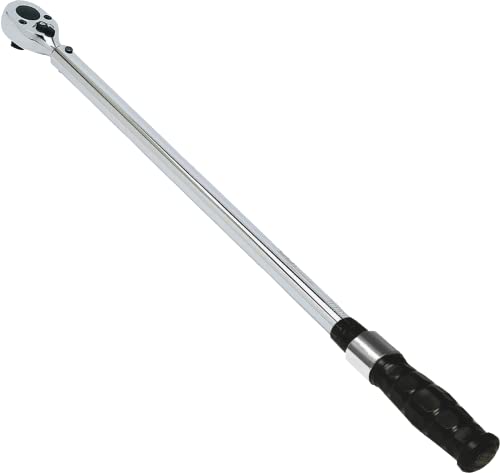
Do You Really Need a Torque Wrench for Home Projects?
For most everyday home projects, a torque wrench is not strictly necessary, since general carpentry, furniture assembly, and basic repairs tolerate a wide range of how tight a fastener is. It becomes genuinely important for specific jobs where a manufacturer specifies an exact torque value, most commonly automotive work like wheel lug nuts, and for a smaller set of tasks where overtightening can crack a part or strip threads, like mounting delicate electronics or certain plumbing fittings.
Where a torque wrench actually matters
Manufacturers specify exact torque values, in foot-pounds or newton-meters, mainly for fasteners where both undertightening and overtightening carry real consequences. Automotive lug nuts are the clearest home example, since undertightened wheels can loosen while driving and overtightened ones can warp brake rotors or strip the stud threads, both of which are expensive and potentially dangerous to get wrong.
Why general carpentry and furniture assembly rarely need one
Wood screws, deck fasteners, and most flat-pack furniture hardware have a wide tolerance range for tightness, and the typical failure mode for overtightening, like stripping a screw hole in soft wood, is usually obvious by feel well before it becomes a real problem. A standard screwdriver, impact driver with a clutch setting, or basic wrench handles the vast majority of these jobs fine.
Specific household tasks where precise torque actually prevents damage
Beyond cars, a handful of household tasks genuinely benefit from torque control: mounting a TV or monitor on certain wall brackets where the bracket manufacturer specifies a bolt torque, assembling some bicycle components where carbon fiber parts can crack under overtightening, and certain plumbing compression fittings where overtightening deforms the seal rather than making it tighter.
Click-type versus beam-type torque wrenches for home use
A click-type torque wrench is set to a target value and makes an audible click once that torque is reached, which most home users find easier to use correctly. A beam-type wrench uses a visible needle and scale that requires watching it while tightening, which is more affordable but slightly less convenient for a one-off home project.
Why borrowing or renting one occasionally makes sense
Since most home projects needing precise torque are infrequent, like a seasonal tire rotation or a single furniture assembly with a torque spec, it is common and reasonable to borrow a torque wrench from a neighbor, rent one from a tool library or auto parts store, or simply ask a shop to handle that specific step rather than owning one permanently.
When owning one outright makes more sense
Anyone who regularly rotates their own tires, works on a bicycle with carbon components, or does repeated small engine or appliance repairs with torque specifications will generally save time and avoid repeated borrowing by owning an inexpensive click-type torque wrench in a common range, like 10 to 150 foot-pounds for automotive use.
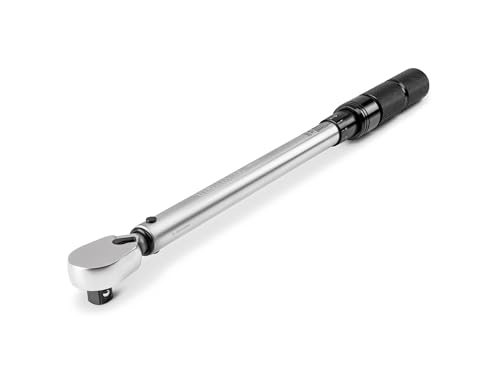
TEKTON 24335 1/2-Inch Drive Click Torque Wrench
An affordable click-type torque wrench in a range commonly used for automotive lug nuts and other mid-range household torque specs.
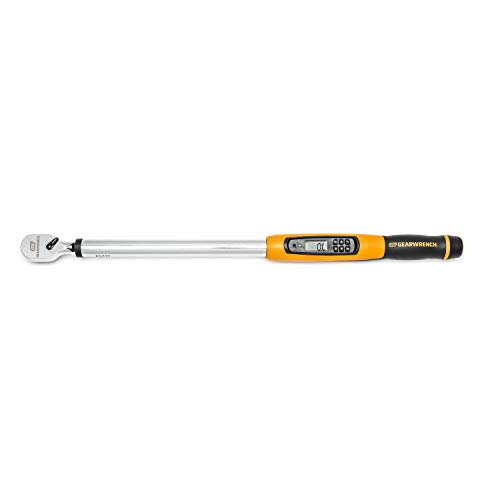
GearWrench 85077 Electronic Torque Wrench
A digital torque wrench with a readout and audible or vibrating alert at the target torque, aimed at users who want a precise digital confirmation rather than reading a dial or feeling a click.
Common questions
Is it safe to tighten car lug nuts by feel instead of using a torque wrench?
It is not recommended, since undertightened lug nuts can loosen while driving and overtightened ones can warp a brake rotor or strip the wheel stud, both of which are more expensive and more dangerous than taking the extra few minutes to torque them properly.
What torque range is most useful for a typical home toolbox?
A range covering roughly 10 to 150 foot-pounds covers most common automotive and household specs, including lug nuts on most passenger vehicles, though checking the specific spec for your vehicle or project before buying is still worth doing.
Can overtightening really damage furniture or household fittings?
Yes, especially with particleboard furniture, where overtightening strips the screw hole entirely, and with certain plumbing compression fittings, where overtightening deforms the seal rather than improving it, making a leak more likely rather than less.
Do torque wrenches need to be calibrated or recalibrated over time?
Click-type torque wrenches can drift out of calibration with heavy use or being left set at a high torque value for long periods, so occasional calibration checks matter more for frequent or professional use than for occasional home projects.
Is a digital torque wrench more accurate than a click-type one?
Both can be accurate within their stated tolerance when properly calibrated, with the main practical difference being that a digital wrench gives a readout and alert while a click-type gives a physical and audible click at the target value.
Can I use a torque wrench to loosen bolts as well as tighten them?
Most torque wrenches are designed specifically for tightening to a measured value and are not intended for breaking loose an already tight or seized bolt, which can strain the internal mechanism beyond its calibrated range.
Does every car and project specify an exact torque value?
No, many household tasks do not specify a torque value at all and rely on reasonable hand-tightening, while automotive manufacturers and some specialty equipment manufacturers do publish specific torque specs precisely because the consequences of getting it wrong are higher.
Is it worth buying a torque wrench just for one project?
For a genuine one-time need, renting from a tool rental service, borrowing from a friend, or having a shop handle that specific step is usually more practical than buying and storing a tool that may not get used again soon.
How do you find the correct torque spec for a specific bolt or fastener?
Manufacturer manuals, the vehicle or product’s official specification sheet, or sometimes a sticker or stamp near the fastener itself are the most reliable sources, rather than guessing based on a similar-looking fastener from a different product.
Does bolt size alone tell you what torque to use?
No, torque specs depend on the bolt’s size, thread pitch, material, and what it is fastening into, so two bolts of the same visible size can have very different correct torque values depending on their specific application.
Can an impact driver replace a torque wrench for precise jobs?
No, impact drivers are built for speed and driving power rather than measured torque output, and even models with adjustable clutch or torque settings are generally less precise than a dedicated torque wrench for jobs with a tight specification.
Is a torque wrench necessary for assembling flat-pack furniture?
Rarely, since most flat-pack furniture hardware is designed with a wide tolerance for tightness using the included hex key or screwdriver, though a small number of specialty items, like some bike-adjacent furniture hardware, occasionally do specify a torque value.
Does temperature affect torque wrench accuracy?
Extreme cold or heat can slightly affect the internal spring mechanism in click-type wrenches, though this is a minor factor for typical home garage conditions compared to professional environments with very tight tolerance requirements.
Can using the wrong torque wrench size range damage the tool?
Yes, consistently using a torque wrench near or beyond its rated maximum, or using it to apply force well below its minimum calibrated range, can both reduce accuracy and shorten the tool’s working life over time.
Is a beam-type torque wrench good enough for occasional home use?
Yes, a beam-type wrench is generally accurate enough for occasional home projects and costs less than a click-type, with the main tradeoff being that it requires watching the scale while tightening rather than stopping automatically at the target value.
Final word
A torque wrench is not essential tool-drawer equipment for most home projects, but it earns its place the moment a job specifies an exact value, which in practice usually means car work and a short list of delicate household fittings. Owning one makes sense if that list comes up often; renting or borrowing is perfectly reasonable if it does not.
Jake Monroe
Jake worked as a residential contractor for over a decade before shifting to full-time writing. He evaluates power tools, hand tools and workshop gear through the lens of someone who has actually used them on job sites, not just read the box.