Do You Need a Dust Collection System for a Home Workshop?
For anyone running stationary power tools regularly, like a table saw, planer, or miter saw, in an enclosed garage or basement workshop, a dust collection system meaningfully improves air quality and keeps fine sawdust from accumulating on every surface, but occasional light hobby use in a well-ventilated space can often get by with just a shop vacuum attached directly to individual tools instead of a dedicated system.
What a dust collection system actually does differently than a shop vac
A dedicated dust collector moves a much larger volume of air at lower pressure compared to a shop vacuum, which suits it to capturing the high volume of larger wood chips and dust produced by stationary tools like table saws and planers, while a shop vac’s higher pressure, lower volume design suits it better to smaller, more concentrated dust sources like a sander or router.
Why fine dust is the real health concern, not just visible sawdust
The sawdust you can see settling on surfaces is actually the less concerning part. Very fine wood dust particles, small enough to stay suspended in the air for extended periods and penetrate deep into the lungs, are the bigger long-term health concern, and some wood species carry additional respiratory or allergy risks beyond dust alone. A dust collection system, especially paired with proper filtration, captures a meaningfully larger share of this fine airborne dust than leaving a tool completely uncollected.
Workshop size and ventilation change how necessary this is
A small, enclosed garage or basement workshop with limited airflow concentrates dust far more than an open, well-ventilated space or one with a functioning exhaust fan, which is part of why the same tool and usage level can be a real health concern in one workshop and a minor nuisance in another.
Frequency and type of tool use matters as much as workshop size
Someone running a table saw or planer for hours at a time on a regular basis generates dramatically more airborne dust over time than someone making the occasional weekend cut, and the health and cleanliness case for a dedicated collection system scales with that usage frequency, not just the tools owned.
Single-stage versus two-stage dust collectors
Single-stage collectors pull air and debris directly into one filter bag or canister, which works fine for most home shops but can clog faster with large chip volume from a planer or jointer. Two-stage collectors separate larger chips into a bottom bin before air reaches the finer filter, reducing how often the filter needs cleaning and maintaining stronger suction over a longer session.
When a shop vac and basic precautions are genuinely enough
For light, infrequent use, especially with hand tools or a single portable power tool at a time, a shop vac with a HEPA filter attached directly to the tool’s dust port, combined with a well-fitted dust mask or respirator for any task that kicks up visible dust, covers most of the practical and health benefit without the cost and space of a dedicated collection system.
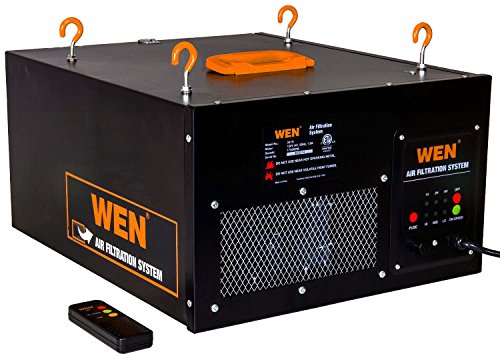
WEN 3410 Dust Collector
A single-stage dust collector commonly used in home workshops as an entry point into dedicated collection before scaling up to a larger or two-stage system.

JET DC-1100VX-CK Dust Collector
A two-stage canister style collector aimed at home shops running multiple stationary tools regularly enough to benefit from the longer filter life and stronger sustained suction of a two-stage design.
Frequently asked questions
Is a shop vacuum the same thing as a dust collection system?
Not exactly, a shop vac moves a smaller volume of air at higher pressure, suiting it to concentrated dust sources like a single sander, while a dedicated dust collector moves a much larger volume at lower pressure, suiting it to the higher chip volume from stationary tools like table saws and planers.
What size workshop actually needs a dedicated dust collector?
There is no strict square footage cutoff, but enclosed garages and basements with limited ventilation generally benefit more from dedicated collection than open, well-ventilated spaces, since dust concentrates faster where airflow is limited.
Does wearing a dust mask make a dust collection system unnecessary?
A mask protects the person wearing it during active work, but it does not reduce fine dust settling throughout the workshop over time or protect anyone else in the space, so the two serve different, complementary purposes rather than one replacing the other.
Can fine wood dust actually cause long-term health problems?
Yes, prolonged exposure to fine airborne wood dust is linked to respiratory irritation and, with some wood species and heavy long-term exposure, more serious respiratory conditions, which is part of why occupational safety guidelines treat wood dust as a real exposure risk rather than just a nuisance.
Do all stationary power tools produce the same amount of dust?
No, tools like table saws, planers, and jointers generally produce significantly more dust and chip volume than something like a drill press or a band saw doing fine detail cuts, so collection needs vary by the specific tools in a given shop.
Is a single-stage or two-stage dust collector better for a home workshop?
A single-stage collector works fine for occasional or lighter use, while a two-stage collector, which separates large chips before the filter stage, holds up better for frequent use of chip-heavy tools like planers and jointers since its filter clogs less often.
Can a dust collection system be connected to more than one tool at once?
Many home shop setups use ducting or flexible hose with blast gates to connect several stationary tools to a single collector, opening the gate only for whichever tool is currently in use rather than running every connection simultaneously.
Does a dust collector need a separate filter for fine dust, or does it collect everything in one step?
Most collectors use a primary bag or canister for larger chips and dust, and some setups add a secondary fine filter or cyclone separator specifically to catch the smallest particles that would otherwise pass through or clog the main filter quickly.
Is it worth it to retrofit dust collection ducting into an existing home workshop?
For anyone running multiple stationary tools regularly, permanent ducting with blast gates generally saves time over moving a portable collector or hose between tools, though a portable setup is a reasonable and much simpler option for a smaller shop or less frequent use.
Does a cyclone separator attachment actually make a difference?
Yes, a cyclone separator spins incoming debris to drop heavier chips into a bin before air reaches the filter, which meaningfully extends filter life and maintains stronger suction over a longer work session compared to a collector without one.
Can dust collection systems get loud enough to need hearing protection?
Many dust collectors run comparable to or louder than the power tools they are paired with, so combining hearing protection with dust protection is a reasonable practice during any extended workshop session.
How often does a dust collector’s filter or bag need to be emptied?
This depends heavily on usage volume and whether the system has a separate bin for larger chips, but a full bag or canister restricts airflow and reduces collection efficiency, so checking it periodically during heavy use sessions matters more than following a fixed schedule.
Is outdoor or garage door ventilation alone enough instead of a dust collector?
Open airflow helps reduce dust concentration and is a reasonable supplement, but it does not capture dust at the source the way a collector does, so it works best as an addition to source collection rather than a full substitute for it.
Does the type of wood being cut affect how much dust collection matters?
Yes, some wood species produce finer, more irritating dust or carry higher allergy and respiratory sensitivity risk than others, which can make dedicated collection more important when working with those specific materials regularly.
Can a dust collection system reduce the cleanup time after a workshop session?
Yes, this is one of the more immediately noticeable benefits, since capturing dust and chips at the source significantly cuts down on sweeping and surface cleaning compared to letting a tool spray dust freely into the room.
Final word
The honest answer scales with how often the shop runs chip-heavy stationary tools and how enclosed the space is, not a blanket yes or no. Occasional hobby use in a ventilated space gets reasonable protection from a shop vac and a good mask, while regular use of a table saw or planer in an enclosed garage is where a dedicated collector earns its cost in both air quality and cleanup time.
Jake Monroe
Jake worked as a residential contractor for over a decade before shifting to full-time writing. He evaluates power tools, hand tools and workshop gear through the lens of someone who has actually used them on job sites, not just read the box.