Do USB-C Cables Really Charge at Different Speeds?
Yes, significantly. USB-C is a connector shape, not a guarantee of charging speed, and cables vary by their internal wire gauge, whether they support USB Power Delivery and at what wattage, and whether they include the data chip needed for fast charging negotiation at all. A cheap USB-C cable can bottleneck a 65 watt charger down to a fraction of that speed.
USB-C describes the shape, not the capability
The USB-C connector is a universal physical shape, but the cable inside it can be built to wildly different specifications. A cable rated for basic 60 watt charging and one rated for 240 watt charging under USB PD 3.1 look identical from the outside, so the only reliable way to know a cable’s real limit is checking its printed spec or packaging.
Wire gauge determines how much current a cable can safely carry
Thicker internal copper wiring handles higher current with less resistance and heat buildup. Budget cables often use thinner gauge wire to save cost, which caps the safe charging current well below what the connected charger and device could otherwise support, even if both ends are physically USB-C.
USB Power Delivery negotiation requires the right chip in the cable
Fast charging over USB-C relies on a negotiation protocol called USB Power Delivery, where the charger, cable, and device communicate to agree on a voltage and current. Cables without the embedded identification chip required for higher PD profiles will fall back to a slower default charging speed regardless of what the charger is capable of.
Cable length affects speed too
Longer USB-C cables experience more resistance over their length, which can reduce the maximum sustained charging speed compared to a shorter cable of the same build quality, particularly at the highest wattage tiers like 100 watts and above.
Data only cables are a common hidden culprit
Some USB-C cables are built primarily for data transfer and include only enough wiring for slow trickle charging, often around 10 to 15 watts, which can make a phone or laptop charge extremely slowly even though the cable and ports both look correct and are correctly inserted.
How to actually tell what a cable supports
Reputable cable makers print the wattage rating directly on the cable or connector, and many list USB-IF certification which verifies the claimed speed through independent testing. Cables with no printed rating at all are the ones most likely to underperform silently.

Anker 765 USB-C to USB-C Cable (140W)
A cable explicitly rated and marked for high wattage USB Power Delivery charging, built with thicker gauge wiring to support laptop level charging speeds over USB-C.
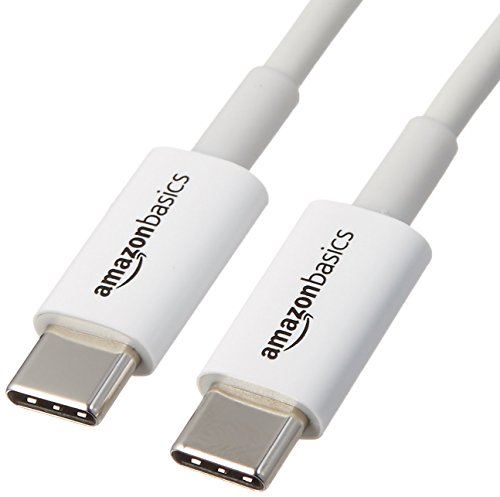
Amazon Basics USB-C to USB-C Charging Cable
A widely available everyday cable rated for standard charging speeds, useful as a baseline example of a cable built for phones and tablets rather than laptop level fast charging.
Common questions
How can I tell if a USB-C cable supports fast charging before buying it?
Check the product listing or packaging for a specific wattage rating or USB Power Delivery support, since generic listings with no wattage mentioned are the ones most likely to underperform.
Does a more expensive USB-C cable always charge faster than a cheap one?
Not always, but price often correlates with better internal wire gauge and proper certification, while unusually cheap cables more frequently cut corners on both.
Can a USB-C cable damage a phone or laptop if it’s the wrong spec?
A cable that is undersized for the power being pushed through it is more likely to overheat than to damage the connected device directly, but overheating cables are still a real safety concern.
Why does my phone charge faster with one cable than another, even with the same charger?
The charger can only deliver what the cable allows through, so a thinner or non PD cable will cap the charging speed well below what the charger is actually capable of.
Is USB-IF certification worth checking for on a cable’s packaging?
Yes, USB-IF certification means the cable has been independently tested against the claimed specification, which is a meaningful signal compared to an uncertified generic claim.
Do longer USB-C cables really charge slower than shorter ones?
At the highest wattage tiers, yes, since resistance increases with cable length, though for everyday phone charging speeds the difference is usually small enough not to notice.
Can a data only USB-C cable still charge a device, just more slowly?
Yes, most data only cables still carry some charging current, typically in the range of a slow trickle charge rather than anything close to fast charging speeds.
Does the charging brick matter more than the cable, or is it the other way around?
Both matter together, since the final charging speed is limited by whichever component, the brick or the cable, has the lower capability.
Why do some USB-C cables feel warm during fast charging?
Some warmth during high wattage charging is normal due to electrical resistance, but a cable that becomes noticeably hot to the touch is a sign it may be undersized for the load.
Is it safe to use a 240 watt rated cable with a 20 watt charger?
Yes, a higher rated cable works fine with a lower wattage charger, since the charger and device will simply negotiate down to whatever lower speed they actually need.
Can a USB-C cable that supports fast charging on one phone brand work the same way on another?
Generally yes, since USB Power Delivery is a cross brand standard, though some manufacturers use proprietary fast charging protocols that only work fully with their own branded cables and chargers.
How do I know if my cable is bottlenecking my laptop’s charging speed?
Checking the charging wattage shown in the laptop’s battery settings against the charger’s rated output is a reliable way to see if the actual delivered speed falls well short of what the charger should provide.
Does cable thickness alone tell you how fast it can charge?
Thickness is a reasonable visual hint toward thicker gauge wiring, but it is not a guarantee, since cable diameter can also come from extra shielding rather than thicker power wires.
Are braided USB-C cables generally better quality than rubber ones?
Braided sleeving mainly improves durability against fraying and tangling rather than indicating better internal wiring, so it is not a reliable indicator of charging speed on its own.
Can a damaged or frayed USB-C cable reduce charging speed even if it still works?
Yes, internal wire damage from fraying or bending stress can increase resistance and reduce effective charging speed even when the cable still makes a connection.
Is there a universal symbol that shows a cable’s maximum wattage?
There is no single universal symbol, though many cables now print the wattage number directly near the connector, and USB-IF certified cables often include a small certification logo.
Does using a USB-C cable with an older USB-A charger through an adapter limit speed?
Yes, USB-A to USB-C adapters generally cap out at older, lower wattage USB standards and do not support the higher wattage USB Power Delivery profiles available on native USB-C to USB-C setups.
Can two cables that both claim 100W actually charge at different real world speeds?
Yes, since claimed wattage does not always reflect sustained performance under heat or over a full charging session, and build quality differences between cables can still produce measurably different results.
Does a thunderbolt rated USB-C cable charge faster than a standard USB-C cable?
Not necessarily just from the Thunderbolt label, since Thunderbolt certification is mainly about data bandwidth, and the cable’s actual charging wattage rating is a separate specification worth checking independently.
Is it worth keeping a dedicated high wattage cable just for laptop charging?
For anyone who charges a laptop over USB-C regularly, keeping one confirmed high wattage cable set aside avoids accidentally grabbing a slower rated cable from a shared drawer of mixed cables.
Our take
Treat USB-C as a shape, not a spec sheet. The charger’s wattage rating is only half the story, and a cable without a clear wattage rating printed on it is the most common reason a fast charger still charges slowly.
Marcus Chen
Marcus covered consumer electronics for enthusiast tech publications for six years before joining ChoiceCrest. He specializes in translating manufacturer spec sheets into plain-language buying advice, with a focus on audio, computing accessories and smart-home gear.


