Do Night Weaning Pacifiers Really Exist?
No, there is no pacifier that automatically weans your baby off the pacifier at night. What exists are pacifiers marketed for night use (glow-in-the-dark, smaller shields, orthodontic shapes) and gradual-weaning systems that reduce pacifier size over time. But the actual weaning still depends on your child and your approach, not on a special pacifier.
What people mean by night weaning pacifier
The phrase gets used for two different things. One is a pacifier designed to be easy to find and use at night, like a glow-in-the-dark model. The other is a pacifier that is part of a step-down weaning system, where you move from a larger pacifier to a smaller one over weeks. Neither one does the weaning for you; they are tools that make the process slightly easier.
Why a dedicated night weaning pacifier does not exist
A pacifier is a passive object. It cannot know when your child is asleep, and it cannot gradually reduce suction on its own. Any product claiming to wean at night is really just a smaller pacifier or one with a different shape, and the parent still has to manage the transition. The only thing that changes at night is that your child is asleep and may not notice a missing pacifier for a few hours, which is why some parents start the weaning process at bedtime.
What actually exists for night weaning
You will find three categories. First, glow-in-the-dark pacifiers that are easier to locate in a dark room. Second, pacifier systems with multiple sizes, where you size down as part of a weaning plan. Third, pacifier clips and storage that keep pacifiers accessible at night. None of these are magic, but they can reduce middle-of-the-night scrambling.
The step-down method explained
Some brands sell pacifiers in stages, from newborn to 6 months, 6 to 18 months, and so on. The idea is that you move to a smaller size as your child gets older, and eventually the smallest size is less satisfying, so your child loses interest. This is not a guaranteed method, but it is a structured way to reduce pacifier use gradually rather than going cold turkey.
What to expect when you actually night wean
Most families report a few rough nights. Your child may wake up more often and cry for the pacifier. The key is consistency: if you give in after 20 minutes of crying, you teach your child that crying works. Some parents use a gradual approach, like offering the pacifier for the first part of the night and then removing it, while others go cold turkey. There is no single right way, but a plan helps.
When to talk to your pediatrician
If your child is over 2 and still using a pacifier frequently, or if you are concerned about dental development or speech, bring it up at a checkup. A pediatrician can tell you whether your child is ready to wean and suggest approaches. They can also rule out any underlying issues, like sleep apnea, that might be making sleep harder.
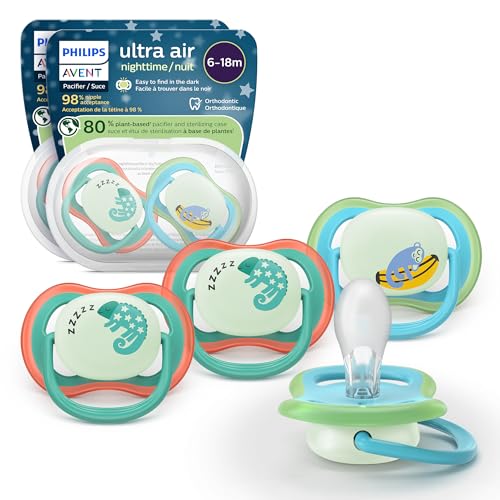
Philips Avent Night Time Pacifier
A glow-in-the-dark pacifier that charges in daylight and glows softly at night, making it easier to find without turning on lights.
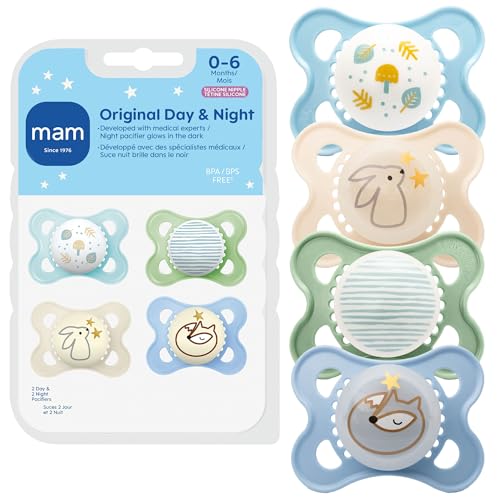
MAM Night Pacifier
A pacifier with a glow-in-the-dark handle and a symmetrical orthodontic nipple, available in multiple sizes for different ages.
Common questions
Is there a pacifier that weans your baby off automatically?
No. No pacifier can wean a baby automatically. Weaning is a behavioral process that requires your child to adjust to not having a pacifier, and that takes time and parental consistency.
What is a night weaning pacifier then?
It is a marketing term for pacifiers that are either glow-in-the-dark, sized for older babies, or part of a step-down system. They are not self-weaning; they are just designed to be more convenient at night.
Do glow-in-the-dark pacifiers help with night weaning?
They help you find the pacifier in the dark, which can reduce the disruption when your child wakes up. But they do not reduce your child’s dependence on the pacifier; they just make it easier to deliver.
Can a smaller pacifier help my baby lose interest?
Some parents find that moving to a smaller size makes the pacifier less satisfying, and their child gradually uses it less. This is not guaranteed, but it is a common step-down strategy.
How long does night weaning take?
It varies widely. Some children adjust in a few nights, while others take weeks. The key is consistency and a clear plan.
Should I wean the pacifier at night first or during the day?
Many parents start with nighttime because sleep is when the pacifier is most missed, and once your child can sleep without it, daytime use often drops naturally. Others prefer to cut daytime use first. There is no single right order.
What if my child cries for hours without the pacifier?
If crying is intense and prolonged, it may help to offer extra comfort, like a stuffed animal or extra cuddles, and to check in periodically. If you are worried, talk to your pediatrician.
Can I just take the pacifier away cold turkey?
Yes, many families do. It can lead to a few tough nights, but some children adapt quickly. The advantage is that it is clear and consistent.
Is it bad to let my child use a pacifier all night?
Pacifier use during sleep is common and generally not harmful for babies and toddlers, but prolonged use past age 2 to 4 can affect dental development. Talk to your dentist or pediatrician if you are concerned.
Do pacifier weaning systems really work?
They can provide structure, but success depends on your child and your consistency. No system works for every child, and some children simply lose interest on their own timeline.
At what age should I stop giving the pacifier at night?
Many experts suggest weaning by age 2 to reduce the risk of dental issues, but there is no hard deadline. Some children are ready earlier, others later.
Can a pacifier cause sleep problems?
A pacifier itself does not cause sleep problems, but if your child wakes up when it falls out and cannot find it, that can disrupt sleep. Glow-in-the-dark pacifiers or having several pacifiers in the crib can help.
What is the best way to handle middle-of-the-night pacifier requests?
Try to offer comfort in other ways first, like patting or shushing, and only give the pacifier if needed. Over time, reduce the number of times you give it.
Will my baby forget about the pacifier if I hide it?
Some children do forget if the pacifier is out of sight and they are kept busy. Others remember and ask for it. It depends on the child.
Are there any safety concerns with glow-in-the-dark pacifiers?
Glow-in-the-dark pacifiers are generally safe if they meet safety standards. The glow material is embedded in the plastic and does not come off. Always check for wear and tear and replace if damaged.
Can I use a regular pacifier at night and a weaning pacifier during the day?
Yes, some parents do this to gradually reduce pacifier use. The idea is to make the pacifier less available during the day while still allowing it at night, then eventually remove it at night too.
What if my child is very attached to the pacifier?
Attachment is normal. A gradual approach, like limiting pacifier use to sleep times only, can help. Some parents use a pacifier fairy or a reward system for older toddlers.
Do pediatric dentists recommend against pacifiers?
Pediatric dentists generally recommend weaning by age 2 to 3 to avoid dental problems like open bite or crossbite. However, they also recognize that pacifiers can be soothing for babies.
Is it okay to give the pacifier back after starting weaning?
It happens. If you give it back, you may need to start over, but that is okay. Weaning is not always a straight line.
Final word
Night weaning pacifiers are not a real category of self-weaning product. What exists are glow-in-the-dark pacifiers and step-down systems that can support your weaning plan, but the real work is yours. Expect some rough nights, stay consistent, and talk to your pediatrician if you need guidance.
Rachel Simmons
Rachel previously worked in child-product retail and brings a practical, detail-first eye to gear reviews, focusing on safety standards, ease of use and the fine print that matters most for new caregivers.


