Do Magnetic Stud Finders Work Through Drywall?
Yes, magnetic stud finders work through drywall, but they do not actually detect the stud itself. They detect the steel screws or nails that fasten the drywall to the studs. As long as those fasteners are present and within the magnet’s reach, the tool will snap to them and indicate where a stud is. In walls where fasteners are sparse, deep, or non-magnetic (like aluminum), a magnetic finder can miss studs entirely.
How a magnetic stud finder actually works
A magnetic stud finder is a small, strong magnet (often neodymium) mounted in a plastic housing. When you slide it across the wall, the magnet is attracted to the steel screws or nails that hold the drywall to the framing. When it passes over a fastener, the magnet jumps or sticks, and you mark that spot. The stud is directly behind the fastener, so the magnet is indirectly finding the stud by finding the hardware.
What drywall thickness means for magnetic finders
Standard half-inch drywall is not a barrier for a decent neodymium magnet. The magnetic field passes through gypsum, paper, and even a layer of paint or texture. The limiting factor is not the drywall itself but the depth of the fastener head and the strength of the magnet. Most quality magnetic finders are rated to detect screws up to about an inch deep, which covers typical residential drywall over wood studs.
When magnetic finders fail on drywall
They fail when there is nothing magnetic to detect. Some drywall crews use adhesive plus a few screws, leaving large gaps between fasteners. Others drive screws too deep, burying the head under a mound of joint compound. In older homes with aluminum or stainless fasteners, a magnet will not respond at all. Also, if the wall has a layer of thick plaster over lath instead of drywall, the fastener may be too far from the surface for the magnet to feel it.
How magnetic finders compare to electronic stud finders
Electronic stud finders use capacitance or radar to sense density changes behind the wall, so they can find studs even without visible fasteners. They also need calibration and can be fooled by pipes, wiring, or dense patches of plaster. Magnetic finders are simpler, never need batteries, and are less prone to false positives from plumbing, but they depend on the presence of fasteners. Many pros carry both: a magnetic finder for a quick check and an electronic unit for confirmation.
Tips for getting reliable results with a magnetic finder
Start by locating one fastener, then check for a second fastener about 16 or 24 inches away along the same line to confirm the stud spacing. Fasteners are usually driven in pairs, so look for two close together. Slide the magnet slowly; rushing can cause you to miss the pull. If the magnet sticks but you are not sure it is a stud, probe with a thin nail or use a piece of wire to feel for the stud behind the drywall.
Are magnetic stud finders worth it for drywall?
For DIYers hanging shelves, pictures, or a TV on standard wood-framed drywall, a magnetic finder is often faster and more foolproof than an electronic one. It is inexpensive, pocket-sized, and has no settings to mess up. The main caveat is that it only works where fasteners are exposed and magnetic. If you frequently work on plaster walls or need to find studs in ceilings with textured surfaces, a good electronic finder is a better primary tool.

CH Hanson 03040 Magnetic Stud Finder
A pocket-sized neodymium magnet stud finder that sticks to screws and nails in drywall; no batteries required.

Zircon StudSensor e50 Electronic Stud Finder
An electronic stud finder that uses capacitance to detect wood and metal studs behind drywall, with a deep-scan mode for thicker walls.
Good to know
Can a magnetic stud finder detect wood studs directly?
No, it detects the steel screws or nails that hold the drywall to the wood stud. The stud itself is not magnetic, so the tool relies on the fasteners as a proxy.
Will a magnetic stud finder work through thick drywall?
It depends on the magnet strength and the depth of the fastener. Most quality magnetic finders can detect screws up to about an inch deep, which covers standard half-inch and five-eighths-inch drywall. Very thick or double-layer drywall may reduce effectiveness.
Do magnetic stud finders work on plaster walls?
They can, but plaster is often thicker than drywall and may have metal lath or a scratch coat that interferes. The fasteners may be too deep for the magnet to detect, so an electronic stud finder is usually more reliable on plaster.
Why does my magnetic stud finder keep sticking in one spot?
It is likely detecting a screw or nail, but it could also be picking up a metal corner bead, a pipe, or electrical conduit. Confirm by checking for a second fastener along the same vertical line.
Can magnetic stud finders find studs behind tile?
Only if the fasteners are magnetic and close enough to the surface. Tile backer board and thinset add thickness, which can weaken the magnetic pull. A magnetic finder may still work if the screws are not too deep.
Are magnetic stud finders accurate enough for hanging a TV?
Yes, if you confirm the stud location by finding multiple fasteners in a line. For heavy items, always verify with a nail or drill bit before committing.
Do magnetic stud finders need batteries?
No, they are passive magnets. That is one of their main advantages: they never run out of power and have no electronics to fail.
Can a magnetic stud finder detect metal studs?
It can detect the steel screws used to attach drywall to metal studs, but the stud itself is also steel and may attract the magnet. However, the screw heads are usually the strongest signal.
What is the best way to use a magnetic stud finder on drywall?
Slide it slowly across the wall in a horizontal line. When it sticks, mark the spot. Then move vertically or horizontally to find another fastener and confirm the stud line. Repeat at different heights for accuracy.
Will a magnetic stud finder find a stud if there are no screws?
No, it needs a magnetic fastener to work. If the drywall is glued or uses non-magnetic fasteners, the magnetic finder will not detect anything.
Can a magnetic stud finder detect pipes or wires?
It can detect metal pipes and conduit if they are close enough to the surface and magnetic. That can be a false positive for a stud, so always confirm with a second fastener.
Is a magnetic stud finder better than an electronic one?
It is simpler and faster for standard drywall with visible fasteners, but electronic finders are more versatile for plaster, deep studs, and situations where fasteners are hidden. Many people keep both.
How deep can a magnetic stud finder detect a screw?
Most strong neodymium magnetic finders can detect a screw head up to about 1 inch deep. Some premium models claim up to 1.5 inches, but that is pushing the limit.
Do magnetic stud finders work on ceilings?
Yes, they work the same way on ceilings, but holding the tool overhead can be tiring. A magnetic finder with a strong magnet and a compact design is easier to use overhead.
Can a magnetic stud finder find the edge of a stud?
It finds the fastener, which is usually driven into the center of the stud. So it gives you the center, not the edge. From there you can infer the stud edges by assuming standard stud width.
Why do some magnetic stud finders have a level built in?
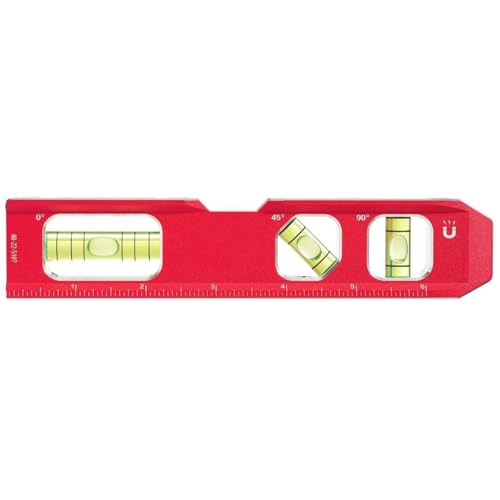
A built-in bubble level helps you keep the tool level while scanning, which makes it easier to follow a straight line and confirm stud spacing. It is a convenience feature, not essential.
Are magnetic stud finders safe to use near electrical wiring?
Yes, they are passive and do not emit signals, so they are safe. However, they can attract to metal electrical boxes or conduit, which might mislead you. Always turn off power when drilling near suspected wiring.
Can I use a magnetic stud finder to find joists under a subfloor?
Yes, if the subfloor is fastened with screws or nails that are magnetic and within range. The same principle applies: find the fasteners, and the joist is behind them.
Final word
Magnetic stud finders are a reliable, low-tech way to locate studs through drywall, provided the wall was built with magnetic fasteners and those fasteners are not buried too deep. They are not magic stud detectors; they are fastener detectors. For most interior drywall projects, that is perfectly sufficient, and the tool’s simplicity makes it a smart first pass before pulling out a more complicated electronic finder.
Jake Monroe
Jake worked as a residential contractor for over a decade before shifting to full-time writing. He evaluates power tools, hand tools and workshop gear through the lens of someone who has actually used them on job sites, not just read the box.