Do Fuel System Cleaners Help Old Engines?
Yes, in many cases, fuel system cleaners can genuinely help older engines, mainly by removing carbon and varnish deposits that build up on fuel injectors, intake valves, and combustion chambers over years of driving, which can restore some lost smoothness, fuel economy, and throttle response. They are not a miracle fix for mechanical wear, but for deposit-related rough running, they often deliver a real, noticeable improvement.
What actually builds up in an older engine’s fuel system
Over tens of thousands of miles, fuel injectors accumulate carbon and varnish deposits on their tiny spray orifices, and intake valves, especially on direct-injection engines, collect carbon buildup since fuel no longer washes over them the way it does in older port-injected designs. Both types of buildup disrupt the precise spray pattern and airflow the engine was tuned around when new.
How a fuel system cleaner actually addresses this
Quality fuel system cleaners contain concentrated detergents, often polyetheramine or similar active cleaning agents, designed to dissolve and carry away these carbon and varnish deposits as the fuel passes through the injectors and combustion chamber. This is a chemical cleaning process happening gradually over one or more tanks of treated fuel, not an instant fix.
Why older engines often show more noticeable improvement
A newer engine with fewer miles has had less time to accumulate heavy deposits, so a cleaner may show little noticeable change. An older engine that has built up years of varnish and carbon, especially one that has mostly run on lower-quality fuel without much top-tier gasoline, tends to show a more noticeable difference in idle smoothness, hesitation, and fuel economy after treatment.
What a fuel system cleaner cannot fix
Fuel system cleaners address deposit buildup, not mechanical problems like worn spark plugs, a failing oxygen sensor, aging ignition coils, or actual engine wear like low compression. If rough running or poor economy is caused by a failing component rather than deposits, a cleaner will show little to no improvement no matter how many times it is used.
Why using top-tier gasoline matters more going forward
Top-tier certified gasoline already contains a higher concentration of detergent additives than minimum-standard fuel, which is part of why vehicles that consistently use it tend to accumulate fewer deposits in the first place. An occasional concentrated fuel system cleaner treatment is often most useful as a periodic deep clean layered on top of generally using quality fuel, rather than a replacement for it.
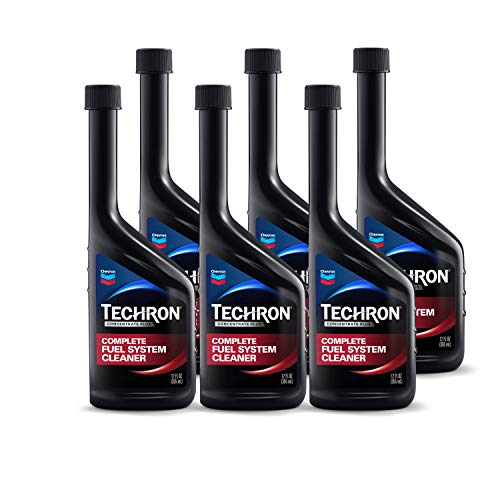
Chevron Techron Concentrate Plus Fuel System Cleaner
A widely used over-the-counter fuel system cleaner commonly recommended for removing carbon and varnish deposits from injectors and intake valves on higher-mileage engines.

Red Line SI-1 Fuel System Cleaner
A concentrated fuel system cleaner often used by enthusiasts specifically for stronger deposit removal on engines that have gone a long time without any cleaner treatment.
Questions worth asking
How often should I use a fuel system cleaner on an older car?
Many manufacturers recommend treatment every 3,000 to 5,000 miles or so for ongoing maintenance, though a single stronger treatment can be worth trying first on a car that has never been treated to see if symptoms improve.
Can a fuel system cleaner fix a rough idle?
It can help if the rough idle is caused by deposit buildup on injectors or intake valves, but if the cause is a failing spark plug, coil, or sensor, a cleaner will not resolve it.
Do direct-injection engines need fuel system cleaner more than older port-injected engines?
Many mechanics consider direct-injection engines more prone to intake valve carbon buildup specifically because fuel no longer washes over the valves the way it does in port injection, so some cleaners and separate intake valve cleaning services target that issue specifically.
Is it safe to use fuel system cleaner in every tank of gas?
Occasional or periodic use as directed on the product label is generally considered safe, but using a concentrated cleaner far more often than recommended offers no extra benefit and is simply unnecessary expense.
Can fuel system cleaner improve gas mileage?
If reduced mileage was caused by deposit-related inefficiency, like disrupted injector spray patterns, cleaning those deposits away can modestly improve fuel economy, though it will not overcome mileage loss caused by unrelated mechanical issues.
Do fuel system cleaners work on diesel engines too?
Yes, dedicated diesel fuel system cleaners exist and address similar deposit and injector cleanliness issues specific to diesel fuel systems, though gasoline-specific cleaners are not interchangeable with diesel formulas.
Can I use fuel system cleaner in a car that has never had one before?
Yes, there is generally no issue starting fuel system cleaner use on an older vehicle for the first time, and in fact that first treatment on a car with years of accumulated deposits often shows the most noticeable improvement.
Does fuel system cleaner remove deposits from the fuel tank itself?
Most fuel system cleaners are formulated to clean injectors, intake valves, and combustion chambers rather than physically clean sediment from inside the fuel tank, which is a separate issue usually addressed by fuel filter replacement.
Will a fuel system cleaner trigger a check engine light?
No, a properly used fuel system cleaner should not trigger warning lights, and if anything, resolving deposit-related misfires or rough running could help clear certain existing codes related to those symptoms.
How long does it take to notice results after using a fuel system cleaner?
Many users report noticing changes within the tank the product was added to or shortly after, though deposit removal is a gradual chemical process, so a heavily deposited engine may need more than one treatment for full effect.
Is professional fuel injector cleaning better than an over-the-counter bottle?
Professional cleaning services, which sometimes run cleaner directly through the fuel system under pressure, can be more thorough for severe buildup, while over-the-counter bottles are a convenient, less expensive option for moderate, ongoing maintenance.
Can fuel system cleaner damage an older engine’s seals or gaskets?
Reputable, properly formulated fuel system cleaners used as directed are generally considered safe for seals and gaskets in both older and newer engines, though always following the product’s specific instructions and dosage matters.
Does the brand of fuel system cleaner really make a difference?
Yes to some degree, since the concentration and type of active detergent varies by product, and some independent testing has shown meaningful differences in actual deposit removal effectiveness between brands.
Can fuel system cleaner help with a car that hesitates on acceleration?
If the hesitation stems from disrupted injector spray pattern or intake deposits affecting airflow, a cleaner treatment can help, though hesitation caused by other issues like a failing fuel pump or sensor will not respond to a cleaner.
Is it worth using fuel system cleaner before a smog or emissions test?
It can modestly help if deposit buildup was contributing to incomplete combustion and higher emissions readings, though it is not a guaranteed fix for a vehicle with a more significant underlying mechanical or sensor issue.
Do older carbureted engines benefit from fuel system cleaners too?
Yes, carbureted engines can also accumulate varnish and gum deposits in the carburetor and fuel lines, and cleaners formulated for that system can help restore smoother running, though the mechanism differs somewhat from fuel-injected systems.
Can using fuel system cleaner regularly prevent future buildup?
Regular use alongside generally using quality, top-tier gasoline is a reasonable preventive strategy, since it addresses new deposit formation on an ongoing basis rather than only treating buildup after it has already accumulated.
Where this leaves you
Fuel system cleaners are not snake oil for an older engine, they genuinely remove the kind of carbon and varnish buildup that years of driving leave behind on injectors and intake valves. They just are not a substitute for real mechanical diagnosis, so the honest expectation is noticeable improvement for deposit-related rough running, and no improvement at all if the actual problem is a worn part.
Tony Russo
Tony trained as an automotive technician and spent years in service and parts retail before moving into writing. He focuses on garage tools, car care products and accessories from a hands-on maintenance perspective.


