Do Fuel Injector Cleaners Actually Restore Lost Engine Performance?
Fuel injector cleaners can restore some lost performance, but only when the problem is actually injector or intake deposit buildup, a real and fairly common issue, not a cure-all for performance problems with other causes like worn spark plugs, a dirty air filter, or mechanical wear. On an engine with genuine deposit buildup, a quality cleaner can noticeably smooth out a rough idle and improve throttle response; on an engine that is already clean or has an unrelated problem, it will not do much of anything.
What injector cleaner actually removes
Modern gasoline already contains some detergent, but over time carbon deposits can build up on injector tips, intake valves, especially on direct-injection engines that do not get fuel washing over the valves the way older port-injected engines did, and combustion chamber surfaces. Injector cleaner additives use stronger detergent concentrations, like PEA, to dissolve these deposits.
Why direct-injection engines are more prone to this problem
On a direct-injection engine, fuel sprays straight into the combustion chamber rather than over the intake valves, so the valves never get the cleaning rinse that port-injected engines benefit from. This lets carbon deposits accumulate there over tens of thousands of miles regardless of fuel quality, a known issue across many modern direct-injection engines.
What symptoms actually suggest deposit buildup rather than another cause
Rough idle, hesitation on acceleration, slightly reduced fuel economy, and a check engine light for a lean or misfire code are the classic signs, but all of these overlap heavily with worn spark plugs, a dirty air filter, or a failing coil, which is why injector cleaner alone sometimes does not fix the actual problem.
One bottle versus a professional cleaning service
An over-the-counter additive poured into the fuel tank is a mild, gradual treatment, while a professional injector cleaning service, where a shop runs a concentrated cleaning solution directly through the fuel system under pressure, is a stronger intervention usually reserved for more significant buildup a bottle treatment has not resolved.
Why cleaner won’t fix a mechanically failed injector
If an injector has a cracked seal, a stuck pintle, or electrical failure, no amount of chemical cleaning restores function, since the problem is mechanical or electrical, not a clog. In that case the injector needs to be tested and likely replaced.
Does using injector cleaner regularly prevent buildup from happening at all
Using a quality cleaner every few thousand miles, or using top-tier gasoline brands that already contain a stronger detergent package, is a reasonable preventive habit, especially for direct-injection engines, rather than waiting for symptoms to show up and treating the problem reactively.
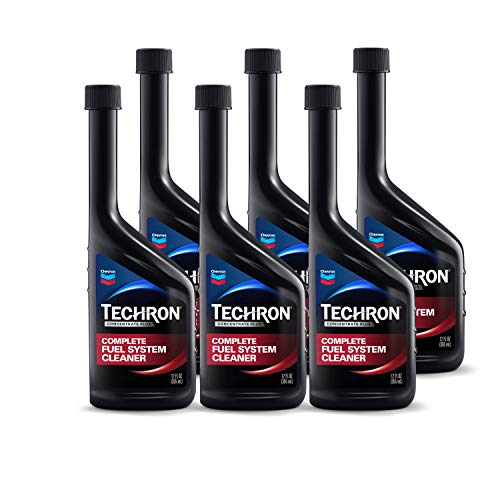
Chevron Techron Concentrate Plus Fuel System Cleaner
A long-standing fuel system additive widely used to address injector and intake valve deposit buildup in a single tank treatment.
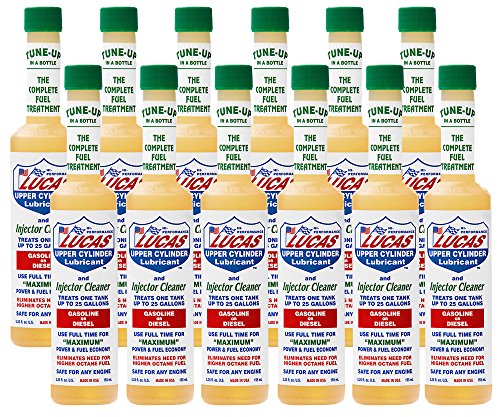
Lucas Oil Fuel Injector Cleaner
A fuel additive aimed at cleaning injectors and combustion chamber deposits as part of routine fuel system maintenance.
Questions worth asking
How often should I use fuel injector cleaner?
Every 3,000 to 5,000 miles as a maintenance habit, or as a targeted treatment when symptoms appear.
Can injector cleaner damage an engine?
Reputable, properly diluted products are safe when used as directed; the real risk is mainly with cheap, overly concentrated products used incorrectly.
Does injector cleaner improve gas mileage?
Only if deposits were actually reducing efficiency; on a clean engine, no measurable change should be expected.
Can injector cleaner fix a check engine light?
Only if the code was caused by a deposit-related lean or misfire condition; mechanical or electrical codes will not clear with a fuel additive.
Is injector cleaner necessary if I only use top-tier gasoline?
Less necessary, since top-tier fuels already include a stronger detergent package, though direct-injection engines can still benefit from occasional extra treatment.
Does injector cleaner work on diesel engines too?
Yes, diesel-specific injector cleaners exist and address similar deposit issues, though the formulations differ from gasoline additives.
How long does it take to notice a difference after using injector cleaner?
Often within one to two tanks of fuel if deposit buildup was actually the cause.
Can I mix injector cleaner into every fill-up?
Most products are designed for occasional use per the bottle’s instructions, not every single tank.
Does injector cleaner clean the whole fuel system or just the injectors?
Quality additives also address intake valve and combustion chamber deposits to some degree, not just the injector tips themselves.
Is a professional injector cleaning service worth the cost over a bottle treatment?
Worth it for more significant buildup or persistent symptoms a bottle treatment has not resolved, less necessary for routine maintenance.
Can old, stale gasoline cause problems that injector cleaner can fix?
Injector cleaner will not reverse fuel degradation itself, though it can help clean up deposits left behind after burning old fuel.
Does injector cleaner help with cold start issues?
Only if the rough cold start was caused by deposits affecting spray pattern; many cold start issues come from unrelated causes like a weak battery or worn spark plugs.
Are injector cleaners safe for high mileage engines?
Generally yes, though very old seals and gaskets in extremely high mileage engines can occasionally be sensitive to strong solvents, so moderate, reputable products are the safer choice.
Can injector cleaner unclog a fully blocked injector?
Unlikely for a severely clogged or mechanically stuck injector; those typically need direct cleaning or replacement.
Does turbocharged or direct-injection engine use change how often injector cleaner is needed?
Turbocharged direct-injection engines in particular tend to accumulate intake deposits faster, making periodic cleaner use more useful than on a naturally aspirated port-injected engine.
Can fuel injector cleaner help with a rough idle caused by a vacuum leak?
No, a vacuum leak is a mechanical air intake issue unrelated to deposits, so injector cleaner will not resolve it.
Does injector cleaner work the same way in older carbureted engines?
Carbureted engines do not have fuel injectors, so injector cleaner products are not applicable in the same way, though carburetor-specific cleaners address a similar deposit concept for that older fuel delivery system.
Can using premium fuel alone replace the need for injector cleaner additives?
Premium and top-tier fuels do include stronger detergent packages, which reduces but does not always fully eliminate the usefulness of occasional additional cleaner treatment, especially on direct-injection engines.
Is it normal for exhaust smell or color to change after using injector cleaner?
A temporary change in exhaust smell can occur as the cleaner burns off along with dislodged deposits, though this should resolve within a tank or two.
Can injector cleaner cause a car to fail an emissions test?
Reputable products used as directed should not cause an emissions failure, and some are specifically marketed as helping reduce emissions-related deposits rather than increasing them.
Does the type of driving, highway versus city, affect how quickly deposits build up?
Yes, frequent short trips and stop-and-go city driving tend to allow more deposit buildup than sustained highway driving, which runs the engine at a more consistent, often hotter temperature that helps burn off some residue.
Can injector cleaner be used in a motorcycle or small engine?
Many injector cleaner products are formulated broadly enough for small gasoline engines with fuel injection, though checking the product label for compatibility is worthwhile before use.
Is there a risk of using too much injector cleaner at once?
Using more than the recommended dose will not clean faster and can be unnecessary or occasionally counterproductive, so following the bottle’s ratio to fuel volume is the safer approach.
Does injector cleaner expire or lose effectiveness over time in storage?
Like most fuel additives, it has a shelf life and can degrade somewhat if stored for years, though a bottle used within a reasonable time of purchase should perform as intended.
Can a professional fuel system cleaning service also clean the throttle body?
Many shop services include a throttle body cleaning as part of the same visit, since throttle body deposits are a related but separate buildup point from the injectors themselves.
Does hybrid vehicle use change how often injector cleaner is needed?
Hybrid engines that shut off frequently in stop-and-go traffic can see patterns of deposit buildup similar to other direct-injection or short-trip-heavy vehicles, making periodic cleaner use a reasonable habit.
Our take
Injector cleaner earns its reputation honestly on the specific problem it is built for, carbon and deposit buildup, but it gets credited for fixing things it has nothing to do with. If a rough idle or hesitation turns out to be a worn spark plug or a dirty air filter, no amount of cleaner in the tank will touch it.
Tony Russo
Tony trained as an automotive technician and spent years in service and parts retail before moving into writing. He focuses on garage tools, car care products and accessories from a hands-on maintenance perspective.