Do Electric Can Openers Handle All Can Sizes?
No, most electric can openers have a practical range they handle well, typically standard cylindrical cans from small tuna tins up to large family-size soup or coffee cans, but they struggle with cans that are unusually tall, oddly shaped, dented, or have a rim sitting too close to a seam or label ridge. The motorized cutting wheel needs a continuous, even rim to grip and roll around, so anything breaking that geometry can cause it to slip or stall partway through.
How the motorized mechanism actually works
A geared wheel clamps onto the can’s rim while a cutting wheel rolls around it as the motor rotates the can itself, a different physical process than a manual opener’s hand-cranked pressure, and one that depends on continuous, even contact to function smoothly.
Where size genuinely becomes a problem
Extra-tall cans, like large tomato or juice cans, sometimes don’t fit under a particular opener model’s arm clearance, and very small cans can occasionally fail to make full, stable contact with the gripping wheel in the first place.
Why dents and uneven rims cause more failures than size
The cutting wheel needs an uninterrupted, round track to follow. A dent interrupts that path, and the mechanism can slip off, jam, or leave a section of the lid uncut, which is a far more common complaint than size alone.
Odd shapes beyond the standard cylinder
Some canned hams, tapered cans, and certain pull-tab designs with a recessed lid weren’t built to be opened by any can opener in the first place, and forcing an electric opener onto them risks damaging its internal gears.
What to check before buying if can size variety matters
Product specs that list a maximum can height and the clearance under the gripping arm are the most reliable way to judge whether a given model will realistically handle the full range of cans a household actually buys.

Hamilton Beach Smooth Touch Can Opener
A widely sold electric opener with adjustable arm clearance built to handle most standard can heights and widths.
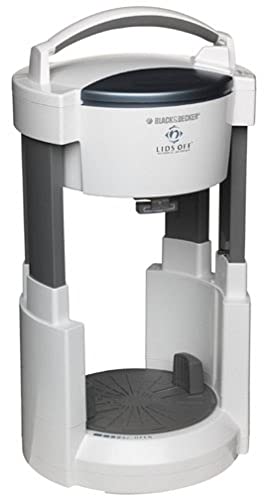
Black+Decker Lids Off Hands-Free Can Opener
An automatic opener that clamps onto the rim and cuts without manual cranking, suited to typical cylindrical cans.
Frequently asked questions
Can an electric can opener handle extra-large restaurant-size cans?
Many standard home models struggle with oversized restaurant or bulk cans due to limited arm clearance and gripping wheel reach, so checking the specific maximum can height listed for a model matters before relying on it for bulk cans.
Why does my electric can opener slip off a dented can?
A dent interrupts the smooth, continuous rim the cutting wheel needs to follow, causing the mechanism to lose its grip or track unevenly, which often leaves an incomplete cut or causes the opener to stop mid-can.
Do electric can openers work on pull-tab cans?
Pull-tab cans generally don’t need a can opener at all, and most electric openers aren’t designed to engage with a recessed pull-tab lid the way they grip a standard rim.
Is there a minimum can size an electric opener needs to work properly?
Very small cans can sometimes struggle to make full contact with the gripping wheel, so extremely small or narrow cans occasionally need to be opened manually if an electric opener can’t get a stable grip.
Can electric can openers open pet food cans the same way as food cans?
Yes, standard pet food cans are usually the same basic cylindrical shape as many human food cans, so a typical electric opener handles them the same way as long as the size falls within its normal range.
Why do some tall cans not fit under the opener’s arm?
The gripping arm on many models has a fixed maximum clearance height, and cans taller than that simply can’t be positioned correctly underneath it for the cutting wheel to engage the rim.
Does rust on a can’s rim cause the opener to fail?
Yes, rust can create an uneven or flaky surface on the rim that disrupts the cutting wheel’s grip, similar to the problem a dent causes, and can also leave jagged or incomplete cuts.
Can an electric can opener damage the can’s contents while cutting?
It’s uncommon for the mechanism itself to damage contents, since it only cuts along the rim, though metal shavings from a worn cutting wheel can occasionally fall into the can if it isn’t cleaned regularly.
Why does the opener sometimes leave a small uncut section on the rim?
This usually happens when the can’s rim isn’t perfectly round or has a slight irregularity, causing the cutting wheel to lose contact for a brief stretch before catching again.
Is it normal for an electric can opener to struggle with glass jar lids?
Yes, most electric can openers are designed specifically for metal can rims and are not built to engage with a flat metal jar lid the same way, so they typically aren’t effective on jars at all.
Can you manually finish a cut the electric opener couldn’t complete?
Yes, using a manual can opener or a knife carefully to finish an incomplete cut is a reasonable workaround when the electric opener stalls partway through on a difficult can.
Do electric can openers need regular cleaning to keep working on all can sizes?
Yes, food residue and metal shavings can build up on the cutting wheel and gears over time, which reduces grip and cutting performance even on cans that would otherwise open without issue.
Why does the cutting wheel eventually fail to grip even normal cans?
The cutting wheel wears down gradually with repeated use, and once it becomes dull or worn smooth, it loses the bite needed to grip and cut cleanly even on cans with a perfectly normal rim.
Is a cordless electric can opener less powerful than a corded one?
Battery-powered models can have slightly less consistent torque than corded ones, especially as the battery runs low, which can make them more prone to struggling on tougher or larger cans.
Can an electric can opener handle cans with paper labels still on?
Yes, most openers cut along the rim beneath the label and aren’t affected by paper labels, though very thick or glued label material right at the rim can occasionally interfere with the gripping wheel’s contact.
Why do some reviewers say their electric opener only works on specific brands of cans?
Rim thickness and profile vary slightly between can manufacturers, and some openers are tuned more precisely for a narrower range of rim dimensions, which can make certain brands of cans open more reliably than others on the same machine.
Does the opener’s grip strength setting affect which can sizes it can handle?
Models with adjustable tension or grip settings can accommodate a slightly wider range of rim thicknesses and can conditions, which helps with borderline cases like dented or oddly seamed cans that a fixed-grip opener might struggle with.
Can a dull cutting wheel be sharpened instead of replacing the whole opener?
Most consumer electric can openers use an inexpensive cutting wheel that isn’t designed to be resharpened, so once it’s worn down, replacing the whole unit or, on some models, just the cutting wheel assembly, is the practical option.
Is there a size cutoff where even high-end electric openers give up?
Yes, extremely tall commercial or catering-size cans typically exceed the arm clearance of even premium home electric openers, which are generally designed around standard retail can sizes rather than bulk food-service packaging.
Does running an electric can opener on a nearly empty battery affect which cans it can handle?
Yes, reduced torque from a low battery can cause a cordless opener to stall on thicker or larger cans it would normally handle without issue, so keeping a battery-powered model charged matters more for can-size versatility than it might seem.
Final word
An electric can opener covers the vast majority of everyday cans without issue, but anyone who regularly deals with oversized, dented, or oddly shaped cans should keep a basic manual opener as a backup rather than assume the motor will handle everything thrown at it.
Dana Whitfield
Dana spent eight years buying and merchandising for a regional kitchenware retailer before moving into editorial work. She has handled thousands of SKUs across cookware, small appliances and kitchen organization, and focuses on the practical differences that matter once a product is actually in daily use.