Can Openers That Won’t Fight You Every Time
The OXO Good Grips Smooth Edge cuts the side seam so no sharp rim is left behind. Owners who prefer a traditional top cutter reach for the EZ-DUZ-IT Deluxe. Anyone with limited hand strength gets the most use from the Hamilton Beach Smooth Touch.
Most kitchens open a tin several times a week without thinking about it, until the wheel slips or the lid edge draws blood. The OXO Good Grips Smooth Edge solves both problems by cutting below the rim. Traditionalists still reach for the EZ-DUZ-IT Deluxe, and anyone with arthritis or weak grip does better with the Hamilton Beach Smooth Touch.
Openers look interchangeable in a drawer but fail in specific, predictable ways: a gear that stops biting the rim, a knob too small to turn comfortably, or a mechanism that traps food and rusts. We compared cutting style, edge sharpness, turning effort and dishwasher tolerance across seven current models, then weighed those against what owners report after months of daily use.
What we recommend

OXO Good Grips Smooth Edge Can Opener
Cutting happens at the side seam instead of the top, so the lid separates with a rounded edge instead of a blade-sharp one. The blade never touches the food itself, which keeps the mechanism cleaner between washes. Owners frequently mention the oversized cushioned handles as the reason they stopped buying cheaper openers.
Pros
- Leaves no sharp edge on lid or can
- Blade stays out of the food
- Comfortable cushioned handles
Cons
- Side cutting takes a moment to learn
- Hand washing is recommended over the dishwasher

EZ-DUZ-IT Deluxe Can Opener
Heavy gauge carbon steel gearing bites the rim and holds it, which is rare among modern stamped-metal openers. Buyers often pick this one up after two or three cheaper openers have already failed. The cut is traditional top-style, so the lid keeps a sharp edge once removed.
Pros
- Extremely durable construction
- Gears bite without slipping
- Smooth turning action
Cons
- Leaves a sharp lid edge
- Carbon steel needs drying to avoid rust

Hamilton Beach Smooth Touch Electric Can Opener 76606ZA
A single push starts the cut, which matters for anyone with arthritis, reduced grip strength or a large volume of tins to get through. The side-cut mechanism keeps the lid edge smooth and the blade away from the contents. Its cutting assembly detaches for washing separately from the housing.
Pros
- No hand strength or turning required
- Smooth edge with no sharp rim
- Cutting assembly lifts out for washing
Cons
- Takes counter space and a socket
- More parts that can eventually fail

Kuhn Rikon Auto Safety Master Opener
A locking clamp grips the can and works its own way around it, so nothing needs to be held steady by hand. Like the OXO, it cuts the seam for a rounded edge, and a built-in lid lifter keeps fingers off the metal. According to the listing, it also works on bottle caps and some jar lids.
Pros
- Locks onto the can so it stays put
- Lid lifter avoids touching metal
- Doubles as a bottle opener
Cons
- Bulkier than a simple manual opener
- Costs more than most manual models

Cuisinart CCO-50N Deluxe Electric Can Opener
A magnetic lid holder lifts the cut lid clear instead of letting it drop into the food, and a knife sharpener is built into the side housing. Stainless steel wipes down quickly and stays presentable on a countertop. Because it cuts the top rather than the seam, the removed lid keeps a sharp edge.
Pros
- Magnet stops the lid falling into the tin
- Stainless housing wipes clean
- Knife sharpener built into the side
Cons
- Top cut leaves a sharp lid edge
- Permanent counter footprint

KitchenAid Classic Multifunction Can Opener
One handle covers a can opener, a bottle opener and a jar lid gripper, which suits drawers that are already short on space. Stainless steel gears turn with a soft-grip handle that does not dig into the palm. Very large catering-size tins are the one area where owners report it struggling.
Pros
- Three tools in one drawer space
- Comfortable soft grip handle
- Stainless gears resist rust
Cons
- Struggles with very large tins
- Top cut leaves a sharp edge
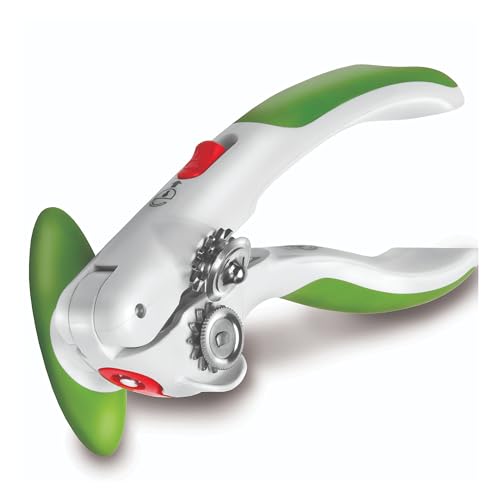
Zyliss Lock N’ Lift Can Opener
A locking clamp fastens to the rim, so the opener stays in position without a constant squeeze on the handles. A magnetic lifter then pulls the cut lid free of the tin. Among lower-cost openers, this one pairs the lowest price with genuinely useful design touches.
Pros
- Locks on so you do not squeeze constantly
- Magnetic lifter keeps fingers clear
- Dishwasher safe
Cons
- Top cut leaves a sharp lid edge
- Lighter build than heavy steel openers
The lineup, side by side
| # | Model | Cut type | Best for | Score | Price |
|---|---|---|---|---|---|
| 1 | OXO Good Grips Smooth Edge Can Opener | Side cut, smooth edge | Best overall | 9.4 | Check price |
| 2 | EZ-DUZ-IT Deluxe Can Opener | Heavy gauge carbon steel | Best traditional manual | 9.2 | Check price |
| 3 | Hamilton Beach Smooth Touch Electric Can Opener 76606ZA | Countertop electric | Best electric | 9.0 | Check price |
| 4 | Kuhn Rikon Auto Safety Master Opener | Side cut, sealed safe edge | Best for safety | 8.8 | Check price |
| 5 | Cuisinart CCO-50N Deluxe Electric Can Opener | Countertop electric | Best electric with extras | 8.6 | Check price |
| 6 | KitchenAid Classic Multifunction Can Opener | Can, bottle and jar opener | Best multi tool | 8.3 | Check price |
| 7 | Zyliss Lock N’ Lift Can Opener | Locking clamp | Best budget | 8.0 | Check price |
What matters most
What to look for in a can opener Turning effort, gear grip and edge safety separate a good opener from one that gets replaced within a year. Cushioned handles and a large turning knob matter more than looks. Heavy gauge steel gears bite the rim and stay aligned far longer than thin stamped metal. Whether the wheel touches food directly also decides how easy the opener is to keep clean.
Side cut versus top cut A traditional opener cuts through the top of the lid, leaving a sharp circular edge on both lid and can. Side cutting works on the seam below the rim instead, so the lid comes away smooth and can even double as a cover. Side cutting also keeps the blade off the food, which is easier to rinse clean. Most people need only a can or two to get used to positioning it.
Manual versus electric for weak grip or arthritis Manual openers cost less, need no outlet and cannot break down electrically. Electric models matter when the turning motion itself is the barrier, not the opener’s quality, which is common with arthritis or reduced hand strength. Opening several tins a day makes an electric opener a real convenience rather than a luxury. Opening one a week, a well made manual opener will simply outlast several electric ones.
Cleaning, rust and getting years out of one opener Food residue collects on the cutting wheel, and an opener that cannot be cleaned there eventually rusts and turns unhygienic. Side cutting designs avoid most of this because the blade never touches the contents. Dishwasher tolerance also varies by material: some carbon steel openers rust in a dishwasher and need hand washing and drying instead. Drying an opener immediately after washing is the single habit that extends its life the most.
Frequently asked questions
What is a smooth edge can opener?
One that cuts the side seam below the rim rather than through the lid, so neither the lid nor the can is left sharp. The lid lifts off cleanly enough to reuse as a cover.
Are electric can openers worth it?
For arthritis, weak grip or a lot of tins to open, yes, because the turning motion disappears entirely. For occasional use, a manual opener costs less, takes no counter space and typically lasts longer.
Why does my can opener slip off the can?
Usually worn or thin gears that no longer bite the rim properly, or incorrect starting position. Heavier gauge openers with well cut gears hold position far better, and locking mechanisms remove the problem entirely.
Can can openers go in the dishwasher?
Some can, some should not. Stainless steel usually tolerates it, while carbon steel rusts and is better hand washed and dried. Check the specific product’s care guidance before assuming either way.
How do I clean the cutting wheel?
A small brush under hot soapy water works around the wheel to clear trapped residue, followed by immediate drying. Side cutting openers need this less often since the blade never touches the contents.
Which can opener is best for arthritis?
An electric model removes the turning effort completely. Among manual designs, a locking opener like the Zyliss or Kuhn Rikon avoids the constant squeezing that causes most of the discomfort.
Do smooth edge openers work on all cans?
They handle standard seamed tins, which covers nearly everything on a grocery shelf. Very large catering tins and unusual shapes can be more difficult, and pull tab cans need no opener at all.
How long should a can opener last?
A well made manual opener that gets dried after washing can run for many years, and heavy steel models often outlast the kitchen they were bought for. Thin stamped openers typically fail within a year or two.
Manual or electric can opener, which opens cans faster?
A good manual opener is usually faster once you know the motion, since there is no waiting for a motor. Electric wins on convenience rather than raw speed, especially across multiple tins in a row.
Do can openers need sharpening?
No, the cutting wheel works by piercing and rolling rather than slicing like a knife. A wheel that stops cutting cleanly is usually worn or bent and needs replacing, not sharpening.
Final word
The OXO Good Grips Smooth Edge is the sensible default for most kitchens, cutting the seam so nothing comes away sharp and keeping the blade clear of the food. Anyone who wants the traditional action and a tool built to outlast a decade should look at the EZ-DUZ-IT Deluxe instead. If turning a manual opener is painful, skip that category entirely and choose the Hamilton Beach Smooth Touch.
Dana Whitfield
Dana spent eight years buying and merchandising for a regional kitchenware retailer before moving into editorial work. She has handled thousands of SKUs across cookware, small appliances and kitchen organization, and focuses on the practical differences that matter once a product is actually in daily use.
You might also need
Rice Cookers That Get the Texture Right Every Time
Washer Dryer Combos Save Space, but Cost You Dry Time
