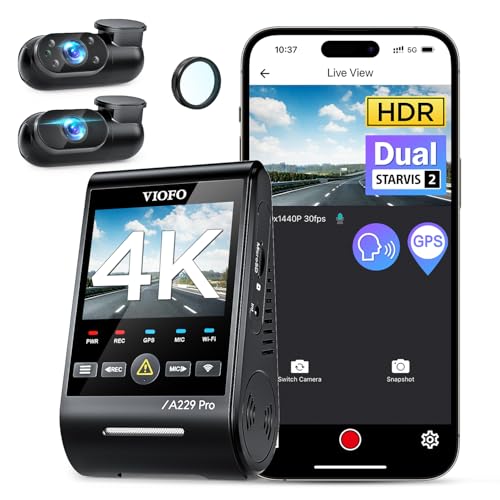
Do Dash Cams Actually Help With Insurance Claims After an Accident?
Yes, in most cases a clear dash cam recording genuinely helps an insurance claim, mainly by removing ambiguity about who did what in the moments before a collision, which is often exactly what insurers and other drivers dispute. It is not a guaranteed win in every case, since footage can be inconclusive, missing a key angle, or simply unhelpful if it does not clearly show fault either way, but a usable recording is one of the strongest pieces of evidence a driver can bring to a disputed claim.
Why insurers actually give weight to dash cam footage
Insurance claims adjusters routinely deal with conflicting driver accounts of the same accident, and dash cam footage replaces that conflicting testimony with an objective recording of vehicle positions, speeds, and signals in the moments before impact. This is why many insurers now explicitly ask whether a dash cam was running after an accident, and some even offer a modest discount for having one installed.
The kinds of disputes footage settles most clearly
Rear end collisions, disputed right of way at intersections, and staged or exaggerated accident claims are the categories where dash cam footage tends to make the biggest difference, since these are exactly the situations where two drivers commonly give contradictory accounts and footage can show, often within seconds, which version matches what actually happened.
Where dash cam footage does not help as much as people expect
A dash cam pointed only forward captures nothing about a side or rear impact, and some accidents happen fast enough or at an angle the camera was not positioned to capture clearly. Footage that is blurry, poorly timed, or missing the critical seconds before impact because the camera was not continuously recording provides little real benefit regardless of having a camera installed at all.
Why continuous loop recording matters more than most buyers realize
A dash cam that only records when triggered by a detected impact can miss the lead up to a collision if the trigger activates late or not at all, while a continuously looping recorder captures everything and simply overwrites older footage, ensuring the moments just before an accident are actually on file rather than missing.
How footage interacts with fault laws that vary by location
Dash cam footage is evidence, not a legal verdict, and how much weight it carries can depend on local fault determination rules, which vary between no fault states, at fault states, and jurisdictions with comparative negligence standards. Clear footage still generally helps regardless of the specific rules, but it is not an automatic override of how fault gets assigned in every jurisdiction.
What actually happens to the footage after an incident
Most insurers will accept a video file, a cloud link, or a copy of the memory card as part of a claim, and it is generally worth saving the footage immediately after an incident since continuous loop cameras will eventually overwrite it, sometimes within hours or days depending on card size and recording settings.

Garmin Dash Cam Mini 2
A small, discreet forward facing dash cam with voice control and automatic cloud backup options for key footage after a detected incident.

Vantrue N4 3-Channel Dash Cam
A three camera system covering front, interior, and rear views at once, aimed at drivers who want coverage beyond just a forward facing angle for disputed accident claims.
Frequently asked questions
Will an insurance company lower my premium just for having a dash cam?
Some insurers offer a small discount for having a dash cam installed, though it varies by company and is usually modest rather than a significant rate reduction, so it should not be the main reason to buy one.
Can dash cam footage be used against me if it shows I was at fault?
Yes, footage is objective regardless of which driver it favors, so if it clearly shows you at fault, it can work against your claim just as easily as it can support it, which is part of why dash cam footage carries real weight with insurers in the first place.
Does a rear-view dash camera matter as much as a front facing one?
For determining fault in rear end collisions specifically, a rear facing camera can matter just as much as a front one, since being rear ended is one of the more common disputed scenarios a forward only camera cannot capture at all.
How long does typical dash cam footage stay saved before being overwritten?
This depends heavily on memory card size and recording quality settings, but many continuous loop dash cams overwrite footage within a day to a few days unless a clip is specifically locked or saved after an incident.
Is dash cam footage admissible in court, not just for insurance claims?
Yes, dash cam footage can be submitted as evidence in court proceedings related to a traffic accident, subject to the same general evidentiary standards as any other recorded video, though specific admissibility rules vary by jurisdiction.
Do police accept dash cam footage at the scene of an accident?
Most police officers will accept dash cam footage as supporting evidence when documenting an accident scene, though it supplements rather than replaces their own accident report and witness statements.
Can a dash cam help with a hit-and-run case?
Yes, this is one of the strongest use cases, since a dash cam can capture a fleeing vehicle’s license plate, color, and direction even if the driver never stops, which is often the only lead available in a hit-and-run otherwise.
Does parking mode recording actually catch anything useful?
Parking mode recording, which activates on detected motion or impact while the car is parked and off, has genuinely helped catch hit-and-run damage and vandalism that would otherwise go completely unexplained, though it depends on the camera’s sensitivity settings and battery or hardwire setup.
What happens if the dash cam was running but the footage is too blurry to tell much?
Blurry or low resolution footage still sometimes shows enough general information, like vehicle positions or a traffic signal state, to be somewhat useful, but it will not resolve disputes that depend on fine detail like a license plate or precise speed.
Can an insurance company request dash cam footage even if I do not want to share it?
Insurers generally cannot force you to hand over footage you choose not to share, but refusing to provide evidence that could support your own claim is usually counterproductive, and the other driver’s insurer may separately request it as part of their own investigation.
Does a dash cam help with a staged accident or insurance fraud attempt?
Yes, dash cam footage has specifically exposed staged accidents, including brake-check setups and pedestrians stepping deliberately in front of slow moving cars, which is one of the reasons some insurers view dash cam ownership favorably.
Do all dash cams record continuously, or do some only activate on impact?
No, some dash cams record continuously in a loop and overwrite old footage automatically, while others only start recording when an impact sensor triggers them, and the second type can occasionally miss the lead up to a collision if the trigger activates late.
Is it worth getting a dash cam with GPS logging for insurance purposes?
GPS logging adds a timestamped speed and location record to the footage, which can resolve disputes about how fast a vehicle was traveling, making it a genuinely useful addition specifically for insurance and legal purposes, not just a novelty feature.
Can dash cam footage be edited or disputed as unreliable by the other side?
Footage can be challenged on authenticity or context grounds like any other evidence, but a continuous, unedited recording directly from the device’s original file is generally difficult to dispute as unreliable compared to, say, a verbal account alone.
Our take
A dash cam does not guarantee a favorable outcome, but it replaces guesswork and conflicting accounts with an actual record, which is usually the single biggest advantage one driver can have over another in a disputed claim. The value drops fast with a camera that is not actually recording continuously or pointed where the accident happens.
Tony Russo
Tony trained as an automotive technician and spent years in service and parts retail before moving into writing. He focuses on garage tools, car care products and accessories from a hands-on maintenance perspective.