Is Canon’s 50mm f/1.8 STM Still the Prime to Buy?
The Canon RF 50mm f/1.8 STM leads for EOS R shooters who want a fast, sharp, affordable prime. The Canon EF 50mm f/1.8 STM matches it on DSLR and adapted bodies. Step up to the Canon RF 50mm f/1.4 VCM for weather sealing and an extra stop of light when budget allows it.
Most EOS R owners shopping their first fast prime should buy the Canon RF 50mm f/1.8 STM. It pairs an f/1.8 aperture with sharpness that beats its size and cost. Canon’s EF 50mm f/1.8 STM covers the same ground on DSLR bodies, and the RF 50mm f/1.4 VCM or Viltrox AF 50mm f/1.8 step in when build quality or an extra stop matters more than price.
Choosing among seven 50mm-class lenses gets confusing because specs alone hide real differences in autofocus feel and corner sharpness. We compared aperture range, focus motor type, corner performance wide open, build materials and minimum focus distance across each listing. Owner feedback on focus hunting in low light and mount durability filled in what spec sheets leave out.
What we recommend

Canon RF 50mm f/1.8 STM
EOS R shooters moving past a kit zoom find this lens punches above its size. Sharpness reaches a strong level from around f/2.8, and the f/1.8 aperture separates subjects from backgrounds with ease. At roughly 160 grams it disappears in a bag, so owners report carrying it daily instead of leaving it behind.
Pros
- Sharp results from f/2.8 onward
- Compact build under 160 grams
- Lowest cost fast prime on RF mount
Cons
- Soft corners and vignetting wide open
- STM motor hunts in dim light

Canon EF 50mm f/1.8 STM
DSLR owners get the same optical formula in EF mount form. A metal mount replaced the plastic ring found on the older f/1.8 II, and a seven-blade aperture keeps blur rounder. Owners describe it as the natural first prime for any EF body, and it adapts cleanly to EOS R cameras when needed.
Pros
- Metal mount improves durability
- Matches the RF version optically
- Adapts to EOS R bodies without quality loss
Cons
- Same soft corners wide open
- Needs an adapter on mirrorless bodies

Canon RF 50mm f/1.4 VCM
Hybrid shooters who need more than f/1.8 look here first. A voice coil motor drives quick, near silent autofocus, and weather sealing protects the barrel in damp conditions. The clickable control ring adds a manual exposure dial for video work, though the lens weighs over three times as much as the f/1.8.
Pros
- Brighter f/1.4 aperture
- Weather sealed construction
- Control ring suits video exposure work
Cons
- Costs far more than the f/1.8 version
- Noticeably heavier and larger
Viltrox AF 50mm f/1.8
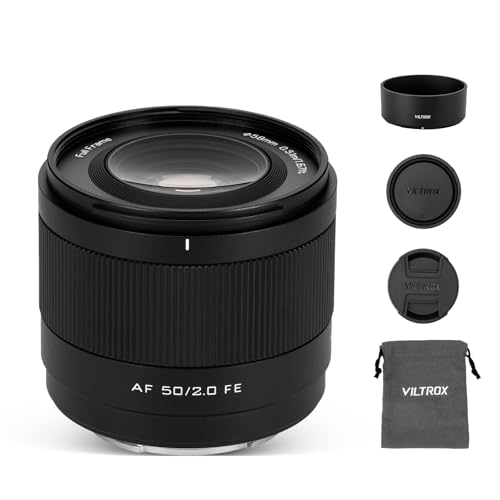
Viltrox built an RF mount rival with a metal barrel Canon’s own f/1.8 skips. A stepping motor keeps focus quiet, and a customizable control ring adds manual control absent on the Canon. Based on specifications, image quality tracks close to Canon’s lens while the exterior feels sturdier.
Pros
- Metal barrel construction
- Customizable control ring included
- Competitive sharpness for the class
Cons
- Third-party firmware support varies
- Slightly heavier than Canon’s lens

Canon RF 35mm f/1.8 Macro IS STM
Photographers who want one lens for interiors, street scenes and close-up detail land here instead. Built-in image stabilization steadies handheld shots, and half life-size macro focusing captures small subjects the 50mm cannot reach. Framing sits wider than a 50mm, trading tight portrait compression for everyday flexibility.
Pros
- Built-in optical stabilization
- Close focus to half life-size
- Wider field suits interiors and street work
Cons
- Wider angle flatters portraits less
- Sits above the 50mm f/1.8 in cost
Nikon Z 50mm f/1.8 S
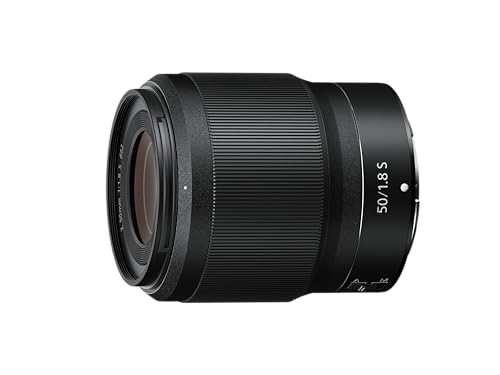
Nikon shows what a premium standard prime looks like on a rival mount. S-line optics stay sharp corner to corner even wide open, and a weather-resistant shell adds durability Canon’s budget lens skips. This lens costs several times more than Canon’s f/1.8 and only fits Z mount bodies, so it mainly illustrates the ceiling above the nifty fifty.
Pros
- Excellent edge-to-edge sharpness
- Weather-resistant build
- Confident, quiet autofocus
Cons
- Fits Nikon Z bodies only
- Costs several times more than Canon’s lens

Sony FE 50mm f/1.8
Sony’s own budget prime targets the same buyer on E mount bodies. A DC motor drives autofocus that owners report as slower and noisier than Canon’s STM system. Aperture range and overall cost sit close to the Canon, making this mainly proof that Canon holds a focus-speed edge in the entry class.
Pros
- Low-cost fast prime for Sony
- Compact and light body
- Seven-blade aperture rounds blur
Cons
- Slower, noisier autofocus
- Fits Sony E mount only
How to choose
What a 50mm f/1.8 prime actually does for you A 50mm lens on a full-frame body frames scenes close to natural human sight. Wide apertures near f/1.8 pull in far more light than a kit zoom manages at any focal length. That extra light separates a subject from its background with a soft blur kit lenses cannot produce. Anyone who shoots portraits, indoor events or low-light scenes gains the most from switching to a prime like this.
RF or EF: matching the lens to your camera mount Camera mount decides the choice more than image quality does, since both versions share the same optical formula. Canon RF 50mm f/1.8 STM fits EOS R mirrorless bodies directly. Canon EF 50mm f/1.8 STM suits EF mount DSLRs, and it adapts to EOS R cameras with no quality loss. Buyers planning a system switch soon should confirm adapter compatibility before committing to the EF version.
When to skip the f/1.8 for something sturdier Professionals and hybrid shooters sometimes need more than an entry prime offers. Canon RF 50mm f/1.4 VCM adds a stop of light, weather sealing and a control ring, at several times the cost and weight. Viltrox AF 50mm f/1.8 splits the difference with a metal barrel and control ring near the f/1.8’s own footprint. Either upgrade path suits shooters who outgrow plastic construction faster than they outgrow the focal length.
Using a 50mm lens on APS-C, for video or as a second focal length APS-C bodies such as the R10 or R50 turn a 50mm lens into roughly an 80mm equivalent field of view. That crop suits tight headshots more than group portraits or interiors. Canon RF 35mm f/1.8 Macro IS STM offers a wider, stabilized alternative for interiors, street scenes and close-up detail. STM focus motors stay quiet enough for casual video, though none of these primes include stabilization except the 35mm macro.
Side by side
| # | Model | Mount | Best for | Score | Price |
|---|---|---|---|---|---|
| 1 | Canon RF 50mm f/1.8 STM | Canon RF | Best overall | 9.4 | Check price |
| 2 | Canon EF 50mm f/1.8 STM | Canon EF | Best for EF mount DSLR bodies | 9.1 | Check price |
| 3 | Canon RF 50mm f/1.4 VCM | Canon RF | Best step up for hybrid shooters | 8.9 | Check price |
| 4 | Viltrox AF 50mm f/1.8 | Canon RF | Best value third-party alternative | 8.6 | Check price |
| 5 | Canon RF 35mm f/1.8 Macro IS STM | Canon RF | Best for versatile everyday shooting | 8.4 | Check price |
| 6 | Nikon Z 50mm f/1.8 S | Nikon Z | Best rival system optics | 8.2 | Check price |
| 7 | Sony FE 50mm f/1.8 | Sony E | Best budget rival for Sony shooters | 8.0 | Check price |
Frequently asked questions
RF or EF 50mm f/1.8: which one should I buy?
Match the mount to your camera body, since optical quality is nearly identical. Choose the RF 50mm f/1.8 STM for an EOS R mirrorless camera. Pick the EF 50mm f/1.8 STM for an EF mount DSLR, and adapt it to an EOS R body later if you switch systems.
Is the Canon 50mm f/1.8 sharp enough for professional work?
Yes, once stopped down a little. Corners stay soft at f/1.8, but the center is sharp even wide open. From f/2.8 to f/5.6 the lens holds up for portraits, events and product shots, which is why many professionals keep one as a light backup prime.
Why does the Canon 50mm f/1.8 hunt for focus in low light?
Its gear-type STM motor prioritizes quiet operation over speed. In dim scenes it can rack back and forth before locking on. Adding light, switching to a single center focus point, or using a body with stronger low-light autofocus usually fixes the issue.
Does the 50mm f/1.8 work on Canon APS-C cameras?
It does. On an APS-C body like the R10, R7 or R50, the crop factor gives an effective field of view near 80mm. That tighter framing favors portraits over interiors, and you stand further back to fit a full scene.
What is the closest focusing distance on the Canon 50mm f/1.8?
Both the RF and EF versions focus down to about 0.3 metres. That distance handles tight head shots and larger product or food details well. For true half life-size macro work, the RF 35mm f/1.8 Macro focuses much closer.
Is the plastic barrel on the Canon 50mm f/1.8 a problem?
Current STM versions use a metal mount, unlike the older f/1.8 II which had a plastic one. The outer barrel stays lightweight plastic, so avoid rough handling. Day to day use holds up fine for most owners.
Should I buy the f/1.8 or save for the RF 50mm f/1.4?
Buy the f/1.8 when budget and weight matter most, since it delivers most of the image quality for a fraction of the cost. Save for the RF 50mm f/1.4 VCM only if you need the extra stop of light, weather sealing or faster autofocus for paid work.
Can the Canon 50mm f/1.8 handle video work?
Yes. The STM motor stays quiet enough that its focus noise rarely reaches a built-in microphone. The f/1.8 aperture also produces a shallow, filmic depth of field. Neither version includes stabilization, so a stabilized body or gimbal helps for handheld footage.
Which 50mm lens is best for portrait photographers on a budget?
The Canon RF or EF 50mm f/1.8 STM covers portraits well for the lowest outlay, thanks to its wide aperture and light weight. The Viltrox AF 50mm f/1.8 is a close second when a sturdier metal build matters more than saving a little extra.
How does the Viltrox 50mm f/1.8 compare to Canon’s own lens?
Viltrox adds a metal barrel and control ring Canon’s f/1.8 lacks, at a modest step up in weight. Based on specifications, sharpness runs close between the two. Canon’s version keeps native firmware support, while Viltrox appeals to owners who want sturdier build for a similar aperture and price class.
The bottom line
Canon’s RF 50mm f/1.8 STM stays the easiest fast prime to recommend for EOS R owners, turning kit-zoom snapshots into sharp, softly blurred images for very little weight or cost. The EF 50mm f/1.8 STM does the same job on DSLR and adapted bodies. Step up to the RF 50mm f/1.4 VCM or Viltrox AF 50mm f/1.8 only when weather sealing, an extra stop or sturdier build outweighs saving money and grams.
Marcus Chen
Marcus covered consumer electronics for enthusiast tech publications for six years before joining ChoiceCrest. He specializes in translating manufacturer spec sheets into plain-language buying advice, with a focus on audio, computing accessories and smart-home gear.