How to Choose a Z-Wave Hub for Your Smart Home
Aeotec Smart Home Hub suits most houses, carrying Z-Wave 700, Zigbee 3.0, Thread and Matter radios in one box. Hubitat Elevation C-8 runs every rule on the hardware, so an outage never stops motion lighting. Homey Pro adds infrared for older air conditioners and televisions.
Aeotec Smart Home Hub is the default pick for a mixed smart home. One box joins Z-Wave 700 sensors, Zigbee bulbs and Matter devices through the SmartThings app. Cloud dependence is the catch, since some routines stall when broadband drops. Hubitat Elevation C-8 avoids that by processing rules on the hub itself.
Series numbers, regional frequency locks and Matter support all change which devices a controller will accept. We compared published radio specs, antenna design, local rule engines and supported integration lists. Owner reports on pairing distance, firmware updates and app stability settled the close calls. Node ceilings mattered only for the larger installs.
The shortlist, ranked
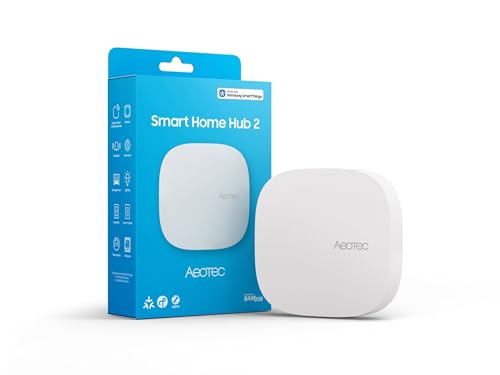
Aeotec Smart Home Hub
Built on the SmartThings platform, this hub joins Z-Wave 700 sensors, Zigbee 3.0 bulbs and Matter gear under one app. Wired Ethernet keeps inclusion steady in apartments where 2.4GHz traffic runs heavy. Parameter edits on Z-Wave devices happen in the separate Advanced Web App, not the phone app.
Pros
- One radio set covers Z-Wave, Zigbee, Thread and Matter
- SmartThings library lists thousands of supported models
- Ethernet link steadies device inclusion in busy buildings
Cons
- Several routine types still round-trip through the cloud
- Advanced Web App needed for Z-Wave parameter changes

Hubitat Elevation C-8
Every automation executes on the hub, so motion lighting still fires with the internet down. Two removable external antennas extend mesh reach beyond the internal aerials of older Elevation models. Rule Machine expresses conditional logic that simple trigger-and-action apps cannot.
Pros
- Automations survive a broadband outage
- Removable antennas improve reach across multiple floors
- Community drivers add support for unusual Z-Wave models
Cons
- Dashboard looks dated next to mainstream smart home apps
- Rule Machine takes real time to learn

Homey Pro (Early 2023)
One anodised aluminium puck carries Z-Wave Plus, Zigbee 3.0, Thread, Matter, Bluetooth LE, infrared and 433/868MHz radios. Infrared earns its place when older air conditioners or televisions belong in a scene. Flows run locally after pairing, with variables and logic cards for layered conditions.
Pros
- Infrared control reaches legacy air conditioners and televisions
- Flows execute on the device once pairing finishes
- App store adds branded integrations without writing code
Cons
- Sits at the premium end of the hub market
- Ethernet requires an optional adapter, not a built-in port

Zooz ZST39 800 Series Z-Wave Long Range S2 USB Stick
Plugged into a mini PC or Raspberry Pi, this stick becomes a full controller through Z-Wave JS. An 800 series chip enables Z-Wave Long Range, a point-to-point mode that reaches outbuildings a normal mesh cannot hold. You supply the host machine and the software stack.
Pros
- Long Range mode covers detached garages and driveway gates
- Firmware updates install through Z-Wave JS tooling
- No vendor account, cloud or subscription involved
Cons
- Requires a host computer running continuously
- Setup assumes comfort with Home Assistant configuration
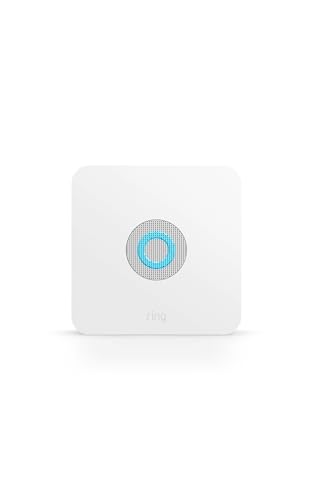
Ring Alarm Base Station (2nd Gen)
Z-Wave links Ring contact sensors, motion detectors and keypads to a 104 dB siren inside the panel. A rechargeable cell and cellular failover keep the system armed through power and broadband cuts. Third-party Z-Wave devices are restricted to a short approved list, so general automation stays out of scope.
Pros
- Battery and cellular backup keep the alarm armed
- Sensor pairing finishes in seconds inside the Ring app
- Optional monitoring plan adds professional dispatch
Cons
- Most third-party Z-Wave devices will not join
- No rule engine for lights, locks or thermostats
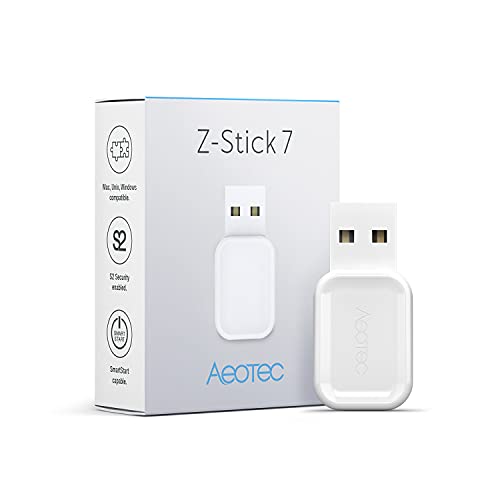
Aeotec Z-Stick 7 Plus
An internal cell lets this stick leave the host machine and include devices where they are installed. Back at the computer it uploads the new nodes to your controller software. Z-Wave 700 silicon pairs more reliably than older 500 series sticks, though Long Range is absent.
Pros
- Walk-around pairing helps with hardwired wall switches
- Works with Home Assistant, HomeSeer and Z-Wave JS
- Short enough for a rear USB port on a mini PC
Cons
- 700 series radio omits Z-Wave Long Range
- Older firmware needs a manual update utility

Fibaro Home Center 3 Lite
Installers who write Lua scenes are the intended audience, not people tapping preset toggles. Z-Wave 700 radios and an on-board engine keep logic running locally. Device support leans toward European brands, and one network tops out at 130 Z-Wave nodes.
Pros
- Lua scripting handles layered conditional logic
- Scenes keep running without an internet connection
- Web interface suits installers managing many rooms
Cons
- Device library is smaller than SmartThings or Hubitat
- 130 node ceiling trails full-size controllers
How to choose
What a Z-Wave hub actually does Z-Wave runs a low-power mesh on sub-gigahertz frequencies, separate from Wi-Fi. A hub holds the network key, assigns node IDs and passes commands to switches, locks and sensors. Mains-powered nodes repeat signals, so every smart plug you add strengthens the mesh. Battery sensors never repeat. That single rule explains why plug-heavy houses hold a steadier network than sensor-heavy ones.
Local rules vs cloud automations Cloud hubs send a trigger to a remote server before the light responds. Latency stays low on a good day, yet an ISP outage silences the routine completely. Hubitat and Homey execute rules on the hardware. Aeotec and Ring lean on their platforms instead. Renters with a handful of scenes rarely notice. Door locks, thermostats and security lighting are where local execution earns its keep.
How far does Z-Wave reach? Indoors a mesh beats raw radio power, because repeaters hop signals around walls and floors. Z-Wave Long Range works differently, talking point-to-point past the mesh to a gate, shed or detached garage. 800 series chips add that mode plus better receive sensitivity. External antennas, as on the C-8, often help more than a chip generation in houses with plaster or foil-backed insulation. Adding one repeating plug per floor remains the simplest fix of all.
Best Z-Wave hub for renters, large homes and Home Assistant Renters usually want plug-in sensors and a controller that resets cleanly at move-out, which points to Aeotec or Ring. Large homes do better with external antennas plus a repeating plug on every floor. Home Assistant users gain real control from a Zooz or Aeotec stick, since Z-Wave JS exposes parameters consumer apps hide. Buy a stick only if a small server already runs around the clock. Anyone unwilling to maintain that server should take the Hubitat instead.
How they compare
| # | Model | Protocols | Best for | Score | Price |
|---|---|---|---|---|---|
| 1 | Aeotec Smart Home Hub | Z-Wave 700, Zigbee 3.0, Thread, Matter | Best overall | 9.4 | Check price |
| 2 | Hubitat Elevation C-8 | Z-Wave 700 with Long Range, Zigbee 3.0 | Best for local control | 9.2 | Check price |
| 3 | Homey Pro (Early 2023) | Z-Wave Plus, Zigbee 3.0, Thread, Matter, BLE, infrared, 433/868MHz | Best for mixed-brand homes | 9.0 | Check price |
| 4 | Zooz ZST39 800 Series Z-Wave Long Range S2 USB Stick | Z-Wave 800 series with Long Range | Best value for Home Assistant | 8.8 | Check price |
| 5 | Ring Alarm Base Station (2nd Gen) | Z-Wave Plus for Ring sensors | Best for security-first homes | 8.6 | Check price |
| 6 | Aeotec Z-Stick 7 Plus | Z-Wave 700 series | Best budget controller | 8.3 | Check price |
| 7 | Fibaro Home Center 3 Lite | Z-Wave 700, Wi-Fi, Bluetooth | Best for scene scripting | 8.0 | Check price |
Questions worth asking
Do I need a hub for Z-Wave devices?
Yes. Z-Wave devices cannot talk to a phone directly, so a controller must hold the network key and route commands. A USB stick counts, provided a computer runs the controller software.
Which Z-Wave hub works with Home Assistant?
Zooz ZST39 and Aeotec Z-Stick 7 Plus plug straight into a Home Assistant machine and run through Z-Wave JS. Hubitat can bridge across too, though a stick gives more direct parameter access.
What is the difference between Z-Wave 700 and 800 series?
800 series silicon adds better receive sensitivity, lower battery drain and Z-Wave Long Range support. A 700 hub still joins 800 devices, and the reverse holds, since the protocol stays backward compatible.
Can a Z-Wave hub control Matter devices?
Some can. Aeotec Smart Home Hub and Homey Pro both act as Matter controllers alongside their Z-Wave radios. USB sticks handle Z-Wave only, so Matter gear needs a second controller.
How many devices can one Z-Wave network hold?
Protocol limits sit at 232 nodes. Practical ceilings arrive earlier, because hub processing power and routing depth matter more than the theoretical number. Fibaro Home Center 3 Lite caps at 130.
Is Hubitat better than SmartThings for Z-Wave?
For local reliability, yes. Rules stay on the Hubitat hub and survive outages. SmartThings wins on device library breadth and app polish, which suits anyone wanting setup done in one evening.
Will my Z-Wave devices keep working if I switch hubs?
They will, after re-pairing. Exclude each device from the old controller, then include it on the new one. Network keys do not transfer between different platforms.
Does Z-Wave interfere with Wi-Fi?
No. North American Z-Wave sits near 908MHz, far from the 2.4GHz band. Zigbee shares 2.4GHz with Wi-Fi and can struggle when nearby routers crowd the same channels.
Which Z-Wave hub suits a renter?
Aeotec Smart Home Hub and Ring Alarm both pair with plug-in sensors and reset cleanly for the next address. Neither needs hardwired switches, which landlords rarely allow.
Is Z-Wave Long Range worth it for a detached garage?
Usually, yes. Long Range talks straight to the controller instead of hopping through repeaters, which no plug can bridge across a driveway. Zooz ZST39 and the Hubitat C-8 both support it.
The verdict
Aeotec Smart Home Hub takes the default recommendation, because one box joins Z-Wave, Zigbee and Matter devices through an app most people can navigate. Pick Hubitat Elevation C-8 instead when outage-proof rules and external antennas outrank app polish. Households already running Home Assistant should skip full hubs and add the Zooz ZST39 stick.
Marcus Chen
Marcus covered consumer electronics for enthusiast tech publications for six years before joining ChoiceCrest. He specializes in translating manufacturer spec sheets into plain-language buying advice, with a focus on audio, computing accessories and smart-home gear.