Woodworking Machines Worth Making Room for in a Shop
DEWALT’s DWE7491RS table saw is the best overall machine for a home workshop handling sheet goods and rip cuts. The WEN 3921 band saw adds curved cuts and resawing that a table saw cannot do, and DEWALT’s DW735 planer dimensions rough lumber down to a consistent thickness.
DEWALT’s DWE7491RS table saw takes the top spot for a home shop that needs to break down sheet goods and make accurate rip cuts without a full cabinet saw’s footprint. The WEN 3921 band saw covers curved cuts and resawing that a table saw simply cannot make safely. DEWALT’s DW735 planer then takes rough lumber down to a consistent thickness before any of it reaches a saw or joiner.
A woodworking machine that looks capable in a product video can still struggle with a specific task, like resawing thick stock or cutting clean mortises, if it was not built for that job in the first place. We compared stated capacity, motor power, owner feedback on accuracy, and which specific shop task each machine actually handles well before narrowing this list to seven.
The shortlist, ranked
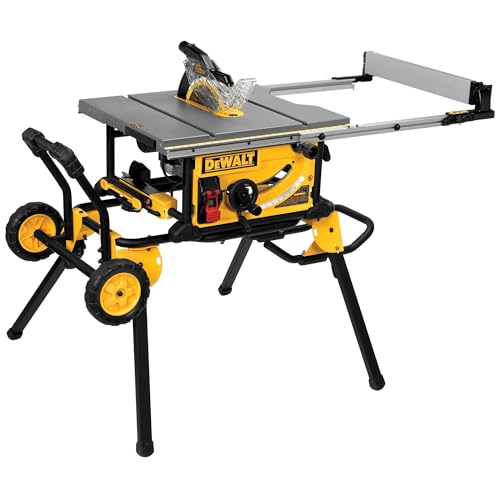
DEWALT DWE7491RS Table Saw
DEWALT built the DWE7491RS around a rack and pinion fence system that stays parallel to the blade without the drift common on cheaper fences. A 32 and a half inch rip capacity handles most sheet good cuts without a separate panel saw. Rolling stand compatibility makes it easier to move around a smaller shop than a stationary cabinet saw.
Pros
- Rack and pinion fence stays accurate without drift
- Rip capacity handles most sheet good cuts
- Rolling stand option suits a smaller shop
Cons
- Smaller table surface than a stationary cabinet saw
- Dust collection needs an added shop vacuum connection
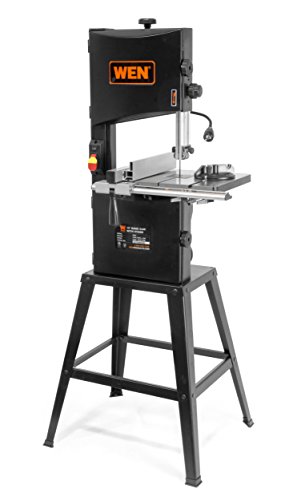
WEN 3921 10-inch Band Saw
WEN’s 3921 uses a 10 inch wheel size with enough throat capacity to resaw boards into thinner slices for veneer or bookmatched panels. A rack and pinion blade guide adjusts smoothly to match different stock thickness. The cast aluminum table tilts for angled cuts without a separate jig.
Pros
- Handles curved cuts a table saw cannot make
- Decent resaw capacity for a benchtop machine
- Tilting table adds angled cutting without a jig
Cons
- Motor is underpowered for very dense hardwoods
- Blade changes take longer than on a larger band saw
DEWALT DW735 Benchtop Planer
The DW735 runs a three knife cutter head that produces a smoother finish than typical two knife benchtop planers. A two speed gearbox lets a user switch between faster material removal and a finer finish pass. An extra wide 13 inch capacity handles most hardwood boards without ripping them down first.
Pros
- Three knife head leaves a smoother finish than most benchtop planers
- Two speed gearbox balances speed and finish quality
- 13 inch capacity covers most hardwood boards
Cons
- Heavier than a basic single speed benchtop planer
- Knife changes cost more than a disposable blade system

WEN MM250 Mortising Machine
WEN’s MM250 uses a hollow chisel bit to punch clean, square mortises that would take far longer to cut by hand with a chisel. An adjustable fence and depth stop keep repeated mortises consistent across multiple workpieces. It suits furniture and cabinet work that relies on mortise and tenon joinery rather than pocket screws.
Pros
- Cuts clean, square mortises much faster than hand chiseling
- Adjustable fence keeps repeated joints consistent
- Compact enough for a benchtop in a smaller shop
Cons
- Limited to mortising, a single purpose machine
- Chisel bits need periodic sharpening or replacement

Delta 46-460 Midi-Lathe
Delta’s 46-460 offers variable speed control through a single lever rather than changing belt positions manually. It handles both spindle work, like table legs, and faceplate work, like small bowls, within its swing capacity. A relatively compact footprint suits a hobby shop that cannot dedicate space to a full size lathe.
Pros
- Variable speed adjusts without manual belt changes
- Handles both spindle and small bowl turning
- Compact footprint fits a smaller hobby shop
Cons
- Swing capacity limits larger bowl projects
- Bed extension for longer spindles sold separately on some packages

xTool D1 Pro Laser Engraver
xTool’s D1 Pro uses a diode laser to engrave detailed designs or cut through thinner wood sheets, which a traditional woodworking machine cannot do. Software controlled settings adjust power and speed for different wood species and thicknesses. It adds a decorative and labeling option that complements rather than replaces saws and planers.
Pros
- Adds engraving and fine detail work no saw or planer can do
- Software control adapts to different wood types
- Works alongside existing shop machines rather than replacing them
Cons
- Cutting capacity limited to thinner stock compared to a band saw
- Requires ventilation and safety precautions during operation

VEVOR Edge Banding Machine
VEVOR’s edge banding machine applies heat activated edge tape to raw plywood or MDF edges, giving them a finished look without a router and solid wood edging strip. Adjustable temperature settings match different tape thicknesses and materials. A portable design lets it move to a workbench rather than staying fixed in one spot.
Pros
- Gives plywood and MDF edges a finished look quickly
- Adjustable heat settings suit different tape materials
- Portable enough to set up only when needed
Cons
- Edge tape is a consumable that needs restocking
- Results depend on practice with feed speed and pressure
What matters most
What a home woodworking shop actually needs first A table saw, like DEWALT’s DWE7491RS, and a planer, like the DW735, cover the two most common tasks in nearly any build, which are breaking down material and getting it to a consistent thickness. Specialty machines like a mortiser, lathe or edge bander solve a narrower problem and matter more once a specific project type, such as furniture joinery or turned legs, comes up repeatedly. Buying specialty machines before the core saw and planer setup often means underusing an expensive tool.
Cutting curves, resawing and joinery A band saw, like WEN’s 3921, handles curved cuts and resawing that a table saw cannot make safely, which matters for anyone building curved furniture parts or slicing veneer. A mortiser, like WEN’s MM250, speeds up mortise and tenon joinery that would otherwise take far longer with a hand chisel. Neither machine replaces the other, since they solve different steps in the same build.
Turning and decorative work A midi lathe, like Delta’s 46-460, opens up spindle and small bowl turning that no other machine on this list can do. A laser engraver, like xTool’s D1 Pro, adds a different kind of decorative capability, cutting designs or lettering into thinner wood rather than shaping it on a lathe. Both machines suit a shop that has already covered basic cutting and dimensioning needs and wants to add detail work.
Finishing edges and panel work An edge bander, like VEVOR’s edge banding machine, solves a specific problem that shows up mainly with plywood and MDF builds, where a raw edge needs a finished look without a solid wood edging strip. This matters most for cabinet and shelving projects built from sheet goods rather than solid lumber. A shop working mainly with solid wood may never need this machine, while a cabinet shop may use it on nearly every project.
The lineup, side by side
| # | Model | Motor | Best for | Score | Price |
|---|---|---|---|---|---|
| 1 | DEWALT DWE7491RS Table Saw | 15 amp | Best overall | 9.3 | Check price |
| 2 | WEN 3921 10-inch Band Saw | 10 inches | Best band saw for curves and resawing | 8.8 | Check price |
| 3 | DEWALT DW735 Benchtop Planer | Three knife | Best thickness planer | 9.0 | Check price |
| 4 | WEN MM250 Mortising Machine | Hollow chisel mortiser | Best mortiser for joinery | 8.4 | Check price |
| 5 | Delta 46-460 Midi-Lathe | Variable speed, single lever | Best lathe for turning | 8.6 | Check price |
| 6 | xTool D1 Pro Laser Engraver | Diode laser | Best laser engraving machine for wood projects | 8.5 | Check price |
| 7 | VEVOR Edge Banding Machine | Heat activated edge tape application | Best edge bander for finishing panel edges | 8.1 | Check price |
Good to know
What is the first woodworking machine a beginner should buy?
A table saw, like DEWALT’s DWE7491RS, covers the widest range of basic cuts and is usually the first stationary machine most home shops add.
Can a band saw replace a table saw for most cuts?
A band saw, like WEN’s 3921, handles curves and resawing well but is slower and less precise for long, straight rip cuts compared to a table saw.
Why does a planer matter if lumber already looks flat from the store?
Rough or even surfaced lumber often has slight twist, cup or inconsistent thickness that a planer, like the DEWALT DW735, corrects before glue up, which matters for joints to fit correctly.
What is a mortiser used for in woodworking?
A mortiser, like WEN’s MM250, cuts clean, square holes for mortise and tenon joints, which are common in furniture and cabinet frame construction.
Is a midi lathe good enough for bowl turning, or only spindles?
A midi lathe, like Delta’s 46-460, handles small to medium bowls within its swing capacity in addition to spindle work, though larger bowls need a full size lathe.
Can a laser engraver cut through wood, or just engrave the surface?
A diode laser engraver, like xTool’s D1 Pro, can cut through thinner wood stock in addition to surface engraving, though thickness capacity is limited compared to a saw.
Do I need an edge bander if I only build with solid wood?
No. Edge banding machines, like VEVOR’s edge banding machine, solve a problem specific to plywood and MDF sheet goods, since solid wood edges do not need tape applied.
How much shop space does a benchtop woodworking machine actually need?
Most benchtop machines on this list need roughly the footprint of their base plus clearance for material feeding through, often several feet in front of and behind the machine for longer boards.
What safety equipment is needed when running a table saw or band saw?
Eye and hearing protection, a push stick for the table saw, and keeping hands clear of the blade path are standard minimums for both machines.
Is it worth buying a specialty machine like a mortiser for just one project?
If mortise and tenon joints only come up once, renting or using a router jig may make more sense. A dedicated mortiser pays off once that joint type becomes a regular part of a shop’s projects.
The bottom line
DEWALT’s DWE7491RS table saw earns the overall recommendation as the first major machine for a home woodworking shop, since it covers the widest range of everyday cuts. Anyone who regularly works with curves, veneer or rough lumber should add the WEN 3921 band saw and DEWALT DW735 planer next rather than skipping straight to specialty machines. Furniture builders doing real joinery should add WEN’s MM250 mortiser, while anyone focused on turned projects or sheet good finishing should choose between Delta’s 46-460 lathe and VEVOR’s edge banding machine based on which task comes up more often.
Jake Monroe
Jake worked as a residential contractor for over a decade before shifting to full-time writing. He evaluates power tools, hand tools and workshop gear through the lens of someone who has actually used them on job sites, not just read the box.


