Angle Grinders That Hold Up to Daily Shop Use
The Makita 9557PBX1 is the strongest all-around pick, combining a tool-less guard adjustment with an anti-kickback clutch most corded grinders skip. The Milwaukee M18 FUEL 2880-20 suits buyers who want cordless mobility, while the Ryobi P421 fits anyone on a tighter budget who already owns ONE+ batteries.
The Makita 9557PBX1 stands out because its tool-less guard adjustment and Super Joint System clutch reduce both setup time and kickback risk compared to basic corded grinders. Its main limitation is the corded design, which ties use to outlet access that cordless grinders do not need.
We compared published disc size, motor specifications, safety features and disc change mechanisms across each listing rather than running our own cutting tests.
What we recommend

Makita 9557PBX1
This corded 4.5 inch grinder pairs a 7.5 amp motor with a tool-less wheel guard adjustment, letting users reposition the guard without a wrench between cuts. Makita includes a Super Joint System clutch that disengages the gears during a sudden bind, reducing kickback risk. The slim body design improves grip compared to bulkier competitors in the same power class.
Pros
- Tool-less guard adjustment speeds up repositioning between cuts
- Super Joint System clutch reduces kickback risk during binds
- Slim body design improves grip over bulkier competitors
Cons
- Corded design limits mobility compared to cordless alternatives
- 4.5 inch disc size limits cutting depth versus larger grinders
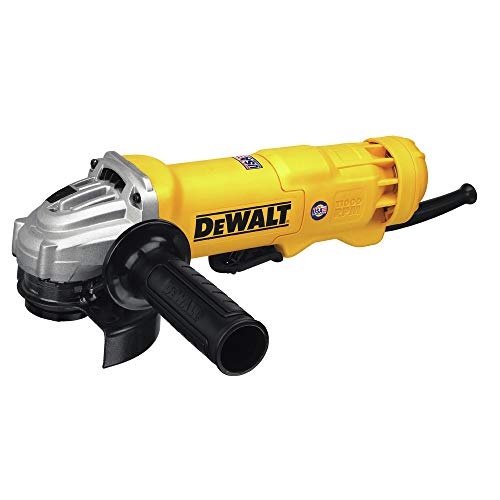
DeWalt DWE402
This 4.5 inch corded grinder covers typical metalworking and grinding tasks at a lower cost than premium brushless models. An 11 amp motor delivers enough power for cutting, grinding and surface prep without the weight of larger grinders. A spindle lock simplifies disc changes by holding the spindle stationary during removal.
Pros
- 11 amp motor delivers solid power at a lower cost than premium models
- Spindle lock simplifies disc changes without extra tools
- Lighter weight than many grinders in its power class
Cons
- No brushless motor, so it runs less efficiently than premium alternatives
- Corded design limits use away from an outlet

Milwaukee M18 FUEL 2880-20
Running on Milwaukee’s M18 battery platform, this grinder removes the cord for use in locations without reliable outlet access. A brushless motor maintains disc speed under load closer to corded grinder performance than older cordless designs. Milwaukee’s RAPID STOP brake halts the disc within roughly two seconds of releasing the trigger, reducing injury risk from a freely spinning disc.
Pros
- Cordless operation suits locations without reliable outlet access
- Brushless motor holds disc speed close to corded performance
- RAPID STOP brake halts the disc quickly after trigger release
Cons
- Bare tool listing requires a separate M18 battery and charger
- Shorter continuous runtime than a corded grinder on long jobs

Bosch GWS13-50VSP
A variable speed dial on this corded grinder lets users match disc speed to specific materials, from slower speeds for polishing to full speed for aggressive cutting. The 13 amp motor provides enough power for repeated use on thicker metal stock without overheating as quickly as smaller motors. Bosch’s vibration control handle design reduces hand fatigue during extended grinding sessions.
Pros
- Variable speed dial matches disc speed to specific materials
- 13 amp motor handles repeated use on thick metal without overheating
- Vibration control handle reduces hand fatigue on long sessions
Cons
- Heavier than compact 4.5 inch grinders due to the larger motor
- Corded design still requires outlet access on site

Metabo WEPBA 19-125 Quick
Metabo’s Quick system lets users swap discs by hand in seconds, without a wrench or spindle lock tool most grinders still require. A brushless motor paired with electronic overload protection shuts the tool down briefly if it senses excessive strain, protecting the motor from damage. The grinder’s size and weight stay comparable to standard corded 4.5 to 5 inch models despite the added disc-change mechanism.
Pros
- Tool-free Quick system swaps discs faster than wrench-based designs
- Electronic overload protection shuts down briefly to prevent motor damage
- Comparable size and weight to standard corded grinders
Cons
- Quick system discs may cost slightly more than standard options
- Corded design limits mobility away from an outlet

Makita XAG04Z 18V LXT
This cordless grinder keeps a slim, lightweight body compared to larger cordless models, suited to overhead work or extended one-handed use. A brushless motor delivers consistent power despite the more compact size, running on Makita’s widely available 18V LXT battery platform. An electric brake stops the disc quickly after the trigger releases, similar to the safety feature on larger cordless grinders.
Pros
- Slim, lightweight body suits overhead and one-handed work
- Brushless motor delivers consistent power despite the compact size
- Shares the widely available 18V LXT battery platform
Cons
- Lower power ceiling than larger 5 inch cordless grinders
- Bare tool listing requires a separate 18V LXT battery

Ryobi P421 ONE+ HP
Running on Ryobi’s shared ONE+ battery platform, this grinder suits anyone who already owns Ryobi yard or shop tools and wants to avoid starting a second battery ecosystem. A brushless motor keeps performance reasonable for occasional grinding and cutting tasks around the home. It costs noticeably less than professional-grade cordless grinders from Milwaukee or Makita.
Pros
- Shares Ryobi’s ONE+ battery platform with many other tools
- Lower cost than professional-grade cordless grinders
- Brushless motor handles occasional home tasks reasonably well
Cons
- Less durable for daily professional use than Milwaukee or Makita
- Bare tool listing requires a separate ONE+ battery
Compared at a glance
| # | Model | Disc Size | Best for | Score | Price |
|---|---|---|---|---|---|
| 1 | Makita 9557PBX1 | 4.5 inch | Best Overall | 9.3 | Check price |
| 2 | DeWalt DWE402 | 4.5 inch | Best Value Corded | 8.7 | Check price |
| 3 | Milwaukee M18 FUEL 2880-20 | 4.5 to 5 inch | Best Cordless | 9.1 | Check price |
| 4 | Bosch GWS13-50VSP | 5 inch | Best Variable Speed for Metalworking | 9.0 | Check price |
| 5 | Metabo WEPBA 19-125 Quick | 4.5 to 5 inch | Best for Quick Disc Changes | 8.8 | Check price |
| 6 | Makita XAG04Z 18V LXT | 4.5 inch | Best Compact Cordless | 8.6 | Check price |
| 7 | Ryobi P421 ONE+ HP | 4.5 inch | Best Budget Cordless | 8.2 | Check price |
How to choose
What to look for in an angle grinder Disc size, typically 4.5 or 5 inch, decides how deep a single pass can cut and which replacement discs fit the tool. Motor power, whether a corded amp rating or a cordless brushless motor, determines how the grinder handles sustained use on thicker material. Safety features, including anti-kickback clutches and electric brakes, matter more on an angle grinder than on most other power tools given the exposed spinning disc. Disc change design affects how much downtime happens between switching cutting and grinding discs on the same job.
Corded versus cordless grinders Corded grinders like the Makita 9557PBX1 and Bosch GWS13-50VSP run at consistent power for as long as needed near an outlet, without battery runtime to track. Cordless grinders, including the Milwaukee 2880-20 and Makita XAG04Z, trade that unlimited runtime for mobility, useful on job sites or outdoor work away from reliable power. Shop-based users doing extended grinding sessions typically benefit more from corded power, while mobile repair or installation work favors cordless.
Disc size and cutting capacity A 4.5 inch disc, used on the Makita 9557PBX1 and DeWalt DWE402, suits most general cutting, grinding and surface prep tasks around a home or shop. A 5 inch disc, found on the Bosch GWS13-50VSP, cuts slightly deeper per pass and handles larger material with fewer passes. Buyers working mainly with thinner metal stock or standard grinding tasks rarely need to size up beyond 4.5 inch discs.
Safety features worth prioritizing An anti-kickback clutch, like Makita’s Super Joint System, disengages the gears during a sudden bind, reducing the chance of the grinder jerking back toward the user. An electric brake, found on the Milwaukee 2880-20 and Makita XAG04Z, stops the disc within seconds of releasing the trigger rather than letting it spin freely. Electronic overload protection, used on the Metabo WEPBA 19-125 Quick, shuts the tool down briefly under excessive strain to protect both the motor and the user from an unexpected stall.
Frequently asked questions
What disc size is best for a general purpose angle grinder?
A 4.5 inch disc, used on the Makita 9557PBX1 and DeWalt DWE402, covers most general cutting and grinding tasks around a home or shop.
Is a cordless angle grinder as powerful as a corded one?
Brushless cordless models like the Milwaukee 2880-20 come close, though corded grinders like the Bosch GWS13-50VSP still offer more sustained power for long sessions.
What does an anti-kickback clutch do on an angle grinder?
It disengages the gears during a sudden bind, as seen in Makita’s Super Joint System, reducing the risk of the grinder jerking back toward the user.
Why do angle grinders need an electric brake?
An electric brake, included on the Milwaukee 2880-20 and Makita XAG04Z, stops the disc quickly after the trigger releases instead of letting it spin freely.
Is variable speed useful on an angle grinder?
For working across different materials, yes. The Bosch GWS13-50VSP’s variable speed dial allows slower speeds for polishing and full speed for aggressive cutting.
How does a tool-free disc change system work?
Systems like Metabo’s Quick design let users swap discs by hand without a wrench or spindle lock tool, speeding up changes between cutting and grinding discs.
Can a compact cordless grinder handle regular shop use?
For lighter tasks, yes. The Makita XAG04Z handles typical grinding and cutting work well, though it has a lower power ceiling than larger 5 inch grinders.
Do angle grinders need a specific battery platform?
Cordless grinders are tied to their brand’s battery system, such as Milwaukee’s M18 or Makita’s 18V LXT, which are not interchangeable between brands.
Is a budget angle grinder reliable for occasional home use?
For occasional tasks, yes. The Ryobi P421 covers typical home grinding and cutting work without the cost of professional-grade grinders.
The verdict
The Makita 9557PBX1 earns the top recommendation for most buyers, since its tool-less guard adjustment and anti-kickback clutch make it both convenient and safer for regular use. Anyone working in locations without reliable outlet access should choose the Milwaukee M18 FUEL 2880-20 instead, since cordless mobility matters more there than the Makita’s slightly lower cost. Homeowners who only need a grinder for occasional projects and already own Ryobi ONE+ batteries should skip the professional-grade options and pick the Ryobi P421.
Jake Monroe
Jake worked as a residential contractor for over a decade before shifting to full-time writing. He evaluates power tools, hand tools and workshop gear through the lens of someone who has actually used them on job sites, not just read the box.


