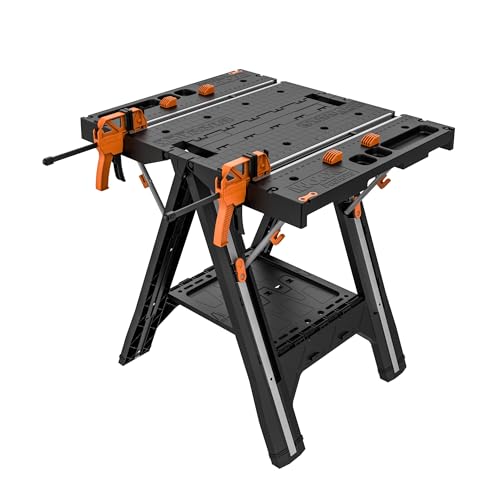
Seven Woodworking Accessories That Earn Bench Space
Among seven compared woodworking accessories, the Kreg K5 pocket-hole jig offers the strongest all-round joinery, the MICROJIG GRR-RIPPER GR-100 pushblock provides the safest way to rip narrow stock, and the Wixey WR300 digital angle gauge delivers the best value for setting precise bevels.
Start joinery upgrades with the Kreg K5 pocket-hole jig, add the MICROJIG GRR-RIPPER pushblock for safer rip cuts, and dial in bevels with the Wixey WR300 angle gauge. Those three tools cover tasks most home shops repeat every weekend.
Shop drawers fill fast with gadgets that see one project and never come out again. We compared these seven accessories on published specifications, owner feedback and how often each one solves a recurring job, rather than on marketing claims.
How to choose
What should you look for in woodworking accessories? Match an accessory to a task you repeat often, not one you might use once. Pocket-hole jigs, featherboards and angle gauges touch nearly every project, which is why they earn permanent bench space. Single-purpose gadgets tend to sit in a drawer after the first build.
Which accessories keep hands away from the blade? Pushblocks, featherboards and clamp guides do more than clean up a cut. Each one adds a barrier between fingers and a spinning blade. The GRR-RIPPER lets a woodworker rip narrow stock without a hand ever entering the blade path, which is where most table saw injuries start.
How do accuracy tools cut down on wasted stock? Digital angle gauges and calipers remove guesswork from a setup before the first cut. A tenth-degree bevel reading or a thousandth-inch measurement lets a woodworker dial in a cut once. Creeping up on a line with test cuts wastes both time and material.
Will these accessories fit your saw or bench? Miter slot and T track dimensions differ across saw brands, so confirm fit before buying a featherboard or slot-mounted jig. Clamp edges and calipers work across most shops since they do not depend on a specific slot size. Check rail length and jaw capacity against the size of work you typically build.
The best picks, ranked

Kreg K5 Pocket-Hole Jig
Pocket holes replace complex clamping with a fast, repeatable joint. A front ratcheting clamp locks the stock in seconds. Hole spacing stays consistent project to project thanks to the removable drill guide, and most owners reach for this jig on nearly every build.
Pros
- Ratcheting clamp locks stock without extra hardware
- Depth settings cover half inch to one and a half inch stock
- Built-in dust port keeps chips off the bench
Cons
- Screws and stepped bit sold separately
- Larger body than compact mini jigs
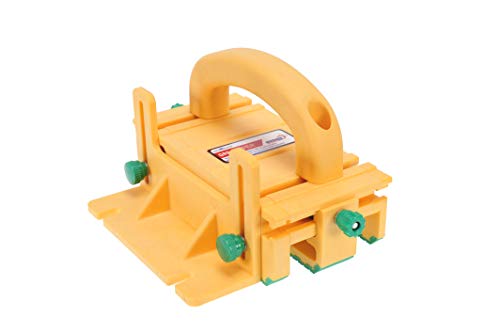
MICROJIG GRR-RIPPER GR-100 Pushblock
Adjustable legs grip stock and push it past the blade without a hand entering the danger zone. Side pressure keeps narrow rips tight against the fence while downforce holds the board flat. Woodworkers often cite it as the accessory that changed how they rip thin strips.
Pros
- Combines downforce and side pressure in one pass
- Rips strips narrower than a pushstick allows
- Modular legs adjust to different board widths
Cons
- Setup takes practice the first few uses
- Priced above a basic pushstick

Wixey WR300 Digital Angle Gauge
Bevel angles read to a tenth of a degree instead of a guess at a saw scale. A magnetic base holds the gauge to the blade or fence for a one-hand zero and read. For the cost, few accessories improve cut accuracy this much.
Pros
- Reads bevel angle to a tenth of a degree
- Magnetic base frees both hands during setup
- Compact enough for a tool bag
Cons
- Display dims in bright shop light
- Battery drains fast if left powered on

Milescraft 1406 FeatherBoard
Steady spring pressure holds stock tight against the fence through the entire cut. Standard miter slot and T track mounts fit most table saws and router tables. Owners credit it with fewer burn marks and less kickback risk for a low outlay.
Pros
- Applies consistent pressure against the fence
- Fits standard miter slots and T tracks
- Low cost entry into safer ripping
Cons
- Polymer body flexes more than metal versions
- Slot fit varies slightly between saw brands

Rockler Bench Cookie Plus Work Grippers
Four rubber grippers raise a panel off the bench so every edge stays reachable for sanding or finishing. Grip pads hold the workpiece steady without clamps blocking access. Finishing day moves faster once wet coats never touch the benchtop.
Pros
- Lifts panels for full edge access
- Rubber pads keep finish off the bench
- Expands with add-on cones and pads
Cons
- Grip weakens under heavy sawdust buildup
- Not rated for high-vibration cutting tasks

Bora 542013 WTX Clamp Edge Saw Guide
A fifty inch aluminum rail clamps flat to plywood or long boards for a straight reference edge. Both ends lock down so a circular saw base rides the rail without wandering off line. Breaking down sheet goods without a track saw gets noticeably faster with this guide in the shop.
Pros
- Guides dead straight cuts across sheet goods
- Clamps flat to the workpiece without slipping
- Costs less than a dedicated track saw
Cons
- Cut width needs an offset measurement first
- Fifty inch length limits very long rips
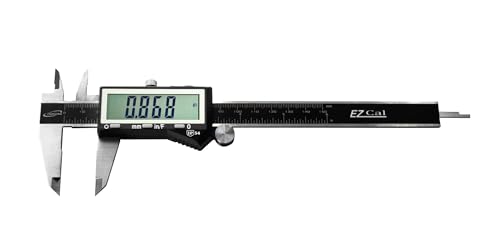
iGaging 100-333-8 Digital Caliper
Inside, outside and depth readings come off an eight inch stainless jaw in inches, fractions or millimeters. Matching stock thickness or checking a bit diameter takes seconds instead of trial cuts. Based on its published specifications, this caliper delivers shop-grade precision at an entry price.
Pros
- Switches between inch, fraction and millimeter modes
- Measures inside, outside and depth in one tool
- Priced well below machinist-grade calipers
Cons
- Battery door feels flimsy under regular use
- Zero reading can drift if the tool is dropped
The lineup, side by side
| # | Model | Type | Best for | Score | Price |
|---|---|---|---|---|---|
| 1 | Kreg K5 Pocket-Hole Jig | Pocket-hole jig | Best overall | 9.4 | Check price |
| 2 | MICROJIG GRR-RIPPER GR-100 Pushblock | 3D pushblock | Best for saw safety | 9.2 | Check price |
| 3 | Wixey WR300 Digital Angle Gauge | One tenth degree | Best value | 9.0 | Check price |
| 4 | Milescraft 1406 FeatherBoard | Standard miter and T track | Best budget | 8.7 | Check price |
| 5 | Rockler Bench Cookie Plus Work Grippers | Four grippers | Best for finishing | 8.5 | Check price |
| 6 | Bora 542013 WTX Clamp Edge Saw Guide | Fifty inch | Best for straight cuts | 8.2 | Check price |
| 7 | iGaging 100-333-8 Digital Caliper | Eight inch | Best for measuring | 8.0 | Check price |
Good to know
What woodworking accessory should a beginner buy first?
A pocket-hole jig is a strong starting point since it builds strong joints without advanced joinery skills. Add a featherboard next for safer cuts, and those two cover a wide range of early projects.
Are pocket-hole joints strong enough for furniture?
Yes, cabinets, shelves and face frames hold well with pocket screws when paired with wood glue. Production furniture uses this joint often, though visible joinery may call for a different method.
Do I need a pushblock if I already own a pushstick?
A pushblock adds side pressure and downforce that a thin pushstick cannot supply, which matters most on narrow rips. Many shops keep both and grab the pushblock once stock gets close to the blade.
How accurate is a digital angle gauge compared to a saw scale?
A gauge like the Wixey WR300 reads to a tenth of a degree, far tighter than eyeballing a printed scale. Zero it on a known flat surface first for the most reliable reading.
Will a featherboard fit any table saw?
Most featherboards fit standard miter slots and T tracks, though slot widths vary slightly by brand. Measure your saw’s slot before buying so the featherboard locks in securely.
Can a clamp edge guide replace a track saw?
For occasional sheet breakdown, a clamp edge paired with a circular saw gives straight cuts for far less money. A dedicated track saw still wins on speed if plywood gets cut daily.
Pocket-hole jig vs biscuit joiner: which suits a home shop better?
A pocket-hole jig sets up faster and needs less practice, making it the more common home shop choice. A biscuit joiner aligns panels well but adds a second tool and technique to learn.
Are inexpensive digital calipers accurate enough for woodworking?
For wood, an inexpensive caliper is usually accurate enough since the material itself moves more than the tool’s margin of error. Keep the jaws clean and confirm a proper zero before each measurement.
How do you keep bench grippers from slipping during finishing?
Wipe sawdust off the rubber pads regularly, since fine dust is the main cause of slipping grip. Reach for clamps instead under heavy vibration, where grippers alone are not rated to hold.
The verdict
A core trio covers most shops well: the Kreg K5 for joinery, the MICROJIG GRR-RIPPER for safer rips and the Wixey WR300 for precise bevels. Layer in a featherboard and Bench Cookie grippers as project variety grows. Each accessory here earns bench space through repeat use, not novelty.
Jake Monroe
Jake worked as a residential contractor for over a decade before shifting to full-time writing. He evaluates power tools, hand tools and workshop gear through the lens of someone who has actually used them on job sites, not just read the box.