Which Wireless Car Charger Actually Grips Your Phone?
iOttie’s Auto Sense grips almost any phone with motorised clamp arms, making it the most dependable all round wireless car charger. ESR’s HaloLock pairs strong magnets with active cooling, and Anker’s 613 MagGo is the simplest vent mount for MagSafe phones.
iOttie’s Auto Sense, ESR’s HaloLock CryoBoost and Anker’s 613 MagGo stand out among current wireless car chargers. Each keeps a phone secure while it charges, and each solves the mounting problem a different way. Grip matters more here than any spec sheet number.
This category gets trickier than it looks because wireless charging generates heat, and a sun baked dashboard already runs hot. We compared clamping or magnet strength, stated charging output, cooling design and how each mount behaves on rough roads, since those factors decide whether a charger earns its keep or just looks good.
The top picks, ranked
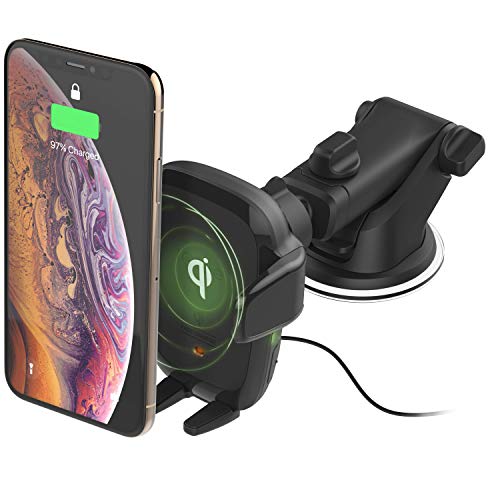
iOttie Auto Sense Wireless Car Charger
Motorised arms close around the phone automatically here, which works with thick cases and phones lacking magnets entirely. Owners report it holds firm over speed bumps where magnetic pads slip. That reliability comes at the cost of extra bulk on the dash.
Pros
- Grips almost any phone regardless of magnets
- Automatic arms make one handed use easy
- Multiple mounting bases included
Cons
- Needs constant power to run the arms
- Bulkier than a flat magnetic pad

ESR HaloLock CryoBoost Wireless Car Charger
ESR pairs a strong magnetic array with an internal cooling fan, so phones throttle less on long summer drives. Few magnetic mounts keep charging at full rate once the cabin heats up. This one does, and it snaps on and off in one motion.
Pros
- Active cooling keeps charge speeds high
- Strong magnets hold through bumps
- Snaps on and off in one motion
Cons
- Fan is audible in a quiet cabin
- Requires a magnetic phone or case

Belkin BoostCharge Pro Wireless Car Charger with MagSafe
Official MagSafe certification lets iPhones charge at full rate here, rather than the slower generic wireless speed. Build quality feels noticeably more solid than most vent clips. The ball joint stays exactly where you set it, trip after trip.
Pros
- Full speed MagSafe charging on iPhone
- Solid materials and stable joint
- Clean, compact appearance
Cons
- No benefit for Android phones
- Sits at the higher end of the range

Anker 613 MagGo Magnetic Wireless Car Charger
A compact vent mount, this snaps a magnetic phone into place and charges without any moving parts. Smaller cabins and dashboards with no free space suit it well. Nothing here needs adjusting, winding down or plugging into a bulky base.
Pros
- Very compact and easy to install
- Rotates freely for navigation or video calls
- Nothing to break or wear out
Cons
- Slower charging than 15 watt rivals
- Heavy phones can tilt weak vent slats

Scosche MagicMount Pro Charge5 Wireless Charger
Included magnetic plates let phones without built in magnets snap on just as securely. Android owners in particular gain magnetic convenience without buying a new case. Several mounting bases ship in the box, covering vent, dash and window setups.
Pros
- Works with phones that lack magnets
- Several mounting bases supplied
- Compact head keeps sightlines clear
Cons
- Plates can interfere with some cases
- Magnet strength varies by plate placement
Spigen OneTap Pro Wireless Car Charger
A heavier weighted base keeps this planted on a dashboard without adhesive in many cars. Magnets run on the stronger side, and the arm length places the phone close to the driver. Textured dashboards in particular hold it steady over rough roads.
Pros
- Stable on textured dashboards
- Long arm reaches close to the driver
- Strong magnetic hold
Cons
- Takes up dashboard real estate
- Adhesive pad is hard to reposition

ZeeHoo Wireless Car Charger with Auto Clamping
Automatic clamping arms reach the lower end of the market here, and owners report solid grip for the outlay. Build quality runs plainer than the iOttie, though the core function still works for daily commuting. Two mounting options ship in the box.
Pros
- Automatic arms at a low outlay
- Fits phones with or without magnets
- Includes more than one mounting base
Cons
- Plastics feel less refined
- Suction cup can loosen in heat
How they compare
| # | Model | Hold type | Best for | Score | Price |
|---|---|---|---|---|---|
| 1 | iOttie Auto Sense Wireless Car Charger | Motorised auto clamp arms | Best overall | 9.4 | Check price |
| 2 | ESR HaloLock CryoBoost Wireless Car Charger | Magnetic array for MagSafe phones | Best value | 9.2 | Check price |
| 3 | Belkin BoostCharge Pro Wireless Car Charger with MagSafe | Certified MagSafe magnets | Best for iPhone owners | 9.0 | Check price |
| 4 | Anker 613 MagGo Magnetic Wireless Car Charger | Magnetic ring | Best for vent mounting | 8.8 | Check price |
| 5 | Scosche MagicMount Pro Charge5 Wireless Charger | Magnetic with included plates | Best for case flexibility | 8.6 | Check price |
| 6 | Spigen OneTap Pro Wireless Car Charger | Magnetic array | Best for dashboard placement | 8.3 | Check price |
| 7 | ZeeHoo Wireless Car Charger with Auto Clamping | Automatic clamping arms | Best budget option | 8.0 | Check price |
How to pick the right one
Magnetic mount or clamping arms, which holds better? Magnetic mounts work fast and look elegant, but only if your phone or case carries the right magnet ring. Clamping arms grip anything, including bulky rugged cases, at the cost of extra bulk and a slightly slower grab. Drivers who change phones often or share the car gain more from clamps.
Why does a wireless charger get hot in a car? Wireless charging runs less efficient than a cable, and the leftover energy becomes heat. Sunlight through a windscreen adds to that load, and phones start throttling their charge rate to protect the battery. Chargers with an active fan or a metal cooling plate keep speeds up in warm weather, which matters more than a headline wattage figure.
Vent, dashboard or windshield, where should it mount? Vent mounts install quickly but load your vent slats and block airflow. Dashboard mounts stay stable and free the vents, though they need surface space and often adhesive. Windshield suction cups give the best sightline but can release once the cabin heats up. Check what your car actually offers before choosing.
Does the car’s power outlet limit charging speed? A 15 watt charger only delivers 15 watts if the car adapter supplies enough power. Many kits include a suitable adapter, and an older low output socket charger is a common reason speeds disappoint. Match what comes in the box to a socket that can actually supply the current.
Frequently asked questions
Is wireless charging slower than a cable in a car?
Generally yes, since some energy is lost as heat. The difference rarely matters for navigation and music on a commute, but a long drive with heavy screen use favors a cable.
Will a magnetic charger work with any phone?
Only if the phone or case carries a magnet ring in the right position. Many Android phones need a case with built in magnets, or an adhesive plate like the one Scosche supplies.
Does wireless charging damage phone batteries?
Heat is the real concern, not the wireless part itself. Chargers with cooling and shaded placement away from direct sun keep temperatures reasonable, which protects long term battery health.
Can a thick or rugged phone case still work?
Clamping models such as the iOttie Auto Sense handle thick cases well. Magnetic mounts struggle once the case adds too much thickness between the magnets and the coil.
Do vent mounts damage a car’s air vents?
Heavy phones on thin horizontal slats can bend them over time. A dashboard base spreads the load far better if your vents already feel flimsy.
Why does a wireless charger stop mid drive?
The usual causes are a phone that overheated and paused charging, or a car socket cutting power. Try a shaded position and a higher output adapter before assuming the charger is faulty.
Do wireless car chargers work through a wallet case?
Cards behind the phone block the charging field and can be damaged by it. Remove cards from between the phone and the charging coil before mounting.
Is paying more for 15 watt charging worth it?
It helps on long drives if your phone supports that rate and the mount stays cool. A cheaper model loses you nothing if your phone caps out at 7.5 watts anyway.
MagSafe versus generic magnetic mounts, what changes?
MagSafe certified mounts like the Belkin BoostCharge Pro charge iPhones at the full 15 watt rate. Generic magnetic mounts without certification often cap iPhones at a slower 7.5 watts, even with a magnetic case attached.
Which wireless car charger suits an Android phone best?
Scosche’s MagicMount Pro Charge5 ships adhesive magnet plates that give Android phones the same magnetic convenience iPhone owners get from MagSafe, without needing a new case.
Our pick
iOttie’s Auto Sense is the wireless car charger most drivers should buy, since it grips any phone in any case and stays put on rough roads. Choose the ESR HaloLock CryoBoost for magnetic convenience with cooling that keeps speeds up in hot weather, or the Anker 613 MagGo if you simply want a small vent mount that works.
Marcus Chen
Marcus covered consumer electronics for enthusiast tech publications for six years before joining ChoiceCrest. He specializes in translating manufacturer spec sheets into plain-language buying advice, with a focus on audio, computing accessories and smart-home gear.


