Snowboard Boots for First-Timers: Flex and Fit Guide
Burton Moto BOA offers the easiest fit for most beginners, with one-pull lacing and a forgiving soft-medium flex. DC Shoes Phase Boa costs less while keeping similar flex, and K2 Raider suits wider feet better. All three list flex ratings between 3 and 5 on a 10-point scale, ideal for learning turns.
Burton Moto BOA is the easiest boot here for first-timers, pairing one-pull BOA lacing with a soft-medium flex that forgives sloppy turns. Its BOA dial is one extra mechanical part that laces don’t need. DC Shoes Phase Boa trims cost without losing that flex range, and K2 Raider fits wider feet better than narrower BOA shells.
Beginner boots succeed or fail on flex rating, lacing speed, and how well the liner holds heat on a chairlift. We compared listed specifications, lacing hardware, and owner feedback from current Amazon listings across seven models. That approach balances comfort, support, and ease of adjustment for someone buying a first pair.
The top picks, ranked

Burton Moto BOA Snowboard Boot
Burton’s Moto pairs a single BOA Coiler dial with a soft-medium flex, so lacing takes seconds and turns forgive late edges. A molded EVA footbed cushions a full day of laps. Ankle support stays moderate, not stiff, which suits riders still learning how a boot should feel.
Pros
- One-pull BOA lacing speeds up boot changes
- Soft-medium flex forgives beginner mistakes
- Heat-moldable liner packs out to fit over time
Cons
- BOA dial can loosen in deep cold if not double-checked
- Runs slightly narrow through the midfoot

DC Shoes Phase Boa Snowboard Boot
DC keeps the Phase Boa simple, with one BOA dial and a soft flex that suits riders still finding their stance. A basic heat-moldable liner replaces pricier foam blends, trimming cost. Riders get BOA convenience without paying for features they won’t use yet.
Pros
- Lower cost than most BOA competitors
- Soft flex is easy to learn edge control in
- Simple one-dial lacing
Cons
- Liner offers less insulation than premium models
- Less ankle support for aggressive riders as skills improve
K2 Raider Snowboard Boot
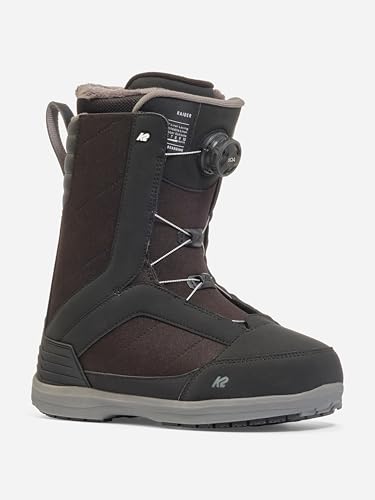
K2 cuts the Raider on a roomier last, fixing a common complaint with narrow European-style shells. Traditional laces let riders tighten pressure zone by zone instead of relying on one dial. A Harshmellow flex tongue softens landings, useful for anyone still learning to ride switch.
Pros
- Roomier fit accommodates wider feet comfortably
- Traditional laces allow zone-specific tightening
- Padded tongue reduces shin bang
Cons
- Traditional laces take longer to tighten than BOA
- Medium flex feels stiffer than pure beginner boots after a full day

Ride Anthem Snowboard Boot
Ride raises the Anthem’s backstay and firms up the heel cup, helping riders who roll their ankles on heel-side turns. Dual-zone lacing anchors the lower boot separately from the cuff for a locked-in feel. Riders who progress fast within a season avoid outgrowing this boot’s support.
Pros
- Taller backstay adds ankle stability
- Dual-zone lacing locks the heel in place
- Holds up well as skills progress beyond beginner level
Cons
- Medium flex feels less forgiving on very first days
- Dual-zone laces add a few extra minutes to boot-up time

Salomon Pearl Snowboard Boot
Salomon shapes the Pearl on a women’s-specific last with a lower-volume heel pocket, cutting heel lift during turns. A soft flex stays forgiving for new riders, and one quick-pull motion tightens the whole boot. An EVA liner adds warmth without bulking out the narrower shell.
Pros
- Women’s-specific last reduces heel lift
- Quick-pull lacing tightens in seconds
- Soft flex suits first-time riders
Cons
- Narrower shell may not suit wider feet
- Less ankle support than medium-flex options

Vans Encore Snowboard Boot
Vans pairs traditional laces with an UltraCush footbed for a comfortable, no-frills entry boot. Flex sits soft, which helps beginners stay balanced while linking early turns. Premium liner materials get skipped here, keeping the price accessible for a first pair.
Pros
- Comfortable footbed for full-day wear
- Soft-medium flex suits first-season riders
- Lower cost than most BOA models
Cons
- Traditional laces slow down boot changes
- Liner runs thinner in extreme cold

Burton Grom Snowboard Boot
Burton scales its Speed Zone lacing down to kid sizing, so young riders tighten boots themselves with one pull. A very soft flex matches lighter body weight and still-developing balance. A shorter cuff keeps mobility high for kids just learning to stand on a board.
Pros
- Kids can tighten laces independently
- Very soft flex matches light body weight
- Shorter cuff keeps mobility for new riders
Cons
- Kids outgrow sizing within a season or two
- Liner offers less warmth on longer lift days
Side by side
| # | Model | Flex Rating | Best for | Score | Price |
|---|---|---|---|---|---|
| 1 | Burton Moto BOA Snowboard Boot | 4 of 10 (soft-medium) | Best overall | 9.4 | Check price |
| 2 | DC Shoes Phase Boa Snowboard Boot | 3 of 10 (soft) | Best for beginners on a budget | 9.0 | Check price |
| 3 | K2 Raider Snowboard Boot | 5 of 10 (medium) | Best for wide feet | 9.1 | Check price |
| 4 | Ride Anthem Snowboard Boot | 5 of 10 (medium) | Best for all-day ankle support | 8.9 | Check price |
| 5 | Salomon Pearl Snowboard Boot | 3 of 10 (soft) | Best for women | 9.2 | Check price |
| 6 | Vans Encore Snowboard Boot | 4 of 10 (soft-medium) | Best value | 8.8 | Check price |
| 7 | Burton Grom Snowboard Boot | 2 of 10 (very soft) | Best for kids | 8.7 | Check price |
How to choose
How Flex Rating Shapes Beginner Progress Flex rating measures how much a boot resists bending forward and side to side, typically on a 1 to 10 scale. Soft boots rated 2 to 4 forgive mistakes and let riders feel the board underfoot while learning turns. Fast progress within a season often means outgrowing a very soft flex within months. Buying soft first and upgrading later costs less than starting with a stiff boot you’re not ready for.
Traditional Laces vs BOA vs Speed Lace Traditional laces adjust pressure zone by zone, useful for uneven pressure points, but tightening takes longer each morning. BOA dials pull a steel cable evenly around the boot, cutting boot-up time to seconds. Speed lace and Speed Zone systems split the difference with fast one-pull tightening and no dial. Cold or numb fingers by midday make BOA or speed lace the easier choice over traditional laces.
Liner Materials and All-Day Warmth Heat-moldable EVA foam liners pack out to match foot shape after a few wears, improving fit over time. Basic foam liners, common in kids’ and budget boots, break in through regular use instead. Warmth depends more on liner thickness than shell material, which matters on long lift lines. Thick socks paired with a thin liner can crowd the boot and cut circulation, so match sock thickness to liner type.
Sizing for Men, Women, and Kids Women’s boots use a narrower heel pocket and lower-volume shell than a men’s boot in the same listed size, cutting heel lift. Men’s sizing generally follows standard shoe sizing. Kids’ boots run smaller and need replacing as feet grow. Wide-fit lasts, like the roomier build in some K2 models, help riders whose forefeet don’t suit narrower European-style shells. Trying boots on with the socks you’ll actually wear on the mountain avoids sizing surprises later.
Common questions
What flex rating should a beginner snowboarder buy?
Most beginners do best between 2 and 4 on a 10-point flex scale. Softer flex forgives balance mistakes and makes edge pressure easier to feel while learning.
Is BOA lacing better than traditional laces for new riders?
BOA tightens faster and more evenly, which helps riders still learning how boots should feel. Traditional laces cost less to repair and allow zone by zone adjustment.
How should snowboard boots fit when trying them on?
Toes should lightly touch the front when standing, then pull back once you flex forward. Heel lift should stay minimal once laces are fully tightened.
Can a beginner use the same boots as an intermediate rider?
Beginners can wear medium-flex boots, though softer flex between 2 and 4 usually makes learning easier. Riders who progress quickly within a season may prefer a firmer boot from the start.
Do women need snowboard boots built for women’s feet?
Women’s-specific boots use a narrower heel pocket and lower-volume shell that cuts heel lift for many riders. Some women fit men’s boots fine, so trying both pairs is worth the time.
Is a heat-moldable liner worth it for a first pair?
Heat-moldable liners pack out to match your foot shape, improving comfort after a few wears. Basic liners without heat molding still work but need more break-in through regular use.
What size boots should kids start with?
Kids’ boots should fit true to current shoe size with room for one pair of ski socks. Feet grow fast, so expect a resize within one or two seasons.
How long do beginner snowboard boots usually last?
Liners and lacing hardware tend to wear out first, often after 40 to 60 days on snow. Shell materials generally outlast liners, so a liner swap can extend usable life.
BOA vs traditional laces: which is faster in cold weather?
BOA wins in cold weather since one turn of a dial tightens the whole boot evenly. Traditional laces need bare or thin-gloved fingers to thread and knot properly.
Final word
Burton Moto BOA remains the top pick for most first-season riders, combining one-pull lacing with a flex forgiving enough for early mistakes. Tighter budgets should go with DC Shoes Phase Boa, which keeps that same BOA convenience for less. Wide feet or a preference for zone-specific lacing point toward K2 Raider instead of the narrower BOA-laced options.
Derek Holt
Derek has a background coaching recreational and amateur athletes and has worked the sales floor at specialty fitness retailers. He focuses on equipment durability, ergonomics and realistic use cases rather than marketing claims.