Wheelbarrows for Hauling Soil, Gravel, and Mulch
Jackson’s M6T22 tops this list with a seamless steel tray built for years of heavy hauling. WORX’s Aerocart earns runner-up for its eight-in-one versatility. Ames True Temper’s 6 Cubic Foot steel model handles the heaviest yard and job-site loads.
Jackson’s M6T22 is the wheelbarrow most people should buy, with a rugged seamless steel tray and 6-cubic-foot capacity built for years of heavy loads. Buyers wanting more versatility should look at the WORX Aerocart. Anyone hauling serious weight will appreciate the Ames True Temper 6 Cubic Foot steel model.
Choosing a wheelbarrow gets tricky fast, since the right one depends on what you haul and where you push it. Steel trays handle rocks and debris but add weight, poly trays resist rust but flex under sharp loads, and wheel count trades maneuverability for stability. We compared published specs, matched each model to real yard and job-site tasks, and weighed what long-term owners report about balance and durability.
What matters most
Steel or poly tray, which should you choose? Tray material shapes what a wheelbarrow can handle. Steel resists gouging from rocks, bricks, and construction debris, though it adds weight and can rust if scratched. Poly stays light, rust-proof, and easy to clean, which suits soil, mulch, and general gardening. Very heavy, sharp loads can still flex or crack a poly tray, so match material to your toughest job.
One wheel, two wheels, or four: what’s the difference? Wheel count trades maneuverability for stability. A single wheel pivots tightly on narrow garden paths but demands more balance from you. Dual-wheel designs feel steadier and resist tipping under heavy or awkward loads. Four-wheel dump carts move the most material with the least lifting, though they turn less nimbly and need more storage space.
How much capacity and load rating do you need? Capacity in cubic feet tells you how much volume the tray holds. Load rating tells you how much weight the frame and wheels can safely carry. A 6-cubic-foot tray is the versatile standard for most yards, while 3-cubic-foot models suit lighter chores. Wet soil or gravel gets heavy fast, so leave headroom instead of overloading.
Tires, handles, and comfort for daily use Small details often matter most in daily use. Pneumatic tires roll smoothly over rough ground but can go flat, while flat-free tires skip that worry at some cost to cushioning. Handle material affects comfort too, since bare wood can splinter without gloves while padded grips ease long sessions. Low-maintenance hardware is what keeps a wheelbarrow pleasant to use for years.
Our top picks

Jackson M6T22
Toughness and everyday usability meet in the M6T22, our first recommendation for most buyers. Its 6-cubic-foot seamless steel tray shrugs off rocks and rubble. Owners consistently praise how it holds up under repeated heavy loads on yard and job-site duty.
Pros
- Rugged seamless steel tray resists dents and leaks
- Handles heavy rock and debris with ease
- Single wheel maneuvers well in tight spaces
Cons
- Heavier to lift and tip than poly models
- Bare wood handles can splinter without gloves
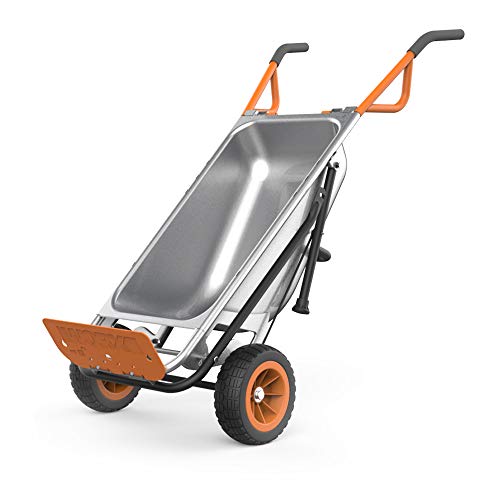
WORX Aerocart WG050
This cart converts into a dolly, yard cart, and trailer tote beyond its wheelbarrow mode. Dual wheels and turbo-lift geometry make heavy loads feel lighter. Owners report the powder-coated steel frame and flat-free tires hold up well over time.
Pros
- Converts to a dolly, cart, and more
- Leverage design makes heavy lifts feel easier
- Flat-free tires never need inflating
Cons
- Smaller tray than traditional wheelbarrows
- More assembly and moving parts to learn
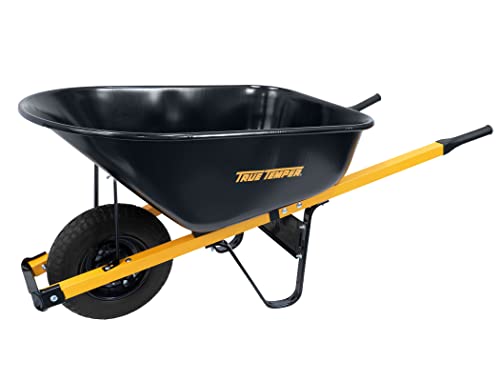
Ames True Temper 6 Cubic Foot Steel Wheelbarrow
A rugged workhorse aimed at demanding jobs, this True Temper pairs a steel tray with a heavy-duty undercarriage. Soil, gravel, and light construction debris are well within its stated capacity. Owners value its long-haul durability across seasons of hard use.
Pros
- Sturdy steel build suits big, heavy jobs
- Reinforced undercarriage adds long-term durability
- Generous 6-cubic-foot capacity
Cons
- Substantial weight when fully loaded
- Pneumatic tire can eventually need attention

Gorilla Carts GOR6PS
Four wheels and a quick-release tray define this poly dump cart, built for people moving lots of material without lifting handles. Loads dump in seconds instead of tipping by hand. A 1,200-pound rating and steel frame make it a favorite for mulch, firewood, and gravel.
Pros
- Quick-release dumping saves your back
- Four wheels stay stable on heavy loads
- Rust-proof poly tray needs little upkeep
Cons
- Four wheels turn less nimbly than one
- Bulkier to store than a standard wheelbarrow

Marathon Yard Rover Dual-Wheel Wheelbarrow
Two front wheels replace the usual single wheel, making loads feel balanced and hard to tip. Flat-free tires and a poly tray keep maintenance low. Owners on uneven ground or with bigger loads appreciate the steadier feel over a single-wheel design.
Pros
- Dual wheels resist tipping on uneven ground
- Flat-free tires skip inflation and flats
- Easy to balance for less confident users
Cons
- Smaller tray than 6-cubic-foot models
- Wider stance is harder to steer in tight rows

Suncast 3 Cubic Foot Poly Wheelbarrow
Gardeners who value easy handling over maximum capacity will like this light, rust-proof option. Its poly tray resists dents and corrosion. Owners note it is simple to push, tip, and store, which suits smaller yards and lighter chores.
Pros
- Light and easy to maneuver and tip
- Rust-proof poly tray resists weather
- Compact size stores easily in a shed
Cons
- Modest capacity limits big hauling jobs
- Poly can flex under heavy, sharp loads

VEVOR 6 Cubic Foot Poly Wheelbarrow
General yard duty is covered without a big outlay by this budget-friendly 6-cubic-foot option. A poly tray resists rust, and a dual-handle frame keeps loads manageable. Owners report solid everyday performance for the money on routine garden tasks.
Pros
- Strong value for a 6-cubic-foot tray
- Rust-resistant poly needs little care
- Roomy capacity for general yard work
Cons
- Assembly quality varies unit to unit
- Not built for repeated heavy construction loads
Compared at a glance
| # | Model | Capacity | Best for | Score | Price |
|---|---|---|---|---|---|
| 1 | Jackson M6T22 | 6 cubic feet | Best overall | 9.3 | Check price |
| 2 | WORX Aerocart WG050 | 300 pound load rating | Best multi-use | 9.1 | Check price |
| 3 | Ames True Temper 6 Cubic Foot Steel Wheelbarrow | 6 cubic feet | Best for heavy loads | 8.8 | Check price |
| 4 | Gorilla Carts GOR6PS | 6 cubic feet | Best dump cart | 8.6 | Check price |
| 5 | Marathon Yard Rover Dual-Wheel Wheelbarrow | 3 cubic feet | Best two-wheel stability | 8.4 | Check price |
| 6 | Suncast 3 Cubic Foot Poly Wheelbarrow | 3 cubic feet | Best lightweight | 8.2 | Check price |
| 7 | VEVOR 6 Cubic Foot Poly Wheelbarrow | 6 cubic feet | Best value | 8.0 | Check price |
Questions worth asking
What size wheelbarrow do you need?
A 6-cubic-foot tray is the versatile standard for most yards, holding enough soil or mulch for real work without becoming unwieldy. Lighter chores are easier with a 3-cubic-foot model that’s simpler to push, tip, and store.
Is a steel or poly tray better?
Steel resists gouging from rocks, bricks, and construction debris. Poly stays lighter, rust-proof, and easier to clean for soil and mulch. Choose based on the toughest load you expect to carry regularly.
How many wheels should a wheelbarrow have?
A single wheel turns tightly on narrow paths but needs more balance. Dual wheels feel steadier and resist tipping. Four-wheel dump carts move the most material with the least lifting, at the cost of maneuverability and storage space.
Are flat-free tires worth it?
For many owners, yes. Flat-free tires never go flat and skip inflation entirely, which suits occasional use. Pneumatic tires ride a bit smoother over rough terrain but can eventually puncture.
What is the best wheelbarrow for heavy loads?
For heavy rock, gravel, and construction work, a steel-tray model like the Jackson M6T22 or the Ames True Temper 6 Cubic Foot wheelbarrow is the safer bet. Steel resists damage that would dent or crack a poly tray.
How much weight can a wheelbarrow hold?
It varies widely by design. Traditional wheelbarrows typically handle a few hundred pounds, while heavy-duty four-wheel dump carts like the Gorilla Carts GOR6PS are rated far higher. Check the load rating rather than filling the tray by eye.
What is the easiest wheelbarrow to use?
Dual-wheel and multi-function designs are generally easiest for people who want less strain. The WORX Aerocart uses leverage to make heavy loads feel lighter, and the Marathon Yard Rover stays balanced on uneven ground.
Can a wheelbarrow tip over easily?
Single-wheel wheelbarrows can tip if loaded unevenly or pushed over rough terrain, which is why balance matters. Dual-wheel and four-wheel designs are far more stable, making them a good choice for beginners.
How do you keep a wheelbarrow from rusting?
Rinse and dry the tray after hauling wet or corrosive material, store it under cover, and touch up scratches on steel trays. Poly-tray models sidestep rust entirely, which is one reason many gardeners prefer them.
Is a dump cart better than a wheelbarrow?
It depends on the job. Dump carts like the Gorilla Carts GOR6PS haul more material with less lifting and dump quickly, suiting big landscaping projects. A traditional wheelbarrow is lighter, turns tighter, and stores more easily for everyday tasks.
The verdict
The Jackson M6T22 is the best wheelbarrow for most people, pairing a rugged seamless steel tray with the balance to handle heavy loads season after season. Maximum versatility comes from the WORX Aerocart. The Ames True Temper 6 Cubic Foot model remains the dependable choice for the heaviest hauling.
Sierra Daniels
Sierra's background is in landscape design and nursery retail. She focuses on lawn and garden equipment, outdoor furniture and gear durability, weighing published specs against how materials actually hold up outside.