Rolling Wheel Stands That Make Off-Car Detailing Easier
The Maxshine WS01 Wheel Rim Detailing Rolling Stand is the strongest overall choice, built by an established detailing equipment brand with steady 360-degree rotation. ALL4DETAIL’s steel-plate stand suits heavier wheels needing extra stability. DESEQPT’s compact roller suits occasional home use.
The Maxshine WS01 Wheel Rim Detailing Rolling Stand is the best overall pick for taking a wheel off the car and cleaning it at a comfortable working height. Its rollers spin the wheel a full 360 degrees so brake dust, barrel grime, and ceramic coating all get even access without flipping the tire by hand. It costs more than the generic roller stands below, which only matters if budget is the deciding factor.
These stands solve a simple problem: scrubbing, polishing, or coating a wheel while it sits on the ground means working at an awkward angle and only reaching the top half easily. We compared frame material, load capacity, and rotation mechanism across current listings, then weighed owner feedback on wobble and tire scratching.
Before you buy
What a rolling wheel stand is for A rolling wheel stand holds a removed tire and wheel upright at a comfortable working height instead of on the ground. Rollers under the rim let the wheel spin so every section of the barrel and face gets even access without manual flipping. This matters most for ceramic coating, where uneven rotation can leave streaks or thin spots. Painting, tire shine, and deep cleaning all benefit from the same even access.
Load capacity and frame thickness matter more than price Lighter roller stands handle standard passenger wheels fine but can flex or wobble under larger truck and off-road wheels. Thicker steel plate frames, like the 4mm build on heavier-duty stands, raise the safe load rating substantially. Checking a stand’s weight rating against actual wheel and tire weight avoids a wobbling, unsafe setup mid-task. This is the main reason prices vary so much across otherwise similar-looking stands.
Matching a stand to the task: wash, polish, or coat Basic wash and tire shine work fine on almost any rolling stand, since the task just needs steady rotation. Polishing benefits from a stand that resists flex while a buffer pad applies pressure against the rim. Ceramic coating needs the most even, controlled rotation of the three, since missed rotation during cure time shows up as visible texture differences. Picking a stand built around the heaviest task on the list avoids buying twice.
Shop use versus occasional home detailing Detailing shops and fleet operations cycle through many wheels a day, which favors a stand built for fast setup and scratch-resistant rollers. A home user detailing their own car a few times a year gets more value from a compact, portable stand that stores easily. Commercial-rated stands cost more upfront but hold up to repeated daily use without roller wear. Matching the stand’s duty cycle to actual use frequency is the simplest way to avoid overpaying.
The shortlist, ranked

Maxshine WS01 Wheel Rim Detailing Rolling Stand
Maxshine builds detailing-specific equipment, and this stand reflects that focus with a steady steel frame and smooth 360-degree roller action. It raises a tire to roughly waist height, which cuts down on bending during a full wheel-off detail. Owners doing regular wheel care or paying for ceramic coating prep lean on this one.
Pros
- Smooth, steady 360-degree rotation
- Comfortable waist-height working position
- Built by a dedicated detailing equipment brand
Cons
- Costs more than generic roller stands
- Takes up real floor space in a small garage

ALL4DETAIL 360 Rolling Wheel Detailing Stand
An integral steel plate up to 4mm thick gives this stand a 110 pound load rating, higher than most roller stands in this category. The added weight capacity keeps large truck or off-road wheels from tipping the frame. It brings the tire up to a comfortable working height without the flex some lighter stands show.
Pros
- Higher load rating than typical roller stands
- Thick steel plate resists flex
- Stable with larger truck wheels
Cons
- Heavier and bulkier to move around
- More than needed for small passenger wheels

FuturelOT Heavy Duty Wheel Detailing Stand
A smooth roller surface is built to avoid scratching tires and rims during frequent use, which matters for shops cycling through many vehicles a day. Easy installation and removal cut downtime between wheels. Transportation companies and detailing shops are the stated target use beyond home garages.
Pros
- Scratch-safe roller surface
- Fast setup between wheels
- Built for repeated commercial use
Cons
- More capacity than most home users need
- Premium positioning over basic roller stands

JoyDetail Rolling Wheel Detailing Stand
This stand is built around the slower, methodical process ceramic coating requires, rotating the wheel evenly so coating cures without flat spots or missed sections. It also handles standard cleaning and tire shine application. Owners applying coatings at home rather than driving to a shop get the most use from it.
Pros
- Even rotation suits coating application
- Doubles for cleaning and tire shine
- Heavy duty rack construction
Cons
- Specialized toward coating workflows
- Overkill for a quick occasional wash

KREFINISH Rolling Wheel Detailing Stand
A 360-degree rotating base is built with polishing passes in mind, keeping the wheel steady while a buffer or applicator pad works the surface. It also handles general wheel wash and tire shine steps. Owners who polish wheels by hand or machine benefit most from the stable rotation.
Pros
- Steady base for polishing passes
- Handles wash and shine steps too
- Heavy duty steel frame
Cons
- Rotation speed depends on manual pushing
- Not specialized for coating cure times
iondelce Rolling Wheel Detailing Stand
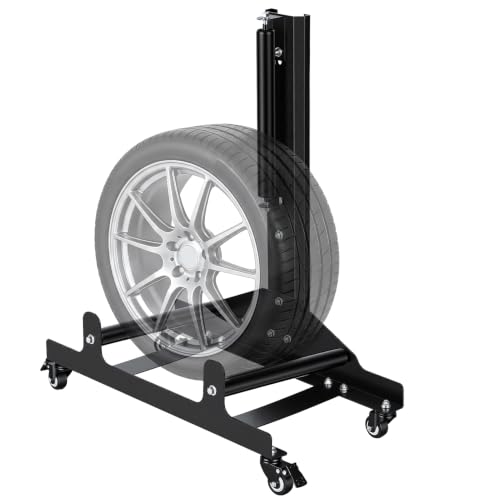
Three high-strength rollers give effortless 360-degree rotation at a lower price than the heavier steel-plate stands above. It still handles tire shine, ceramic coating, and polishing passes for occasional home use. The lighter frame is the tradeoff for the lower cost.
Pros
- Effortless rotation on 3 rollers
- Lower price than steel-plate stands
- Handles most common detailing tasks
Cons
- Lighter frame than heavy-duty options
- Less stable with very large wheels

DESEQPT Rolling Wheel Detailing Stand
A smaller footprint and portable design make this stand easier to tuck away in a garage without dedicated detailing space. Rollers still allow smooth rotation for cleaning and polishing passes. It suits someone detailing wheels a few times a year rather than running a shop.
Pros
- Compact footprint for storage
- Easy to move around a garage
- Smooth rotation for the price
Cons
- Lower load capacity than steel-plate stands
- Less suited to daily shop use
How they compare
| # | Model | Dimensions | Best for | Score | Price |
|---|---|---|---|---|---|
| 1 | Maxshine WS01 Wheel Rim Detailing Rolling Stand | 23 in L x 14 in W x 36 in H | Best overall | 9.2 | Check price |
| 2 | ALL4DETAIL 360 Rolling Wheel Detailing Stand | 110 lbs / 50 kg | Best for heavy wheels and stability | 8.9 | Check price |
| 3 | FuturelOT Heavy Duty Wheel Detailing Stand | Full 360 degree | Best for shops and commercial use | 8.7 | Check price |
| 4 | JoyDetail Rolling Wheel Detailing Stand | 360 degree, heavy duty | Best for ceramic coating prep | 8.5 | Check price |
| 5 | KREFINISH Rolling Wheel Detailing Stand | 360 degree rotating | Best for polishing and tire shine | 8.3 | Check price |
| 6 | iondelce Rolling Wheel Detailing Stand | 3 high-strength rollers | Best budget pick | 8.1 | Check price |
| 7 | DESEQPT Rolling Wheel Detailing Stand | Portable, compact frame | Best compact and portable | 8.0 | Check price |
Frequently asked questions
What is a wheel detailing stand used for?
It holds a removed wheel upright and lets it rotate so cleaning, polishing, and coating reach the entire surface evenly.
Can a wheel stand hold a truck wheel?
Only stands with a higher load rating and thicker steel frame, like 4mm plate construction, safely hold heavier truck wheels.
Do I need a rolling stand for ceramic coating?
It is not strictly required, but even rotation during coating application and cure helps avoid streaks and thin spots.
Is a wheel stand the same as a tire changer?
No. A tire changer removes rubber from the rim, while a detailing stand just holds the wheel upright for cleaning or coating.
How much weight can a rolling wheel stand hold?
It varies by model, with lighter roller stands rated lower and steel-plate stands reaching around 110 pounds.
Can these stands scratch a wheel or tire?
Quality roller surfaces are designed to avoid scratching, though cheaper rollers with rough edges can mark softer finishes.
Are wheel detailing stands only for shops?
No, home detailers use compact versions, while shops and fleets tend toward heavier-duty, fast-setup models.
How do I clean the rollers on a wheel stand?
Wipe rollers with a microfiber towel and mild cleaner regularly to prevent grit buildup that could transfer to a wheel.
Do wheel stands fold or store compactly?
Portable and compact models are built to tuck into a corner, while heavier steel-plate stands take up more permanent floor space.
What size wheel fits on these stands?
Most current stands handle common passenger and light truck wheel diameters; very large off-road wheels should check the load and size rating first.
Final word
The Maxshine WS01 is the right pick for most detailers because it comes from a brand built specifically around this equipment and holds steady rotation under regular use. Anyone working with larger or heavier wheels should pick the ALL4DETAIL stand instead for its thicker steel plate and higher load rating. A home user who only details a car a couple of times a year should skip the commercial-grade options and go with the compact DESEQPT stand.
Tony Russo
Tony trained as an automotive technician and spent years in service and parts retail before moving into writing. He focuses on garage tools, car care products and accessories from a hands-on maintenance perspective.