Wetsuits that suit indoor pools and plunge tubs
Seavenger Navigator 3mm leads for indoor use, holding warmth through long static work in a cool pool. O’Neill Reactor II 2mm frees the shoulders for lap swimming. Cressi Playa 2.5mm shorty fits a heated pool, where only the core really needs covering.
Seavenger Navigator 3mm is the default pick for indoor dive classes, aqua therapy and unheated training tanks. Full coverage holds warmth through an hour of slow work, and flatlock seams sit flat against skin. Its limit shows in a fast freestyle stroke, where 3mm sleeves fight the shoulders.
Indoor water removes wind and chop, which changes the job a suit has to do. Warmth still counts in pools held below eighty degrees and in plunge tubs, while surf durability stops mattering. We compared thickness, seam type, coverage and zip design, then weighed owner reports on sizing, chafing and how neoprene survives chlorinated water.
The best picks, ranked

Seavenger Navigator 3mm Full Body Wetsuit
Three millimetres of full coverage matches scuba lessons run in a pool, where you hover and kneel more than you swim. Flatlock seams lie flat under a harness strap and stop the rubbing that shows up after an hour. Reinforced knee panels take the wear of skills practice on tile.
Pros
- Holds warmth through long, low effort sessions
- Knee panels survive kneeling on a pool floor
- Zip leash makes solo entry workable
Cons
- 3mm sleeves fight a fast freestyle stroke
- Needs hours to dry between back to back classes

O’Neill Reactor II 2mm Back Zip Spring Wetsuit
Stretchier neoprene than most entry suits, cut at 2mm, keeps the shoulder rotation a swim stroke needs. Short sleeves and legs stop you overheating during laps in a pool held near eighty degrees. Insulation is the trade, so a cold plunge tub asks too much of it.
Pros
- Shoulder panels allow a full swim stroke
- Dries much faster than a 3mm full suit
- Sizing runs consistent across the range
Cons
- Warmth runs out below seventy degrees
- Bare arms and legs get no abrasion cover
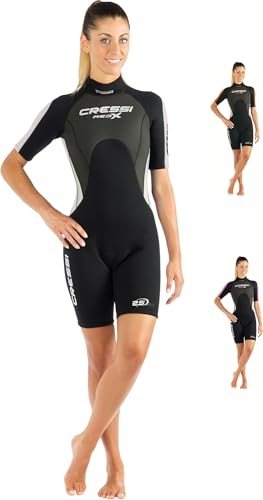
Cressi Playa 2.5mm Shorty Wetsuit
Cressi aims this at warm water, which describes almost every heated indoor pool. Coverage stops at the torso and thighs, the areas that shed heat fastest, leaving arms and calves free. Snorkel and freediving students choose it to stay comfortable through deck briefings as well as in the water.
Pros
- Warms the core without cooking you on deck
- Pulls on and off quickly between sessions
- Rolls small enough for a swim bag
Cons
- Arms and lower legs get no insulation
- Too light for cold plunge work

NeoSport 3mm Premium Neoprene Shorty Wetsuit
Dive shops stock NeoSport partly because the size run covers tall and plus fits that other brands skip. A 3mm shorty lands between the warmth of a full suit and the freedom of a 2.5mm. Seams are flatlock rather than glued, a fair trade in a pool where cold flush stays mild.
Pros
- Size range covers more body shapes
- Warmer core than any 2.5mm shorty
- Holds up to weekly class use
Cons
- Flatlock seams let cool water seep through
- Panels feel stiff for the first few wears

Lemorecn 3mm Neoprene Shorty Wetsuit
Specification stays basic: 3mm neoprene, flatlock seams and a back zip with a long pull cord. That covers occasional lessons or a couple of plunge sessions a week without fuss. Finish trails the branded suits, and owners report the zip runs rough unless rinsed after every use.
Pros
- Lowest outlay for a 3mm suit
- Long pull cord makes solo entry simple
- Fine for occasional indoor sessions
Cons
- Zip needs rinsing to stay smooth
- Neoprene stretches less than branded panels

Hevto Kids 3mm Shorty Wetsuit
Children shed heat much faster than adults, so a pool that feels fine to a parent leaves a child shivering by minute twenty. Hevto cuts 3mm neoprene to youth measurements instead of scaling down an adult pattern. Bright panels also make a child easier to pick out in a busy lane.
Pros
- Stops the shivering during long lessons
- Youth pattern rather than a shrunken adult cut
- High visibility panels stand out in the water
Cons
- Outgrown within a season or two
- Back zip still needs an adult to start
Dark Lightning 3/2mm Full Body Wetsuit
Thicker neoprene over the torso with thinner panels on the limbs is the standard swimming compromise. Core warmth stays high while arms keep enough range for sustained strokes against a current. Chlorine still eats neoprene, so rinse this one before it dries after every session.
Pros
- Warm core paired with movable arms
- Handles hour long training swims
- Costs less than branded full suits
Cons
- Sizing runs snug, so size up if between
- Not built for surf abrasion
How they stack up
| # | Model | Thickness | Best for | Score | Price |
|---|---|---|---|---|---|
| 1 | Seavenger Navigator 3mm Full Body Wetsuit | 3mm neoprene | Best overall | 9.4 | Check price |
| 2 | O’Neill Reactor II 2mm Back Zip Spring Wetsuit | 2mm neoprene | Best for flexibility | 9.2 | Check price |
| 3 | Cressi Playa 2.5mm Shorty Wetsuit | 2.5mm neoprene | Best for heated pools | 9.0 | Check price |
| 4 | NeoSport 3mm Premium Neoprene Shorty Wetsuit | 3mm neoprene | Best value | 8.7 | Check price |
| 5 | Lemorecn 3mm Neoprene Shorty Wetsuit | 3mm neoprene | Best budget | 8.5 | Check price |
| 6 | Hevto Kids 3mm Shorty Wetsuit | 3mm neoprene | Best for kids’ lessons | 8.3 | Check price |
| 7 | Dark Lightning 3/2mm Full Body Wetsuit | 3mm torso, 2mm arms and legs | Best for long endless pool sessions | 8.0 | Check price |
What matters most
Why indoor water still calls for a wetsuit Competition pools hold roughly seventy eight to eighty two degrees, which feels warm while swimming and cold while standing still. Scuba skills, snorkel practice and aqua therapy all involve long static spells, and body heat drains during them. Plunge tubs run far colder on purpose. Neoprene works by trapping a thin layer of water your body then warms. Thickness therefore measures how long you stay comfortable, not how cold the water is.
How to choose thickness: 2mm, 2.5mm or 3mm Two millimetres fits a heated pool and active swimming, where movement makes its own heat. Two and a half covers most indoor lessons in a shorty cut. Three millimetres answers static work, unheated tanks and anyone who chills quickly. Mixed builds such as the Dark Lightning 3/2mm put insulation on the torso and flexibility at the shoulders. Body composition shifts all of these numbers, so a lean swimmer often needs a step up.
Full suit vs spring suit vs shorty for pool use Full suits add arm and leg insulation, which earns its place when you kneel on tile for dive drills. Spring suits cover the torso and free the shoulders, the right shape for laps. Shorties change fastest and pack smallest, handy when a lesson follows a work shift. Coverage usually matters more indoors than an extra half millimetre of thickness. Avoid a buoyant triathlon suit unless the facility allows it, since many lesson programmes do not.
How to stop chlorine wrecking your wetsuit Chlorine degrades neoprene and seam adhesive faster than salt water does. Rinse in cool fresh water straight after each session, before the suit dries. Hang it inside out over a wide hanger, because a thin rail creases the panels and cracks the foam over time. Skip hot water, washing machines and direct sunlight. Wetsuit shampoo helps with odour, and regular pool users should expect a shorter service life than an open water swimmer gets from the same model.
Good to know
Can you wear a wetsuit in an indoor swimming pool?
Most facilities allow it for therapy, dive training and swimmers who chill easily. Rules tighten around buoyant triathlon suits in lessons and lap lanes, so ask before buying.
What thickness wetsuit is best for a heated pool?
Two to two and a half millimetres in a shorty cut. Cressi Playa 2.5mm keeps the core warm without leaving you sweltering once you climb out.
Does chlorine ruin a wetsuit?
It shortens the life of both the foam and the seam glue. Rinsing in fresh water before the suit dries, then drying it out of sunlight, does most of the protecting.
Which wetsuit is best for cold plunge tubs?
Full 3mm coverage, such as the Seavenger Navigator. Shorties leave arms and legs bare, and that is exactly where the cold shock response hits hardest.
Shorty vs full wetsuit for indoor training, which is better?
Shorties win in heated pools and short sessions. Full suits win for dive skills, static drills and anything past forty minutes in the water.
Do kids need a wetsuit for indoor swimming lessons?
Many do. A child’s surface area to mass ratio drains heat quickly, so a 3mm youth shorty like the Hevto often ends the mid-lesson shivering.
Will a wetsuit slow down your swim stroke?
Thick sleeves will. Pick 2mm arms, a spring suit such as the O’Neill Reactor II, or a 3/2mm design that thins the neoprene across the shoulders.
How should an indoor wetsuit fit?
Snug, with no loose pockets at the lower back or behind the knees, yet loose enough to breathe deeply. Between sizes in budget suits, owners generally advise going up.
How long does a wetsuit last with regular pool use?
Weekly chlorinated sessions age neoprene faster than occasional sea swims. Watch for seams opening and foam that no longer springs back, and rinse after every visit to delay both.
The verdict
Seavenger Navigator 3mm is the buy for indoor dive classes, aqua therapy and any session with long static periods, since full coverage is what keeps you warm while hovering. Lap swimmers and endless pool users should take the O’Neill Reactor II 2mm instead, because shoulder freedom matters more than insulation once you are working hard. Parents facing a shivering child each week get more out of the Hevto youth shorty than from any adult suit.
Derek Holt
Derek has a background coaching recreational and amateur athletes and has worked the sales floor at specialty fitness retailers. He focuses on equipment durability, ergonomics and realistic use cases rather than marketing claims.