Heavy Duty Wetsuits vs Standard Suits: What Changes
For genuine cold water protection, the O’Neill Epic 4/3mm Wetsuit leads with sealed and taped seams. Mild water surfers do well with the Body Glove Method 3/2mm Wetsuit. Budget buyers should look at the Hyperflex Amp 3/2mm Wetsuit for occasional warm season use.
Cold water sessions call for the O’Neill Epic 4/3mm Wetsuit, since its sealed and taped seams limit flushing better than flatlock stitching. Everyday surf in mild water suits the Body Glove Method 3/2mm Wetsuit. Divers and spearfishers working near rocks should consider the two-piece Cressi Castoro 5mm Wetsuit for its abrasion resistant panels.
Neoprene thickness alone does not determine warmth, since seam construction decides how much water actually gets inside. We compared stated mm ratings, seam types and manufacturer temperature ranges against owner reports on flushing and flexibility.
Before you buy
What does neoprene thickness mean for a wetsuit? Thickness is usually listed as two numbers, such as 3/2mm, showing torso thickness first and limb thickness second. Thicker torso panels trap more body heat while thinner limb panels preserve paddling and swimming range of motion. Suits in this comparison range from 3/2mm for milder water up to 5mm for cold-water diving and surfing. Thicker neoprene also adds buoyancy, which divers offset with additional weight.
Flatlock vs sealed and taped seams: which keeps you warmer? Flatlock seams stitch panels flat and overlapping, which stays flexible but leaves small needle holes that let water seep in. Sealed and taped seams glue panels together first, then cover the stitch line with tape, blocking nearly all water at the seam. Flatlock construction suits warmer water where a small amount of flushing barely matters. Sealed and taped seams cost more but matter more as water temperature drops.
How do you match a wetsuit to water temperature? Manufacturers publish a water temperature range for each suit, based on the neoprene thickness and seam type together. A 3/2mm flatlock suit in this comparison suits water from the mid 60s into the low 70s, while a 5mm sealed suit reaches down into the high 40s. Wearing a suit rated too thin for the water leads to a rider cutting a session short from cold. Layering a hood or vest under a suit can extend its range somewhat, but does not replace matching the base thickness correctly.
Which wetsuit works best for diving versus surfing? Divers spend long stretches mostly still underwater, so thicker neoprene and a two-piece design that layers a jacket over a long john add extra warmth. Surfers move constantly while paddling, so a single-piece steamer with more flexible panels through the shoulders suits that motion better. Spearfishing adds abrasion risk from rocks and gear straps, which a double-lined panel resists better than a single-lined suit. Warm-water beginners in either sport can start with a thinner 3/2mm suit before investing in thicker gear.
The top picks, ranked

O’Neill Epic 4/3mm Wetsuit
Full steamer wetsuit with 4mm neoprene through the torso and 3mm through the limbs. Sealed and taped seams block water at the stitch lines, rated for water roughly 52 to 63 degrees F.
Pros
- Sealed and taped seams cut flushing compared to flatlock
- Thicker 4mm torso panel adds core warmth
- Flexible limb panels keep paddling range of motion
Cons
- Warmer construction feels bulky in water above the low 60s
- Taped seams cost more than flatlock stitching

Body Glove Method 3/2mm Wetsuit
3/2mm full suit with flatlock stitched seams and glued panels at stress points. A back zip entry suits water roughly 62 to 68 degrees F.
Pros
- Flatlock seams stay flexible for paddling and swimming
- Price sits below premium taped-seam suits
- 3/2mm thickness suits a broad range of mild water temperatures
Cons
- Flatlock seams let in more water than sealed seams
- Not warm enough for water in the 50s

Hyperflex Amp 3/2mm Wetsuit
Budget 3/2mm full suit with flatlock seams and a back zip closure. A glideskin collar reduces chafing, aimed at warmer water sessions in the mid 60s and up.
Pros
- Lower cost suits occasional or seasonal use
- Glideskin collar reduces neck rash
- Flatlock seams keep the suit flexible for swimming
Cons
- Thinner seam construction lets in more water than taped suits
- Not built for cold-water sessions
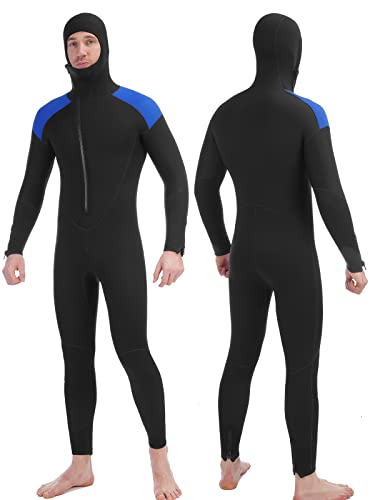
Realon 5mm Wetsuit
5mm neoprene full suit with sealed seams, built for water roughly 46 to 57 degrees F. Aimed at cold-water divers and surfers who need more insulation than a standard steamer.
Pros
- 5mm thickness holds warmth in cold water sessions
- Sealed seams limit flushing better than flatlock
- Heavier neoprene resists compression at moderate depth
Cons
- Thick neoprene restricts flexibility more than 3/2mm suits
- Bulkier fit takes longer to put on and remove
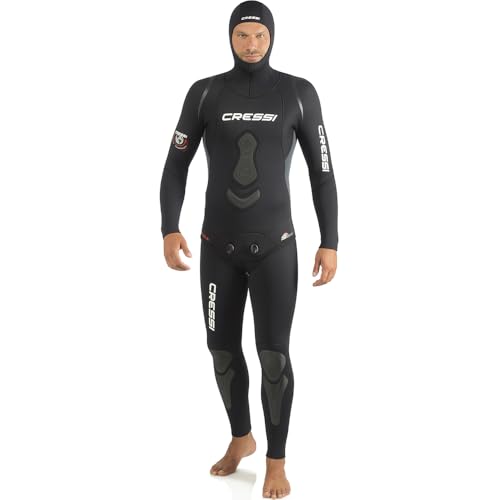
Cressi Castoro 5mm Wetsuit
Two-piece 5mm suit with a long john and separate jacket, double-lined neoprene on the torso for abrasion resistance. Sealed seams suit scuba diving and spearfishing in cooler water.
Pros
- Two-piece design adds a double layer over the core for extra warmth
- Double-lined panels resist abrasion from gear straps and rocks
- Sealed seams suit repeated dive sessions
Cons
- Two-piece style takes longer to don and doff than a single steamer
- More buoyant fit needs additional weighting underwater

Rip Curl Omega 3/2mm Wetsuit
3/2mm surf wetsuit with flatlock seams at low-stress areas and taped seams across the chest and back. Built for water roughly 60 to 68 degrees F.
Pros
- Chest zip entry reduces water flushing at the neckline
- Mixed seam construction balances flexibility with warmth
- Suits paddling-heavy surf sessions
Cons
- Not warm enough for water below the high 50s
- Taped panels add cost over an all-flatlock suit

O’Neill Reactor-2 3/2mm Wetsuit
3/2mm full suit with flatlock seams and a back zip closure. Stretch neoprene keeps the build straightforward for first-time buyers in water around 68 to 75 degrees F.
Pros
- Lower price point suits beginners testing a first wetsuit
- Flatlock seams keep the suit easy to move in
- Stretch neoprene simplifies getting in and out
Cons
- Limited warmth outside its stated mild water range
- Flatlock seams flush more than sealed or taped construction
Side by side
| # | Model | Neoprene thickness | Best for | Score | Price |
|---|---|---|---|---|---|
| 1 | O’Neill Epic 4/3mm Wetsuit | 4/3mm | Best overall | 9.4 | Check price |
| 2 | Body Glove Method 3/2mm Wetsuit | 3/2mm | Best value | 9.2 | Check price |
| 3 | Hyperflex Amp 3/2mm Wetsuit | 3/2mm | Best budget | 8.9 | Check price |
| 4 | Realon 5mm Wetsuit | 5mm | Best for cold water | 8.7 | Check price |
| 5 | Cressi Castoro 5mm Wetsuit | 5mm | Best for diving and spearfishing | 8.4 | Check price |
| 6 | Rip Curl Omega 3/2mm Wetsuit | 3/2mm | Best for surfing | 8.2 | Check price |
| 7 | O’Neill Reactor-2 3/2mm Wetsuit | 3/2mm | Best for warm water and beginners | 8.0 | Check price |
Frequently asked questions
What mm wetsuit do I need for cold water?
Water in the high 40s to mid 50s typically calls for a 5mm suit with sealed seams, based on manufacturer temperature charts. Milder water in the 60s works with a 3/2mm suit instead.
Flatlock vs sealed seams: what’s actually different?
Flatlock seams stitch panels flat with visible thread on both sides, leaving small needle holes that let some water through. Sealed and taped seams glue panels first and cover the stitch line with tape, blocking nearly all water at the seam.
Can a 3/2mm wetsuit be used in winter?
Only in water that stays in its stated range, generally the low to mid 60s for most 3/2mm suits. Colder winter water usually needs a thicker 4/3mm or 5mm suit instead.
How tight should a wetsuit fit?
A wetsuit should fit snugly with no loose fabric or gaps that let water flush freely, but not so tight it restricts breathing or shoulder movement. Sizing charts based on height and weight together give a better fit than weight alone.
Is a 5mm wetsuit too thick for surfing?
It works for cold-water surfing but feels bulky and restricts paddling motion in milder conditions where a 3/2mm suit would suffice. Matching thickness to actual water temperature avoids overheating or restricted movement.
What is a heavy duty wetsuit used for?
Heavy duty usually refers to thicker neoprene, sealed seams and reinforced panels built for cold water diving, spearfishing or extended cold-water surf sessions. Lighter 3/2mm suits cover milder, everyday conditions instead.
Two-piece vs one-piece wetsuit for diving: which is better?
A two-piece long john and jacket combination adds a double layer over the core for extra warmth during long, mostly stationary dives. A one-piece steamer suits more active swimming or surfing where flexibility matters more than layered warmth.
How long should a wetsuit last with regular use?
Sealed and taped seams and quality neoprene typically hold up for several seasons of regular use before seams start to leak. Rinsing with fresh water after each use and avoiding prolonged folding in storage extends that lifespan.
The verdict
Cold-water paddlers and surfers should choose the O’Neill Epic 4/3mm Wetsuit for its sealed and taped seams. Mild-water sessions are covered well by the Body Glove Method 3/2mm Wetsuit at a lower cost. Divers working near structure get more protection from the two-piece Cressi Castoro 5mm Wetsuit.
Derek Holt
Derek has a background coaching recreational and amateur athletes and has worked the sales floor at specialty fitness retailers. He focuses on equipment durability, ergonomics and realistic use cases rather than marketing claims.