Rooftop Cargo Carriers That Actually Stay Dry on the Highway
For hard shell durability, the Thule Force XT L handles years of use without seam concerns. Vehicles without crossbars do better with the RoofBag Explorer, which straps through doors instead. Budget minded trips are covered by the Rightline Gear Sport 3, a soft sided bag rated fully waterproof at a lower cost.
A carrier’s fabric coating matters less than where its seams sit relative to airflow at highway speed. Thule’s Force XT L sidesteps the issue with a one piece ABS shell, though it still needs existing roof crossbars to mount. Owners without crossbars can go waterproof instead through the RoofBag Explorer’s door mounted straps. The Rightline Gear Sport 3 keeps a soft sided, budget friendly option in the mix.
Marketing calls most bags waterproof, but welded seams and storm flap placement decide what survives real rain at highway speed. We compared shell material, seam construction, cargo capacity and mounting hardware across seven current carriers, weighing owner reports of leaks over multiple seasons.
The best picks, ranked

Thule Force XT L
One piece ABS construction removes the seam leak risk that soft bags manage through tape or welding. Dual side opening lids make loading from either side of the vehicle straightforward. Owners covering long highway trips report zero water intrusion across multiple seasons of use.
Pros
- No seams to fail under sustained rain
- Dual opening lids ease loading and unloading
- Aerodynamic shape reduces wind noise at speed
Cons
- Requires existing roof crossbars to mount
- Takes up garage space when not in use

Yakima SkyBox 16 Carbonite
Yakima’s wider shell suits trucks and SUVs where narrower boxes waste usable roof width. SKS locks secure the box to the crossbars and to itself when detached. Owners hauling ski or camping gear regularly cite the extra interior width for awkward shaped items.
Pros
- Extra width suits bulky or irregular gear
- Locking system secures both mount and lid
- Consistent waterproofing from the sealed shell
Cons
- Wider profile needs a vehicle with adequate crossbar spread
- Heavier to lift onto the roof alone
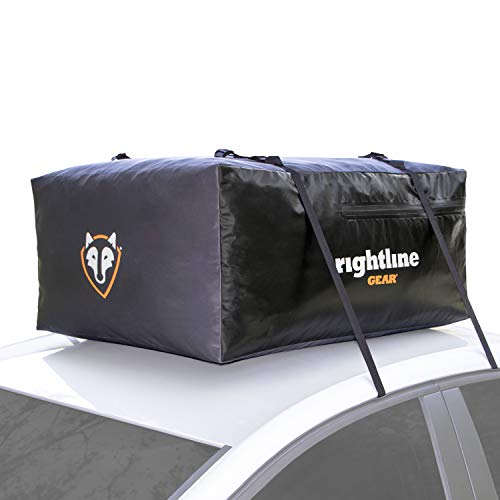
Rightline Gear Sport 3 Car Top Carrier
PVC coated fabric with a storm flap over the main zipper handles sustained highway rain without a hard shell’s cost or storage footprint. Straps route either through door frames or over existing crossbars, covering vehicles either way. Owners note it folds flat for off season storage, unlike any hard box.
Pros
- Works with or without existing roof crossbars
- Folds flat for storage between trips
- Storm flap adds a second barrier over the zipper
Cons
- Fabric shell offers less protection from impacts than a hard box
- Straps need periodic retightening on long drives

SportRack Vista XL Cargo Box
SportRack keeps cost down with a simpler latch system than premium boxes, while still delivering a sealed, seamless shell. Interior straps hold smaller items from sliding during braking. Owners buying a first cargo box choose this to try hard shell storage before committing to a pricier model.
Pros
- Lower cost entry into hard shell storage
- Seamless shell avoids soft bag leak points
- Interior straps keep smaller gear from shifting
Cons
- Latch mechanism feels less refined than premium boxes
- Fewer color and finish options than Thule or Yakima

RoofBag Explorer Waterproof Rooftop Cargo Carrier
Straps run through the doors themselves rather than needing crossbars or a factory rack, making this usable on vehicles with a bare roof. Heat welded seam construction replaces stitching to prevent needle hole leaks. Owners with rented or borrowed vehicles favor it since it needs no permanent hardware.
Pros
- Mounts on vehicles with no factory roof rack
- Heat welded seams avoid stitching needle holes
- Straps stow easily when not attached to a car
Cons
- Smaller capacity than most hard shell options
- Door straps need care around door seals and paint

Kohree Rooftop Cargo Carrier Bag
Kohree uses a simpler zipper and flap design than the Rightline Gear bag, keeping the price low while still using coated waterproof fabric. Straps attach to crossbars or through doors depending on the vehicle. Owners using it for occasional trips rather than frequent hauling get adequate value from the lower cost.
Pros
- Lowest cost waterproof option in this group
- Works on vehicles with or without crossbars
- Folds down small for storage
Cons
- Fabric feels thinner than premium soft carriers
- Zipper flap offers less protection than a storm flap design
Rightline Gear Range Jr Car Top Carrier
Range Jr’s smaller footprint suits compact cars and small SUVs, where a full size carrier overhangs the roofline. The same PVC coated construction and storm flap carry over from the larger Sport 3. Owners with smaller vehicles pick this specifically to avoid overhang past the windshield or rear glass.
Pros
- Smaller footprint avoids overhang on compact cars
- Same waterproofing method as the larger Sport 3
- Lighter weight makes solo mounting easier
Cons
- Reduced capacity compared to full size carriers
- Not ideal for longer, bulkier cargo like skis
What to look for
Hard shell versus soft sided carriers Hard shell boxes seal as one molded piece, removing the seam leak risk that soft bags manage through tape, welding or storm flaps. Soft bags cost less, fold flat for storage and often mount without crossbars. Choose hard shell for frequent highway use, and soft sided for occasional trips or limited storage space.
Mounting without a factory roof rack Not every vehicle ships with crossbars. Some carriers, like the RoofBag Explorer, route straps through door frames instead, avoiding a separate rack purchase for occasional cargo hauling. Check that door seals and paint stay protected where straps make contact.
Matching capacity to the trip Twelve cubic feet suits a weekend trip for two, while 16 to 18 cubic feet covers a family’s luggage or camping gear. Oversized boxes on a compact car increase wind drag and fuel use without adding usable capacity for smaller loads. Measure typical cargo before choosing a size.
Waterproofing details that actually matter Heat welded or taped seams outperform simple stitching, which leaves needle holes exposed to water. A storm flap covering the main zipper adds a second barrier beyond the zipper’s own coating. Hard shell boxes skip this concern entirely, since they carry no fabric seams at all.
Side by side
| # | Model | Material | Best for | Score | Price |
|---|---|---|---|---|---|
| 1 | Thule Force XT L | Molded ABS hard shell | Best overall | 9.4 | Check price |
| 2 | Yakima SkyBox 16 Carbonite | Molded hard shell | Best for wide vehicles | 9.1 | Check price |
| 3 | Rightline Gear Sport 3 Car Top Carrier | PVC coated tarpaulin fabric | Best soft sided value | 8.8 | Check price |
| 4 | SportRack Vista XL Cargo Box | Molded hard shell | Best budget hard shell | 8.5 | Check price |
| 5 | RoofBag Explorer Waterproof Rooftop Cargo Carrier | Heavy duty PVC with heat welded seams | Best without roof crossbars | 8.3 | Check price |
| 6 | Kohree Rooftop Cargo Carrier Bag | PVC coated waterproof fabric | Best budget soft bag | 8.1 | Check price |
| 7 | Rightline Gear Range Jr Car Top Carrier | PVC coated tarpaulin fabric | Best for compact vehicles | 8.0 | Check price |
Frequently asked questions
Are soft rooftop cargo bags actually waterproof?
Quality soft bags with welded or taped seams and a storm flap perform well in sustained rain. Cheaper bags with only a basic zipper cover can leak at highway speed when wind drives rain into the seams.
Can you mount a rooftop carrier without crossbars?
Yes. Models like the RoofBag Explorer and Rightline Gear Sport 3 use straps that route through door frames instead of clamping to crossbars, working on a bare roof.
How much weight can a rooftop cargo carrier hold?
Most soft and hard carriers rate for around 100 to 165 pounds, though the vehicle’s own roof weight rating, listed in the owner’s manual, is usually the stricter limit.
Do hard shell cargo boxes reduce fuel economy?
Any rooftop carrier adds wind resistance and reduces fuel economy somewhat. Aerodynamic hard shells generally perform better than boxy soft bags at highway speed.
What is a storm flap on a cargo bag?
It is a fabric strip that covers the zipper track from outside, blocking wind driven rain from reaching the zipper’s own water resistant coating.
Can a rooftop carrier be left on the car full time?
Soft bags can generally stay mounted, though removing them when empty reduces wind drag and fuel loss. Hard shell boxes are heavier and are often removed and stored between trips.
How do you prevent scratches from rooftop carrier straps?
Route straps through door frames using the felt or rubber protectors most carriers include. Check strap position periodically on longer trips to prevent rubbing against paint.
What size rooftop carrier fits a weekend trip for a family?
Around 15 to 18 cubic feet generally covers luggage for a family of four on a weekend trip, though bulky items like camping gear may need the larger end of that range.
Which rooftop cargo carrier is best for a family road trip?
A 16 to 18 cubic foot box, hard or soft sided, covers luggage for a family of four. Soft sided options like the Rightline Gear Sport 3 also fold flat for storage between trips.
Is a hard shell or soft sided carrier more durable?
Hard shell boxes generally outlast soft bags, since they carry no fabric or seams to degrade from UV exposure and repeated flexing. Soft bags cost less upfront and store flatter.
The bottom line
Frequent haulers get the most from the Thule Force XT L, since a seamless hard shell removes the main failure point soft bags manage around. Vehicles without roof crossbars should go with the RoofBag Explorer instead. Occasional trips are served well enough by the Rightline Gear Sport 3, which keeps cost and storage footprint down.
Tony Russo
Tony trained as an automotive technician and spent years in service and parts retail before moving into writing. He focuses on garage tools, car care products and accessories from a hands-on maintenance perspective.