Ammonia Test Kits for Turtles, Koi Ponds, and Large Tanks
API Freshwater Master Test Kit covers the widest parameter range for mixed large tanks. API Turtle Water Test Kit calibrates ammonia thresholds to reptile waste levels. API Pond Master Test Kit adds hardness testing for koi ponds exposed to rain and runoff. Test method and range matter most in high-waste setups.
API Freshwater Master Test Kit reads ammonia, nitrite, nitrate, and pH in one box, covering the core readings large tanks need most. Owners running mixed turtle-and-fish setups benefit from that single-kit coverage. Its liquid-drop process runs slower than a dip strip, though, so daily spot checks favor a different kit.
Turtles, koi, and oversized fish push more waste through the water than a typical community tank holds. Ammonia readings that stay flat in a lightly stocked aquarium can spike fast under that load. We compared test method, parameter range, and how each kit performs in high-waste turtle tanks, ponds, and large freshwater setups.
The top picks, ranked

API Freshwater Master Test Kit
Liquid reagent drops read finer gradations than test strips, which matters when ammonia climbs slowly in a heavily stocked tank. One kit lasts through roughly 800 tests, covering months of weekly monitoring. Color charts compare results against a printed reference for each parameter.
Pros
- Covers four core parameters in one kit
- Liquid drops read more precisely than strips
- Enough reagent for months of weekly testing
Cons
- Color matching takes practice to read accurately
- Testing runs slower than dip-strip kits

API Turtle Water Test Kit
API built this kit around ammonia thresholds common in turtle tanks, where basking and feeding leave more solid waste than typical fish setups. A turtle-specific care booklet explains safe ranges for shelled pets instead of generic fish guidance. The same liquid-drop method used in the Freshwater Master Kit applies here.
Pros
- Ammonia thresholds calibrated for turtle waste levels
- Includes turtle-specific care guidance
- Uses the same reliable liquid reagent method
Cons
- Skips chlorine and dechlorinator testing
- Fewer tests per kit than the Freshwater Master Kit

API Pond Master Test Kit
Carbonate and general hardness tests join the core four parameters here, both of which swing more in outdoor ponds exposed to rain and runoff. Koi carry a heavier bioload than most freshwater fish, making frequent ammonia checks necessary. This wider parameter list suits pond keepers managing chemistry beyond a simple tank.
Pros
- Adds hardness tests missing from tank-only kits
- Built for the larger water volumes ponds hold
- Covers ammonia spikes from heavy koi bioload
Cons
- Bulkier kit with more bottles to store
- Costs more per test than basic freshwater kits

Tetra EasyStrips 6-in-1 Test Strips
Dip strips read six parameters in one minute, faster than any liquid-drop kit on this list. Color pads sit on a single strip, cutting the steps needed for a quick daily check. Readings run less precise than liquid reagents but flag sudden changes fast.
Pros
- Six parameters from one one-minute strip
- Fastest read time of any kit here
- Skips mixing or measuring drops
Cons
- Less precise than liquid reagent methods
- Strips degrade if exposed to humid storage

JNW Direct 7-in-1 Aquarium Test Strips
100 strips ship in one bottle, covering seven parameters at a lower per-test cost than most liquid kits. Chlorine detection helps owners confirm tap water is fully dechlorinated before a large water change. The higher strip count suits owners testing multiple large tanks.
Pros
- 100 strips cover months of frequent testing
- Tests chlorine, a parameter many kits skip
- Costs less per individual test
Cons
- Accuracy varies more than liquid reagent kits
- Color charts are harder to match in dim light
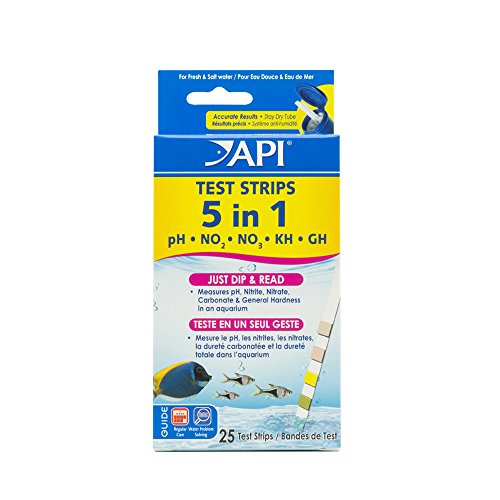
API GH & KH Test Kit
Hardness levels affect how stable pH stays over time, a bigger concern in large tanks where water changes happen less often per gallon. This kit isolates GH and KH testing for owners who already track ammonia and nitrate separately. Turtle and koi keepers pair it with a core freshwater kit rather than using it alone.
Pros
- Isolates hardness readings often bundled poorly elsewhere
- Uses the same liquid reagent method as core API kits
- Pairs well with a separate ammonia kit
Cons
- Skips ammonia, nitrite, and nitrate entirely
- Requires a second kit for full coverage

Salifert Ammonia Test Kit
Titration detects smaller ammonia changes than color-matching kits, useful for catching problems before they stress a large turtle or fish. It tests ammonia only, so owners pair it with a broader kit for nitrite and nitrate. Reagents ship in smaller bottles built for precision over bulk testing volume.
Pros
- More sensitive to small ammonia changes
- Titration reduces color-matching guesswork
- Compact bottles suit precise, controlled use
Cons
- Tests ammonia only, not a full panel
- Fewer tests per kit than multi-parameter options
How to choose
What large aquatic pets need from water testing Turtles, koi, and oversized fish generate more ammonia per gallon than typical community tanks. Ammonia and nitrite readings matter most during the first weeks of a new setup. Nitrate tracking matters more once a tank is established. Test frequency should rise after feeding increases or a new pet joins the tank.
Liquid reagent kits versus test strips Liquid drop kits like the API Freshwater Master Test Kit read finer gradations, useful for catching a slow ammonia climb. Strips like Tetra EasyStrips finish in under a minute, better suited to quick daily checks between full liquid tests. Many owners keep both, running strips daily and a liquid kit weekly.
Testing for turtles versus fish Turtle tanks often carry heavier waste loads from both feeding and basking, so the API Turtle Water Test Kit calibrates its ammonia guidance around that load. Fish-only tanks stocked at normal density can rely on a general freshwater kit without turtle-specific thresholds.
What changes in an outdoor koi pond Rain runoff and seasonal temperature swings affect hardness and pH more in outdoor ponds than in indoor tanks. A pond kit that includes GH and KH, like the API Pond Master Test Kit, catches shifts that ammonia-only kits miss. Larger water volumes also mean less frequent testing is often still safe.
Side by side
| # | Model | Parameters tested | Best for | Score | Price |
|---|---|---|---|---|---|
| 1 | API Freshwater Master Test Kit | Ammonia, nitrite, nitrate, pH | Best overall | 9.4 | Check price |
| 2 | API Turtle Water Test Kit | Ammonia, nitrite, nitrate, pH | Best for turtles | 9.1 | Check price |
| 3 | API Pond Master Test Kit | Ammonia, nitrite, nitrate, pH, KH, GH | Best for koi ponds | 8.9 | Check price |
| 4 | Tetra EasyStrips 6-in-1 Test Strips | pH, ammonia, nitrite, nitrate, hardness, alkalinity | Best for quick daily checks | 8.6 | Check price |
| 5 | JNW Direct 7-in-1 Aquarium Test Strips | pH, ammonia, nitrite, nitrate, hardness, alkalinity, chlorine | Best value | 8.4 | Check price |
| 6 | API GH & KH Test Kit | General hardness, carbonate hardness | Best for water hardness monitoring | 8.1 | Check price |
| 7 | Salifert Ammonia Test Kit | Ammonia only | Best for precision ammonia testing | 8.0 | Check price |
Good to know
How often should I test water in a turtle tank?
Weekly testing catches most ammonia buildup in a turtle tank. Testing twice weekly during the first month of a new setup helps confirm the tank has cycled.
Are test strips accurate enough for koi ponds?
Strips give a fast general reading but read less precisely than liquid kits. Many pond keepers use strips for routine checks and a liquid kit like the API Pond Master for borderline results.
What ammonia level is dangerous for turtles?
Any detectable ammonia above 0 ppm warrants a partial water change in a turtle tank. Turtles tolerate less ammonia buildup than many hardy fish species.
Do I need a separate hardness test kit?
Only if your primary kit skips GH and KH, which is common with basic freshwater kits. Pairing one like the API GH & KH Test Kit fills that gap.
Can the same test kit work for both fish and turtles?
Yes, kits like the API Freshwater Master Test Kit work for both. Turtle-specific kits add guidance calibrated to the higher waste loads shelled pets produce.
Why does a pond need different testing than an aquarium?
Ponds hold far more water and face outdoor conditions like rain and temperature swings. That is why pond kits typically add hardness and alkalinity tests alongside the core ammonia panel.
How many tests come in a typical water test kit?
Liquid kits like the API Freshwater Master Test Kit include enough reagent for roughly 800 tests. Strip-based kits usually ship 25 to 100 strips per bottle.
Is chlorine testing necessary before a tap water change?
Yes, if tap water fills a large tank or pond, testing for residual chlorine confirms dechlorinator worked before the pet goes back in. The JNW Direct 7-in-1 strips include that test.
API Freshwater Master vs API Turtle Water Test Kit: which one fits a mixed tank?
The Freshwater Master Kit suits mixed fish-and-turtle tanks with its general four-parameter panel. The Turtle kit adds guidance calibrated to the heavier waste turtles produce, useful for turtle-only setups.
Is a titration kit like Salifert worth it for a single parameter?
Titration catches smaller ammonia changes than color-matching kits, which helps in a heavily stocked tank. Most owners pair it with a broader kit rather than replacing one entirely.
Our pick
API Freshwater Master Test Kit remains the strongest all-around pick for most large tanks, since its four core parameters cover what matters week to week. Turtle owners should choose the API Turtle Water Test Kit instead, given its calibration toward higher waste loads. Koi pond keepers need the added hardness testing in the API Pond Master Test Kit, which tank-only kits do not provide.
Olivia Hartley
Olivia spent several years working at an animal shelter and a pet-supply retailer before joining the editorial team. She researches pet gear with an emphasis on safety, comfort and the fine print that owners often miss.


