Which Water Filter Pitcher Fits Your Water Problem?
Brita’s Tahoe with the Elite filter suits most homes, certified for lead reduction with a six-month filter life. ZeroWater’s ZP-010 removes the most dissolved solids and includes a testing meter. Epic Pure covers the broadest contaminant list, including PFAS, for well water and cautious city water users.
Brita’s Tahoe with the Elite filter leads this group on certified lead reduction and low upkeep, needing a change only twice a year. ZeroWater’s ZP-010 and Epic Pure take the top spots for dissolved-solids removal and contaminant breadth.
Marketing often blurs the line between taste improvement and certified contaminant removal, which makes pitchers hard to compare fairly. We compared NSF/ANSI certifications, stated filter lifespans, reservoir sizes, and owner reports on flow slowdown to rank these seven.
The top picks, ranked
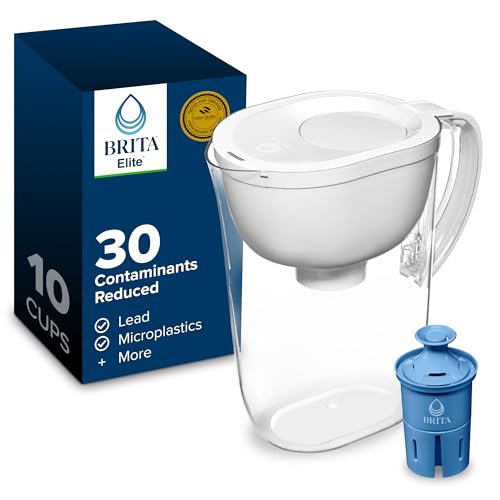
Brita Tahoe Pitcher with Elite Filter
Brita’s Elite filter carries certification for lead and chlorine reduction across 120 gallons, roughly six months of daily use. Tahoe’s 10-cup pitcher slides into most refrigerator doors and pairs with a SmartLight indicator that tracks remaining filter life. Replacement filters sell in nearly every grocery store, keeping the per-gallon cost low.
Pros
- Six-month filter changes cut maintenance to twice a year
- Certified lead and chlorine reduction under NSF/ANSI standards
- Replacement filters stocked in most grocery stores
Cons
- Retains some dissolved minerals and TDS instead of stripping them
- Lid flexes during one-handed pouring
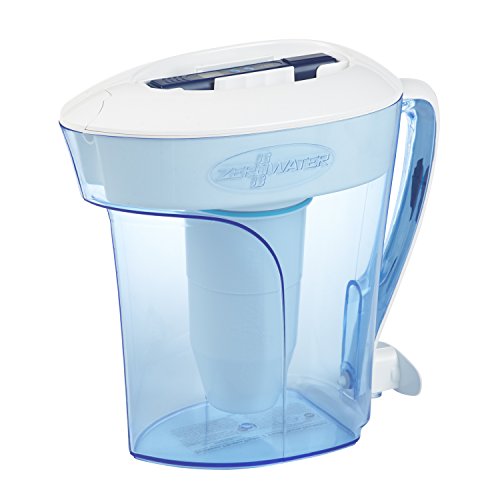
ZeroWater ZP-010 10-Cup Pitcher
Five-stage ion exchange pulls total dissolved solids down to a 000 reading on the included meter. Certification covers lead and chromium reduction, beyond typical carbon-only filtering. Hard water areas see filter life drop faster than the rated average, since dissolved minerals load the resin quickly.
Pros
- Verifiable 000 TDS reading via the included meter
- Certified lead and chromium reduction
- Removes metallic tastes that carbon filters miss
Cons
- Filter life shortens noticeably in high-TDS or hard water areas
- Flow slows as the filter nears its capacity

Epic Pure Water Filter Pitcher
Epic’s solid carbon block targets lead, PFAS, chlorine, and a range of pesticides, with lab results published for each batch. Rated for 150 gallons, the filter typically lasts three to four months. A manual timer dial on the lid tracks the next change date without batteries.
Pros
- Widest published contaminant list among these seven pitchers
- 150-gallon filter life beats most standard cartridges
- Filters manufactured in the United States
Cons
- Filters slower than carbon-only pitchers like Brita
- Replacement filters cost more per unit

PUR PLUS 11-Cup Pitcher
PUR’s PLUS filter carries certification for lead reduction plus dozens of additional contaminants. An 11-cup reservoir gives it the largest capacity among the standard pitchers in this group. LockFit seating locks the filter in place so unfiltered water cannot bypass it, while an LED light signals when the 40-gallon rating runs out.
Pros
- Broad certification list relative to its filter cost
- Largest capacity among standard-style pitchers here
- LockFit seal prevents unfiltered bypass water
Cons
- 40-gallon filter life means changes roughly every two months
- Pours slowly when the reservoir is full

LifeStraw Home 10-Cup Pitcher
LifeStraw combines activated carbon with a membrane microfilter that physically screens out bacteria, parasites, and microplastics. Brand lab data also credits it with lead and PFAS reduction alongside standard chlorine filtering. Its glass-look pitcher stands apart from the plastic designs common in this category.
Pros
- Only pitcher here addressing bacteria and microplastics directly
- Combines membrane filtration with a long-life carbon stage
- Glass-look design suits open counter storage
Cons
- Two separate filter components to track and replace
- Costs more upfront than single-filter pitchers

Waterdrop Lucid 10-Cup Pitcher
Waterdrop’s Lucid filters faster than most rivals in this lineup, so the reservoir refills glasses without a long wait. Its 200-gallon rated filter life is the longest here, which lowers cost per gallon over time. Certification covers chlorine, taste, and odor rather than heavy metals.
Pros
- Longest rated filter life of the seven pitchers
- Faster flow than most comparable pitchers
- Lower running cost per gallon over a year
Cons
- No certified lead reduction, unlike Brita Elite or PUR
- Wide lid design catches drips during pouring

Brita Metro 6-Cup Pitcher
Metro scales Brita’s pitcher down to 6 cups, sized for dorm rooms, single occupants, and compact refrigerators. It ships with a standard filter but accepts the six-month Elite filter as an upgrade path. A slim body slides into door shelves that full-size pitchers cannot reach.
Pros
- Fits refrigerator door shelves too narrow for 10-cup pitchers
- Upgrades to Elite filtration when lead reduction matters
- Lowest entry cost in the Brita lineup
Cons
- Needs frequent refills for more than one daily drinker
- Standard filter targets taste more than heavy metals
How they stack up
| # | Model | Capacity | Best for | Score | Price |
|---|---|---|---|---|---|
| 1 | Brita Tahoe Pitcher with Elite Filter | 10 cups | Best overall | 9.4 | Check price |
| 2 | ZeroWater ZP-010 10-Cup Pitcher | 5-stage ion exchange | Best for dissolved solids | 9.2 | Check price |
| 3 | Epic Pure Water Filter Pitcher | Solid carbon block, 150 gallons | Best contaminant coverage | 9.0 | Check price |
| 4 | PUR PLUS 11-Cup Pitcher | 11 cups | Best for lead-focused filtering | 8.8 | Check price |
| 5 | LifeStraw Home 10-Cup Pitcher | Membrane microfilter plus carbon | Best for microplastics and bacteria | 8.6 | Check price |
| 6 | Waterdrop Lucid 10-Cup Pitcher | 200 gallons | Best value | 8.3 | Check price |
| 7 | Brita Metro 6-Cup Pitcher | 6 cups | Best for small households | 8.0 | Check price |
Before you buy
What does a water filter pitcher actually remove? Every pitcher in this group reduces chlorine taste through activated carbon. Certified models go further, reducing lead, chromium, or PFAS under NSF/ANSI standards 42, 53, and 401. Budget filters without that certification address flavor only, not the contaminants listed on public water reports. LifeStraw stands apart with a membrane that physically screens bacteria and parasites, something carbon alone cannot do. Check the certification sheet before assuming a pitcher handles a specific contaminant.
Which water filter pitcher matches your specific water problem? Start with your utility’s annual water quality report or a home test kit. Chlorine taste alone calls for the Waterdrop Lucid or Brita Metro, both built around carbon filtering. Homes with older plumbing and possible lead risk should choose Brita Elite, PUR PLUS, or Epic Pure. Metallic taste from dissolved minerals points to ZeroWater’s ion exchange system. Well water with pesticide or PFAS concerns favors Epic Pure, with LifeStraw adding bacteria protection.
What size water filter pitcher fits your household? A 10-cup pitcher covers two to three people between refills. PUR’s 11-cup body suits larger households that drink more water daily. Brita Metro’s 6-cup size fits singles, dorm rooms, and narrow refrigerator door shelves. Measure shelf clearance before buying, since tall lids often collide with the shelf above them. Flow rate matters here too, because a slow filter leaves an empty pitcher at dinner time in a busy household.
How much do replacement filters cost over a year? Filter life determines real running cost more than the pitcher price. Brita Elite lasts 120 gallons, Waterdrop Lucid rates for 200, while PUR PLUS needs replacement every 40 gallons. Two-month filters can triple annual spending compared to six-month cartridges. Households that drink heavily should track change dates with a marked calendar or rely on built-in indicators like Brita’s SmartLight or PUR’s LED. Rinse the pitcher body monthly with mild soap and presoak new filters as directed to avoid carbon dust in the first pour.
Frequently asked questions
Do water filter pitchers really remove contaminants?
Certified models do, verified under NSF/ANSI testing standards. All pitchers here reduce chlorine taste through carbon filtering. Only certified filters like Brita Elite, PUR PLUS, ZeroWater, and Epic Pure carry tested claims for lead or chromium reduction.
Which water filter pitcher removes the most contaminants?
Epic Pure publishes the broadest list, including lead, PFAS, chlorine, and pesticides. ZeroWater removes the most total dissolved solids, confirmed by its included meter. LifeStraw is the only pick here that also targets bacteria and microplastics.
How often should you change a water filter pitcher filter?
Follow the rated gallons rather than a calendar date. Standard Brita and PUR filters last about 40 gallons, Brita Elite runs 120, Epic Pure covers 150, and Waterdrop Lucid reaches 200. Heavy-drinking households hit these limits faster than occasional users.
Is ZeroWater better than Brita?
For dissolved solids and metallic taste, ZeroWater performs better, backed by its meter reading. Brita’s Elite filter wins on filter lifespan, flow speed, and lower running cost. Average city water users tend to prefer Brita for daily convenience.
Can a water filter pitcher remove lead from tap water?
Certified pitchers can. Brita Elite, PUR PLUS, ZeroWater, and Epic Pure all carry lead reduction claims tested against NSF/ANSI standard 53. Uncertified basic filters should not be trusted for lead removal.
Why is my water filter pitcher pouring slowly?
Trapped air, carbon dust, or an exhausted filter usually causes slow flow. Tap the cartridge gently to release air bubbles and presoak new filters as the package directs. Replace any filter that has passed its rated gallon count, since clogging accelerates near the end of its life.
Are water filter pitchers worth it compared to bottled water?
Cost-wise, yes, within weeks the per-gallon price undercuts bottled water. Plastic waste also drops sharply compared to disposable bottles. Certified pitchers match or beat many bottled brands on measured contaminant reduction.
What is the best water filter pitcher for well water?
Test the well before choosing a filter. Epic Pure’s broad-spectrum carbon block suits chemical and metal concerns common in well water. LifeStraw adds bacteria protection, though serious microbial contamination needs UV treatment or reverse osmosis instead.
What is the best water filter pitcher for one person?
Brita Metro’s 6-cup size avoids waste for a single daily drinker. Its slim body also fits narrow refrigerator door shelves better than 10-cup pitchers. Upgrading to the Elite filter later adds certified lead reduction without buying a new pitcher.
Water filter pitcher vs reverse osmosis, which is better?
Reverse osmosis removes a wider range of contaminants but requires under-sink installation and produces wastewater. Pitchers cost less upfront and need no plumbing changes. For most rented homes or apartments, a certified pitcher is the more practical choice.
The verdict
Brita’s Tahoe with the Elite filter suits typical city water, needing only two filter changes a year. Choose ZeroWater for a verifiable TDS reading, or Epic Pure when PFAS and well water chemistry are the concern. Every pitcher here beats bottled water on cost within a month of regular use.
Dana Whitfield
Dana spent eight years buying and merchandising for a regional kitchenware retailer before moving into editorial work. She has handled thousands of SKUs across cookware, small appliances and kitchen organization, and focuses on the practical differences that matter once a product is actually in daily use.
You might also need

Under-Sink Water Heaters That Cut the Wait for Hot Water

Robot or Stick: Which Vacuum Mop Combo Fits Your Floors?
How to Choose a Coffee Maker That Fits Your Routine
