Choosing Wall Sconces That Match Your Room and Wiring
Globe Electric’s Bermuda 1-Light Wall Sconce suits the widest range of rooms, with a simple junction box mount and diffused output that avoids glare. The Kichler Barrington 2-Light Wall Sconce works best over a bathroom vanity, and the LNC Modern Wall Sconce fits contemporary rooms needing directional accent light.
Globe Electric’s Bermuda 1-Light Wall Sconce works as the safest all round pick for hallways and bedrooms. Kichler’s Barrington 2-Light suits a bathroom vanity where even facial light actually matters. LNC’s Modern Wall Sconce fits a contemporary room where a traditional bell shade would look out of place.
Sconces fail in predictable ways: an uplight in a hallway leaves the floor dark, an unrated fixture corrodes in a bathroom, and a bare bulb at eye level glares every time someone walks past. We compared shade direction, damp and wet ratings, bulb compatibility, backplate size and mounting requirements, alongside what owners report about finishes discolouring near steam.
The top picks, ranked

Globe Electric Bermuda 1-Light Wall Sconce
One bulb sits behind a fabric or glass shade on this fixture, so light spreads evenly instead of glaring at eye level. Installation uses a standard junction box backplate, a task most owners handle without an electrician. Hallways, bedrooms and living rooms all suit the design equally well.
Pros
- Diffused shade cuts glare at eye level
- Fits hallways, bedrooms and living rooms without clashing
- Standard backplate covers typical junction boxes
Cons
- No wet or damp rating, so skip shower zones
- Single bulb limits output in a large room

Kichler Barrington 2-Light Wall Sconce
Two bulbs flank a bathroom mirror on this Kichler fixture, cutting the harsh shadow a single source casts across a face. Seeded glass softens the beam, and the finish carries a damp location rating. Owners can mount the shades pointing up or down depending on the ceiling height.
Pros
- Two bulbs reduce facial shadow at a mirror
- Damp rated for bathroom humidity, not just dry rooms
- Shades mount either up or down for flexibility
Cons
- Two bulbs raise running cost over single fixtures
- Traditional lines clash with a minimalist bathroom
LNC Modern Wall Sconce
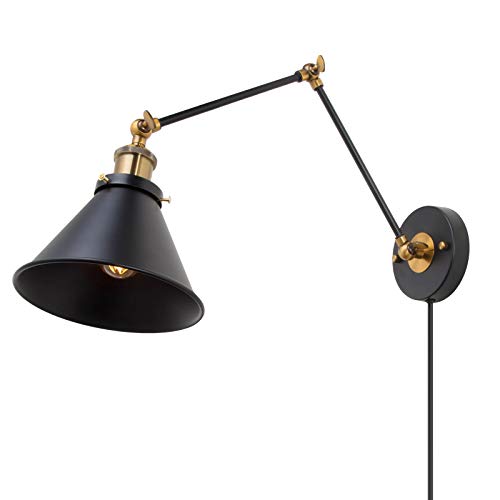
Geometric lines and a matte finish set this LNC fixture apart from a traditional bell shade. Light throws directionally rather than diffusing, which suits accent lighting beside art or a headboard. A whole room still needs a separate primary light source.
Pros
- Geometric styling suits contemporary interiors
- Directional beam works well for reading or accent light
- Matte finish hides fingerprints better than polished metal
Cons
- Directional light leaves the rest of the room dim
- Matte finish scuffs and is hard to touch up

Westinghouse Lighting Sylvestre Wall Fixture
Frosted glass spreads light evenly across this Westinghouse fixture without visible hotspots. Function drives the design here rather than style, and installation stays simple with easy bulb access. Buying several matching units for one hallway costs little.
Pros
- Low cost per fixture suits buying several at once
- Frosted glass avoids hotspots across the shade
- Simple install with easy bulb access
Cons
- Plain shape adds no visual interest
- No damp rating, so bathrooms are off limits
Hykolity LED Wall Sconce
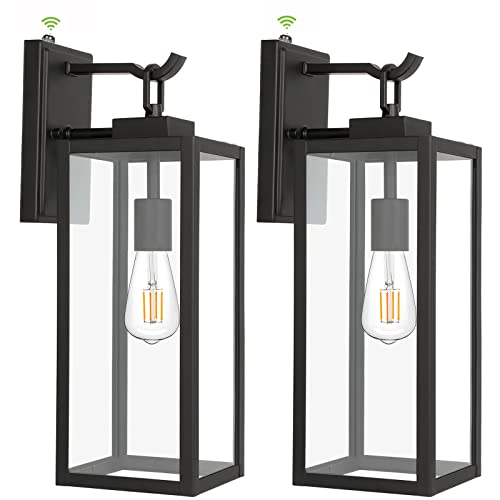
An integrated LED array replaces the bulb socket entirely on this Hykolity fixture, drawing less power over a long rated life. Nothing about the light source can be swapped later, since colour temperature stays fixed. When the LED does fail, the whole fixture gets replaced rather than just a lamp.
Pros
- Running cost stays low compared with bulb fixtures
- Rated life means years without a lamp change
- Slim profile skips the bulk of a bulb housing
Cons
- Whole unit needs replacing once the LED fails
- Colour temperature cannot change after purchase

Design House Kimball Wall Sconce
Oil rubbed bronze detailing on this Design House fixture matches existing traditional hardware in an older home. Textured glass softens the bulb filament rather than showing it bare. Output stays warm and moderate, better suited to accent light than a main room source.
Pros
- Bronze finish coordinates with existing traditional fixtures
- Textured glass hides the bulb filament
- Warm output suits period style rooms
Cons
- Style reads dated inside a modern interior
- Moderate output alone will not light a whole room

Progress Lighting Gulliver Wall Sconce
An oversized shade turns this Progress Lighting fixture into a design element rather than background light. Entryways, stairwells and feature walls suit its scale better than a bedside table. Extra projection from the wall means it needs clearance on both sides.
Pros
- Scale holds its own on a feature wall
- Distinctive shade shape stands out from generic designs
- Suits tall stairwells and entryways well
Cons
- Deep projection can catch shoulders in narrow halls
- Too large for a typical bedside position
How to pick the right one
How to choose a wall sconce for any room Start with the wall itself. A hardwired sconce needs an existing junction box, and installing a new one means opening drywall and running cable, usually electrician work. Plug-in sconces skip that step and suit renters or tricky walls, though a visible cord runs to the nearest outlet. Bulb type, finish and shade shape matter less than this first decision, since it determines what you can even install.
Matching finish and style to the room Traditional bronze or brass finishes suit older homes with matching hardware elsewhere. Matte black and geometric shapes fit contemporary interiors where a bell shade would look out of place. Sconces do not need to match a room’s other fixtures exactly, but sharing a finish family reads as deliberate rather than mismatched. Mixing warm and cool colour temperatures within one sightline is the real clash to avoid.
Bulb type, wattage and dimmer compatibility Bulb based fixtures dim only as well as the bulb allows, so check for a dimmable label before buying an LED replacement. Integrated LED fixtures need a compatible LED dimmer, and a mismatched dimmer causes flicker or an audible buzz. Standard base sockets keep bulb choice open for later, while integrated LED arrays fix the colour temperature for the life of the fixture.
Placement rules for bathrooms, hallways and bedrooms Bathroom vanity sconces need a damp rating at minimum, since steam corrodes an unrated socket and discolours the finish within a couple of years. Hallway sconces generally sit one and a half to one and three quarter metres up, just above eye level, spaced roughly two and a half to three metres apart. Bedside sconces sit lower, angled to light a book rather than the eyes of someone lying down.
The lineup, side by side
| # | Model | Bulb count | Best for | Score | Price |
|---|---|---|---|---|---|
| 1 | Globe Electric Bermuda 1-Light Wall Sconce | One bulb per fixture | Best overall | 9.4 | Check price |
| 2 | Kichler Barrington 2-Light Wall Sconce | Two bulbs per fixture | Best for bathrooms | 9.2 | Check price |
| 3 | LNC Modern Wall Sconce | Modern geometric lines | Best contemporary styling | 9.0 | Check price |
| 4 | Westinghouse Lighting Sylvestre Wall Fixture | One bulb per fixture | Best value | 8.8 | Check price |
| 5 | Hykolity LED Wall Sconce | Integrated LED array | Best for energy efficiency | 8.6 | Check price |
| 6 | Design House Kimball Wall Sconce | Traditional detailing | Best for traditional rooms | 8.3 | Check price |
| 7 | Progress Lighting Gulliver Wall Sconce | Oversized profile | Best for statement walls | 8.0 | Check price |
Frequently asked questions
How high should you mount a wall sconce?
Roughly one and a half to one and three quarter metres from the floor suits most hallways and living rooms, placing the shade just above eye level. Bathroom vanity sconces sit closer to face height beside a mirror. Bedside sconces sit lower so light lands on a book rather than in your eyes.
Do bathroom wall sconces need a damp or wet rating?
Yes, anywhere exposed to shower steam needs a damp rating, and direct splash zones need a wet rating instead. According to the listing specifications, dry rated fixtures corrode at the socket and the finish discolours under steam within a couple of years. Treat the rating as a hard requirement, not a preference.
Can you install a wall sconce without a junction box?
Hardwired sconces need an existing junction box, and cutting a new one into a wall is usually electrician work. Plug-in sconces avoid that requirement entirely and suit renters or walls without existing wiring. A visible cord to the outlet is the trade off.
Should a wall sconce point up or down?
Downward shades light the floor, which suits hallways and stairs. Upward shades wash the ceiling for a soft ambient glow in living rooms and bedrooms. Enclosed diffused shades send light both directions and forgive placement mistakes at eye level.
How far apart should hallway sconces be spaced?
About two and a half to three metres between fixtures is a common starting point, adjusted for ceiling height and other light sources in the hall. Evenly spaced fixtures generally look better than one bright light at each end. Longer halls may need an extra fixture rather than wider spacing.
Are integrated LED wall sconces worth buying?
They cost little to run and last for years without a lamp change, which suits high or awkward spots. The whole fixture gets replaced once the LED fails, and colour temperature stays fixed for its life. A bulb based fixture keeps both options open if that flexibility matters more.
Can wall sconces be dimmed?
Bulb based fixtures dim as well as the installed bulb allows, so confirm a dimmable LED bulb before wiring one in. Integrated LED fixtures need a dimmer rated for LED loads specifically. A mismatched dimmer causes flicker or buzzing, so check compatibility against the fixture specification first.
Do wall sconces need to match other light fixtures?
They need to relate rather than match exactly. Sharing a finish family or a similar shape reads as intentional, while an identical set across every fixture can feel like a showroom display. Mixing warm and cool colour temperatures in the same sightline is the clash worth avoiding.
What is the difference between a plug-in and hardwired sconce?
A hardwired sconce wires directly into a junction box and hides all wiring inside the wall. A plug-in sconce runs a visible cord to a nearby outlet, trading appearance for an installation anyone can do without an electrician. Renters and homes without wall wiring in the right spot lean toward plug-in models.
The bottom line
Globe Electric’s Bermuda 1-Light stays the easiest all round pick since it fits most rooms and mounts to a standard junction box without complication. Choose the Kichler Barrington 2-Light for a bathroom vanity, where its damp rating and even facial light matter most. Pick the LNC Modern Wall Sconce when a contemporary room needs a fixture that actually looks the part.
Jake Monroe
Jake worked as a residential contractor for over a decade before shifting to full-time writing. He evaluates power tools, hand tools and workshop gear through the lens of someone who has actually used them on job sites, not just read the box.