Which Walking Shoes Actually Stay Comfortable All Day?
Brooks Ghost 16 tops this comparison for its balanced midsole and wide sizing options. HOKA Bondi 9 delivers the deepest cushioning for concrete routes, and New Balance Fresh Foam X 880v14 fits the broadest range of foot widths. Five more shoes below cover joint comfort, all day standing, light travel, and zero drop training.
Brooks Ghost 16 earns the top spot because its midsole balances softness against support without collapsing late in a walk. Wide and extra wide sizing solves a fit problem the standard last leaves unanswered. HOKA Bondi 9 answers a narrower question, cushioning concrete better than anything else here, while Skechers Arch Fit suits all day standing where slipping shoes on fast matters more than covering distance.
Walking loads a foot differently than running does, with longer ground contact, gentler impact, and a heel strike that starts further back. Marketing rarely reflects that difference, since most cushioning technology gets developed for running first. A shoe that feels plush in a store can flatten under sustained walking pressure, and a tall stack that helps on pavement can feel unstable on broken ground. Fit also swings widely between brands, so the same labeled size can differ in width and volume. We compared midsole foam, stack height, heel to toe drop, upper construction, and width availability, then weighed those specifications against what owners report about all day comfort and how quickly cushioning breaks down. Anyone managing a foot condition or persistent pain should get advice from a podiatrist rather than from a spec sheet.
What matters most
What to look for in walking shoes Walking loads a foot differently than running, with longer ground contact, gentler impact, and a heel strike that starts further back. A shoe that feels soft for a quick jog can still bottom out under a sustained two hour walk. Stiff, propulsive running shoes with carbon plates offer little benefit to a walker. Foam described as resilient or durable tends to hold up better than foam marketed simply as soft.
How should walking shoes fit? Feet swell during the day and after activity, sometimes close to a full size in volume, so a morning fitting can feel tight by evening. Shop later in the day and wear the socks you plan to walk in. Leave roughly a thumb width of space ahead of the longest toe. Width matters as much as length, and several models above offer genuine wide and extra wide options rather than just longer shoes.
Do you need more cushioning or more stability? Tall cushioned platforms cut the impact reaching joints on hard surfaces, which suits pavement heavy routines. That same height raises the foot further from the ground and reduces stability on uneven paths, kerbs, and trails. Urban, mostly flat walking benefits from maximum cushioning without much downside. Broken ground calls for a moderate stack with a wider base instead.
When should you replace walking shoes? Midsole foam loses its rebound long before the outsole looks worn out, and new aches are often the first real symptom. Many walkers get several hundred miles from a pair, though body weight, surface, and foam type shift that number. Press a thumb into the midsole beside the heel as a quick check. Foam that no longer springs back has finished its job.
The top picks, ranked

Brooks Ghost 16
Brooks tuned the Ghost 16 to sit in the middle of every scale that matters for walking, cushioned enough for pavement without the wobble of a tall stack. Wide and extra wide options let people who normally size up for width buy their true length instead. Outsole rubber wears faster than a dedicated walking shoe under high mileage on rough pavement.
Pros
- Cushioning holds up over long distances
- Wide and extra wide sizing available
- Neutral ride suits most gait patterns
Cons
- Softer HOKA models cushion more
- Outsole wears faster on rough pavement

HOKA Bondi 9
HOKA built the Bondi 9 around its tallest, softest platform, which takes noticeable pressure off knees and hips on long pavement walks. An early stage rocker sole helps the foot roll forward instead of pushing off hard. Height that creates the comfort also raises the foot further from the ground, so kerbs and uneven trails feel less secure.
Pros
- Deepest cushioning for concrete walking
- Rocker sole eases the forward roll
- Plush collar reduces heel pressure
Cons
- Tall platform feels less stable off pavement
- Bulky shape is harder to pack

New Balance Fresh Foam X 880v14
Few brands take width as seriously as New Balance does here, offering narrow through extra wide in most sizes. Fresh Foam X cushioning rebounds well under walking loads instead of compressing flat. A roomy forefoot fits wide feet well but can feel sloppy on a narrow foot.
Pros
- Widest fitting range in this comparison
- Foam resists flattening under sustained load
- Reinforced heel reduces slipping
Cons
- Roomy forefoot feels loose on narrow feet
- Heavier than its stack height suggests

ASICS Gel-Nimbus 27
ASICS pairs thick foam with gel cushioning under the heel for one of the gentlest landings in this group. A knit upper wraps the foot without pressure points, which helps feet that swell late in the day. Extra material adds weight, and the soft heel gives less ground feedback on uneven surfaces.
Pros
- Softest heel landing in the group
- Knit upper avoids pressure points
- Generous padding around the ankle
Cons
- Heavier than simpler walking shoes
- Soft heel reduces ground feel
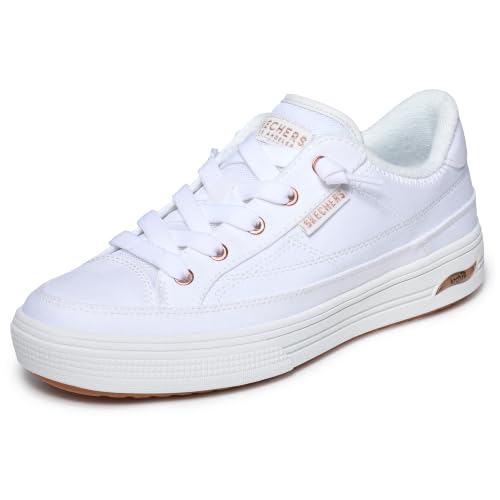
Skechers Arch Fit
A removable molded insole gives the Arch Fit a shaped contour many buyers otherwise purchase separately. Light construction and an easy slip on fit suit standing shifts as much as walking. Structure is modest next to the running derived shoes here, so cushioning flattens sooner under high mileage.
Pros
- Shaped arch support built in
- Light and easy to slip on
- Comfortable through long standing shifts
Cons
- Cushioning flattens sooner at high mileage
- Fixed arch shape will not suit every foot

Saucony Ride 18
Saucony keeps meaningful cushioning in a lower, lighter package than the maximal shoes here, which suits walkers who dislike a tall platform. A simple upper breathes well in warm weather and doubles for errands or travel. Less foam volume means very long pavement days ask more of the legs than the Bondi or Nimbus would.
Pros
- Lighter and lower profile than maximal rivals
- Breathable upper suits warm climates
- Doubles as a general purpose shoe
Cons
- Less cushioning for very long concrete walks
- Minimal padding around the collar

Altra Torin 8
Altra’s foot shaped toe box lets toes spread naturally under load, a real difference for feet that swell or deal with bunion pressure. A zero drop platform keeps heel and forefoot level, encouraging a flatter foot placement. Calves and Achilles tendons used to raised heels need a gradual transition period before long walks.
Pros
- Toe box removes forefoot pressure points
- Level platform suits a flatter foot strike
- Well cushioned despite the zero drop
Cons
- Zero drop needs a slow transition period
- Wide forefoot shape looks bulky to some
How they compare
| # | Model | Midsole | Best for | Score | Price |
|---|---|---|---|---|---|
| 1 | Brooks Ghost 16 | Nitrogen infused DNA Loft v3 foam | Best overall | 9.4 | Check price |
| 2 | HOKA Bondi 9 | Compression molded EVA with rocker profile | Best for hard surfaces | 9.2 | Check price |
| 3 | New Balance Fresh Foam X 880v14 | Fresh Foam X cushioning | Best for wide feet | 9.0 | Check price |
| 4 | ASICS Gel-Nimbus 27 | FF Blast Plus Eco with heel gel | Best for joint comfort | 8.7 | Check price |
| 5 | Skechers Arch Fit | Removable molded Arch Fit insole | Best for all day standing | 8.5 | Check price |
| 6 | Saucony Ride 18 | PWRRUN cushioning foam | Best lightweight option | 8.2 | Check price |
| 7 | Altra Torin 8 | Altra EGO MAX cushioning | Best for toe splay | 8.0 | Check price |
Questions worth asking
Can I use running shoes for walking?
Yes, and most shoes recommended for walking are running models, since they offer strong cushioning and wide fit options. Avoid stiff racing shoes with carbon plates, since those suit a running gait and give a walker little in return.
How do I know if I need stability shoes for walking?
Stability features address a foot that rolls inward significantly, often visible as wear on the inner edge of old shoes. Most walkers do fine in neutral shoes like the ones compared here. Recurring pain regardless of footwear is worth a podiatrist visit rather than another purchase.
How long do walking shoes last?
Commonly several hundred miles, though weight, surface, and foam type all shift that figure. New discomfort in the feet, shins, or knees on familiar routes is a more reliable signal than outsole wear. Rotating two pairs lets foam recover between wears and extends the life of both.
Do I need arch support insoles for walking shoes?
Many walkers are comfortable in a shoe’s own insole, especially models like the Skechers Arch Fit that mold an arch contour into it. Aftermarket insoles help when a shoe fits well but lacks enough support. They also change the volume inside the shoe, so try them before committing to a size.
What heel to toe drop is best for walking shoes?
There is no single correct figure. Higher drops around eight to twelve millimeters suit walkers who land firmly on the heel, while zero drop shoes like the Altra Torin 8 encourage a flatter placement and load the calf differently. Whatever you already wear is the safest starting point for any change.
Should walking shoes be waterproof?
Waterproof membranes keep rain out but also trap heat, making them uncomfortable in warm weather and slow to dry once water gets in over the collar. Breathable mesh paired with quick drying socks works better for most everyday walking, saving waterproof shoes for genuinely wet conditions.
Why do my toes go numb on long walks?
Most often the shoe is too short or too narrow once the foot swells, or the laces sit too tight across the top of the foot. Try a half size up, a wider fitting, or skip an eyelet over the pressure point. Numbness that persists deserves medical advice rather than another shoe.
Is more cushioning always better for walking?
No. Very soft shoes reduce impact but also cut stability and ground feedback, which unsettles some walkers on uneven surfaces. Match cushioning to the surface, favoring maximal foam like the HOKA Bondi 9 for concrete and something firmer for mixed or broken ground.
What is the difference between walking shoes and running shoes?
Running shoes are tuned for impact absorption during a brief, forceful footstrike, while walking shoes prioritize sustained comfort during a longer, gentler stride. Many models overlap, but a walker gets little from stiff propulsion plates built for push off speed.
Our pick
Brooks Ghost 16 is the shoe most walkers should start with, balancing cushioning against support in widths that fit real feet. Anyone walking mostly on concrete with joints that feel it should look at the HOKA Bondi 9 for its deeper cushioning. For long days on your feet where easy wear matters more than mileage, the Skechers Arch Fit remains the practical pick.
Derek Holt
Derek has a background coaching recreational and amateur athletes and has worked the sales floor at specialty fitness retailers. He focuses on equipment durability, ergonomics and realistic use cases rather than marketing claims.


