Which Soccer Ball Size Does Your Kid Actually Need
The Adidas Tiro League Thermally Bonded Ball leads this comparison for all-around durability, while the Wilson Team FX offers the strongest value and the Franklin Sports Competition 100 covers tight budgets. Select, Nike, Baden, and a dedicated size 3 ball round out specific age and surface needs across the lineup.
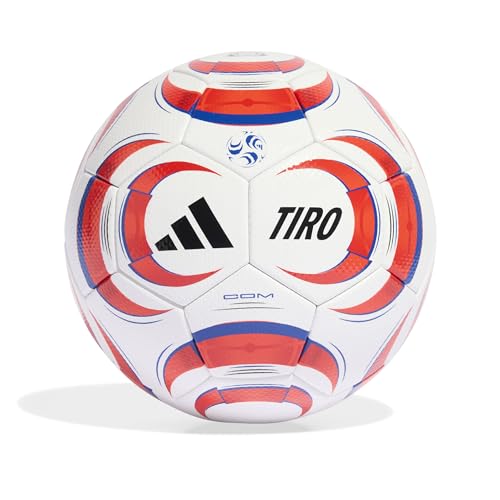
The Adidas Tiro League Thermally Bonded Ball fits players aged 10 and up who want one ball that holds air and shape through a full season. Its seamless TPU cover and butyl bladder outlast stitched training balls in wet grass. It costs more than basic training balls, so families on tighter budgets may prefer the Franklin Sports Competition 100 instead.
Size 3, 4, and 5 balls look nearly identical in photos, which makes sizing the biggest hurdle for parents shopping this category. We compared panel construction, bladder type, cover durability, and manufacturer size charts, then checked owner feedback on air retention and shape after repeated outdoor use.
How to choose
How to choose a youth soccer ball Size, cover material, and bladder type drive most buying decisions in this category. A size number, 3, 4, or 5, is stamped directly on the panel, and matching it to a child’s age prevents control problems during drills. Butyl bladders hold air longer than latex, which matters most for families practicing several times a week. Cover material ranges from soft hand stitched leather to durable thermally bonded TPU, each trading touch for longevity.
What size soccer ball fits each age group Size 3 balls suit children under roughly age 8, since the smaller circumference matches shorter legs and developing coordination. Size 4 covers ages 8 through 12, the range most recreational and school leagues use for practice and games. Size 5 becomes standard at 13 and up, matching adult match specifications. An oversized ball slows skill development, while an undersized one limits shooting power for older players.
Indoor, turf, and grass considerations Outdoor grass and firm ground favor thermally bonded or hand stitched covers that resist water absorption. Artificial turf wears down softer panels faster, so reinforced covers like Baden’s Perfection Elite hold up better across a season. Indoor futsal uses a separate, low-bounce ball entirely, so a standard outdoor youth ball feels unpredictable on hard court. Matching cover type to the primary practice surface extends usable life.
Durability versus touch, training versus match use Hand stitched PU covers like Select’s Numero 10 offer a softer touch prized in passing drills, but they wear faster than bonded synthetic covers. Training balls built for daily scrimmages, such as the Nike Pitch Team, trade some touch for panels that survive repeated turf contact. Families buying for casual backyard play can prioritize cost with a PVC cover like the Franklin Competition 100, since replacement stays affordable if a panel wears through.
What we recommend

Adidas Tiro League Thermally Bonded Soccer Ball
Thermally bonded TPU panels remove the stitched seams that usually soak up water and lose shape. A butyl bladder holds internal pressure steady between practices without daily pumping. Available in sizes 4 and 5, it fits players from about age 9 through high school.
Pros
- Butyl bladder holds air for weeks between pumps
- Seamless cover resists water absorption in wet grass
- Balanced panel bonding keeps flight path consistent
Cons
- Costs more than basic stitched training balls
- Firmer touch than leather balls until broken in
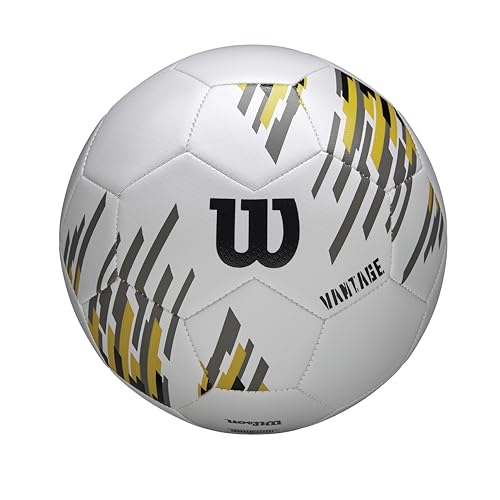
Wilson Team FX Soccer Ball
Machine stitched synthetic panels give this size 4 ball a softer touch than thermally bonded covers. A butyl bladder keeps it round through daily backyard sessions. Reflective panel graphics improve visibility on overcast afternoons.
Pros
- Softer touch than fully bonded covers
- Stitched seams hold up under regular practice use
- Comfortable weight for ages 8 through 12
Cons
- Stitched seams loosen eventually under heavy turf contact
- Not FIFA certified for organized match play

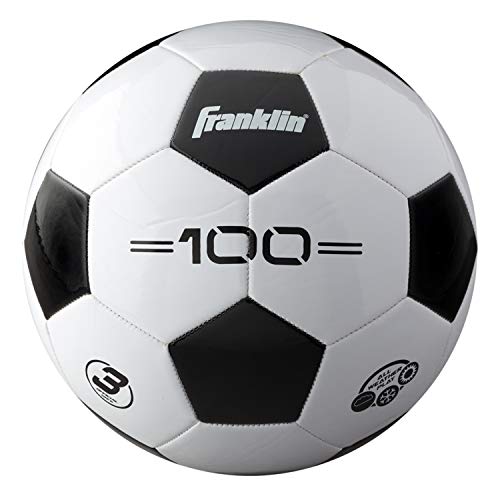
Franklin Sports Competition 100 Soccer Ball
PVC cover construction keeps this size 4 ball affordable for families buying more than one. A latex bladder inflates easily but loses pressure faster than butyl. Owners report it holds up well through casual driveway and park sessions.
Pros
- Low cost makes buying several for team practice practical
- Bright colorways improve visibility for young players
- Lightweight feel suits beginners still learning control
Cons
- Latex bladder needs more frequent re-inflation than butyl
- PVC cover feels harder underfoot than synthetic leather
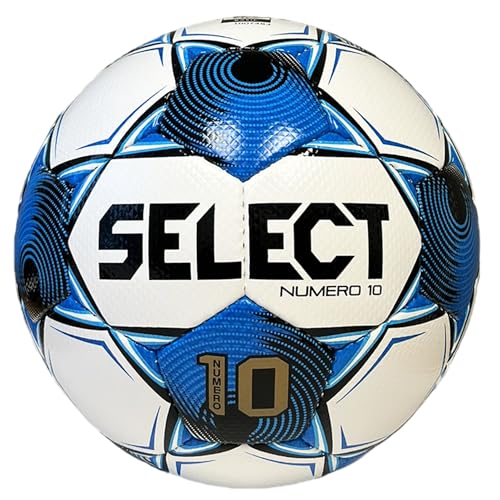
Select Sport Numero 10 Soccer Ball
Hand stitched PU panels give this size 5 ball a softer, more responsive touch than machine bonded covers. A latex bladder produces livelier rebound off the boot. Select has supplied match balls to youth leagues for decades.
Pros
- Hand stitching produces a rounder shape than machine seams
- Soft PU touch favored for passing and shooting drills
- Construction style recognized from use in league matches
Cons
- Latex bladder needs more frequent pumping
- Sized for ages 13 and up, not younger players

Nike Pitch Team Soccer Ball
Machine stitched casing and a butyl bladder build this ball for repetitive drill work rather than match certification. It comes in sizes 3, 4, and 5, covering most youth age brackets from a single product line. Textured panels aid grip during passing drills on damp fields.
Pros
- Available across three sizes for mixed-age teams
- Textured cover improves grip in wet conditions
- Butyl bladder keeps pressure steady across sessions
Cons
- Not certified for official match use
- Firmer feel than hand stitched match balls

Baden Perfection Elite Match Soccer Ball
Hand stitched construction and a reinforced PU cover target players who scrimmage daily on abrasive turf. A butyl bladder resists slow leaks better than the latex bladders common in match balls. Size 5 fits players 13 and older.
Pros
- Reinforced panels resist scuffing on artificial turf
- Butyl bladder holds shape longer than latex alternatives
- Hand stitched seams hold up under frequent scrimmages
Cons
- Heavier feel than lighter training balls
- Only offered in size 5, limiting younger players
Franklin Sports Size 3 Soccer Ball
Scaled to size 3, this ball suits kids under about age 8 who are still developing basic touch and control. A lightweight PVC cover reduces impact when the ball meets shins during early practice. Bright color panels help small children track the ball more easily.
Pros
- Lighter weight reduces impact during early skill drills
- Smaller circumference matches younger foot size
- Affordable enough to replace as kids size up
Cons
- Too small for organized play once a child reaches age 8
- Latex bladder needs more frequent air top-ups
The lineup, side by side
| # | Model | Size | Best for | Score | Price |
|---|---|---|---|---|---|
| 1 | Adidas Tiro League Thermally Bonded Soccer Ball | 4 and 5 | Best overall | 9.4 | Check price |
| 2 | Wilson Team FX Soccer Ball | 4 | Best value | 9.1 | Check price |
| 3 | Franklin Sports Competition 100 Soccer Ball | 4 | Best budget | 8.8 | Check price |
| 4 | Select Sport Numero 10 Soccer Ball | 5 | Best for match play | 8.6 | Check price |
| 5 | Nike Pitch Team Soccer Ball | 3, 4, or 5 | Best for practice and training | 8.4 | Check price |
| 6 | Baden Perfection Elite Match Soccer Ball | 5 | Best for durability | 8.2 | Check price |
| 7 | Franklin Sports Size 3 Soccer Ball | 3 | Best for youngest players | 8.0 | Check price |
Good to know
What size soccer ball does my child need?
Match size to age rather than height. Under 8 typically uses size 3, ages 8 through 12 use size 4, and 13 and older use size 5.
Is a size 4 or size 5 ball better for a 10 year old?
Size 4 fits most 10 year olds, since it matches the circumference and weight most league guidelines recommend for the 8 to 12 age bracket.
Can adults use a youth size soccer ball for practice?
Adults can juggle or pass with a size 4 ball for light drills, but official adult matches require size 5 for correct weight and circumference.
What’s the difference between a training ball and a match ball?
Training balls like the Nike Pitch Team use durable machine stitched covers built for repetition, while match balls like Select’s Numero 10 use hand stitched panels tuned for touch and certified play.
How much should a youth soccer ball weigh?
Size 3 balls typically weigh around 9 to 10 ounces, size 4 around 11 to 13 ounces, and size 5 around 14 to 16 ounces when properly inflated.
Are hand stitched soccer balls better than machine stitched ones?
Hand stitched covers generally offer a softer touch and rounder shape, while machine stitched covers cost less and resist seam separation under heavy daily use.
Do butyl bladders matter for youth soccer balls?
Butyl bladders hold air pressure for weeks compared to days for latex, cutting how often parents need to pump the ball before practice.
Which soccer ball material lasts longest outdoors on turf?
Reinforced hand stitched PU covers, like the one on Baden’s Perfection Elite, resist turf abrasion better than basic PVC or unreinforced synthetic covers.
Adidas Tiro vs Wilson Team FX: which is the better all-around ball?
The Adidas Tiro League holds air longer and resists water better thanks to its thermally bonded cover, while the Wilson Team FX offers a softer touch and lower cost for everyday backyard use.
Our pick
For most families with a player between ages 9 and 15, the Adidas Tiro League Thermally Bonded Ball earns the top spot, pairing a water-resistant seamless cover with a butyl bladder that stays inflated between sessions. Parents outfitting a whole team on a tight budget should choose the Franklin Sports Competition 100 instead, since its PVC construction keeps multiple purchases affordable. Families with a child under 8 should go straight to the Franklin Sports Size 3 Soccer Ball, since standard size 4 and 5 balls will hinder rather than help early skill development.
Derek Holt
Derek has a background coaching recreational and amateur athletes and has worked the sales floor at specialty fitness retailers. He focuses on equipment durability, ergonomics and realistic use cases rather than marketing claims.