Compact Drones Built to Clear Airline Carry-On Limits
The DJI Mini 4 Pro leads on camera quality and obstacle sensing while staying under the 249 gram no-registration limit. Budget travelers should look at the DJI Mini 2 SE instead. Anyone wanting hands-free clips without a controller should consider the pocket-sized HOVERAir X1.
Most travel drones now sit under 249 grams specifically to skip FAA and EASA registration paperwork abroad. Obstacle avoidance and camera quality make the DJI Mini 4 Pro the strongest pick at that weight. Budget-conscious travelers do fine with the older DJI Mini 2 SE, while the HOVERAir X1 drops the controller entirely for pocket-sized hands-free flying.
Carry-on space and battery rules narrow the field fast, since airlines require spare lithium batteries in the cabin, never in checked luggage. We compared folded size, takeoff weight, flight time and camera specs, along with how each drone’s controller packs down for a bag.
What matters most
Why the 249 gram weight limit matters for travel Drones under 249 grams skip FAA registration in the US, and similar exemptions apply across the EU and other regions. Less paperwork at borders and fewer restrictions on some public land follow from staying under that line. Anything heavier, like the DJI Air 3, requires registering with aviation authorities before you fly.
Battery rules for flying with airlines Spare lithium batteries belong in carry-on luggage, never checked bags, and most airlines cap capacity around 100Wh without special approval. A fireproof pouch and covered terminals help avoid questions at TSA security. Rules vary by carrier, so check the specific airline’s drone battery policy before a trip.
Choosing between controller-based and controller-free drones Precise manual control for scenic landscape shots comes from a controller-based drone like the Mini 4 Pro. A controller-free model like the HOVERAir X1 suits solo activities where hands stay busy, hiking or biking footage especially. Base the choice on whether creative control or simple, automated clips matter more.
When it makes sense to break the weight limit Noticeably more flexible footage comes from a dual-camera drone like the Air 3, at the cost of registration and a bulkier carry case. Frequent flyers who already register a drone at home gain little extra hassle bringing it abroad. Casual travelers should stay under 249 grams to skip the paperwork entirely.
The best picks, ranked

DJI Mini 4 Pro
Omnidirectional obstacle sensing is rare at this weight class, catching branches and wires that older Mini models fly straight into. A 1/1.3 inch sensor captures noticeably cleaner low light footage than the Mini 3 series before it. International travelers cite the sub-249 gram weight, according to owner reviews, as the deciding factor over DJI’s larger Air series.
Pros
- Omnidirectional obstacle avoidance at sub-250g weight
- Strong low light camera performance for its class
- No registration needed in most countries at this weight
Cons
- Costs more than the Mini 3 or Mini 2 SE
- Fly More Combo needed for extended battery life

DJI Mini 3
A native vertical shooting mode rotates the gimbal for full resolution portrait video, built for travelers posting straight to phone-first social apps. Front and back obstacle sensors are absent here, unlike the Pro model, which keeps the price down. The longer flight time version pairs with an extended Plus battery, though that combination pushes takeoff weight over 249 grams.
Pros
- Native vertical shooting for social media formats
- Long flight time available with the Plus battery
- Lower cost than the Mini 4 Pro
Cons
- Limited obstacle sensing versus the Pro model
- Plus battery pushes weight past the no-registration threshold

DJI Neo
Built-in propeller guards let this drone launch from a hand and fly indoors or in tight spaces, something the open-prop Mini series cannot do safely. At under 150 grams, it weighs less than every other drone in this group. Phone app tracking lets it fly controller-free, useful for a quick handheld launch without unpacking extra gear.
Pros
- Propeller guards allow safer indoor and close-range flying
- Can launch and fly without a separate controller
- Lightest drone in this comparison
Cons
- Shorter flight time than the Mini series
- Smaller sensor produces softer footage in low light
DJI Mini 2 SE
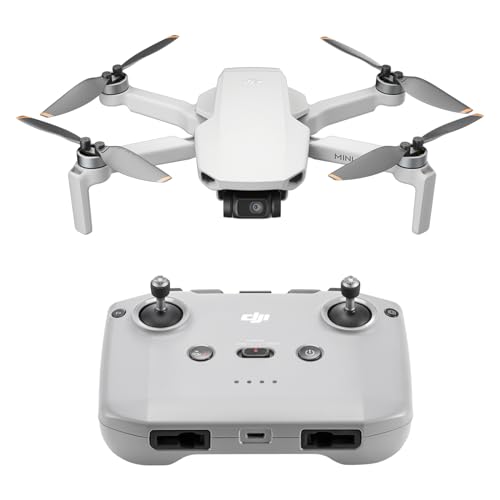
Obstacle sensing and 4K capture are trimmed here to hit the lowest price in DJI’s current travel drone range. It still folds down to roughly the same pocketable size as pricier Mini models. First-time drone buyers shopping for casual vacation clips cite the lower cost, per owner feedback, as worth the tradeoff in resolution.
Pros
- Lowest price point in DJI’s current lineup
- Same folded portability as pricier Mini models
- Simple enough for a first-time flyer
Cons
- No obstacle sensing at all
- Caps out at 2.7K rather than 4K video
Autel Robotics EVO Nano+
A 1/1.28 inch sensor rivals the Mini 4 Pro’s spec sheet while adding tri-directional obstacle sensing that DJI’s cheaper Minis skip entirely. Autel’s own app replaces DJI Fly, a plus for travelers avoiding DJI over past import or app restrictions in some regions. Fewer third-party accessories exist for this app ecosystem than for DJI’s more established lineup, based on the listing and owner comments.
Pros
- Strong sensor size for the sub-249g weight class
- Runs independently of the DJI Fly app ecosystem
- Tri-directional obstacle sensing included
Cons
- Smaller accessory and firmware support community than DJI
- Shorter max flight time than the Mini 4 Pro

HOVERAir X1
No controller ships with this drone at all, since it launches from a palm and tracks a subject automatically using preset flight patterns. Hiking, biking or beach clips are the target use case, letting travelers skip carrying extra gear or learning manual flight. Manual control does exist in the companion app, though owners describe it as secondary to the automated modes the drone is built around.
Pros
- No controller needed, launches straight from your hand
- Automated tracking modes suit solo travel footage
- Smallest, most pocketable option here
Cons
- Much shorter flight time than controller-based drones
- Manual flight feels limited compared to a dedicated remote

DJI Air 3
Dual wide and medium telephoto cameras give framing flexibility no Mini series drone offers, useful for combining landscape wides with closer subject shots. Weighing well over 249 grams means registration requirements apply across the US and many other countries. Frequent flyers who already register a drone happily trade the weight limit for the extra camera and longer flight time.
Pros
- Dual camera system adds real framing versatility
- Longest flight time in this comparison
- Omnidirectional obstacle sensing included
Cons
- Requires registration in the US and most other countries
- Bulkier folded size than any Mini series drone
How they compare
| # | Model | Takeoff weight | Best for | Score | Price |
|---|---|---|---|---|---|
| 1 | DJI Mini 4 Pro | Under 249 grams | Best overall | 9.4 | Check price |
| 2 | DJI Mini 3 | Under 249 grams with standard battery | Best value | 9.0 | Check price |
| 3 | DJI Neo | Under 150 grams | Best ultra-compact option | 8.7 | Check price |
| 4 | DJI Mini 2 SE | Under 249 grams | Best budget | 8.5 | Check price |
| 5 | Autel Robotics EVO Nano+ | Under 249 grams | Best DJI alternative | 8.6 | Check price |
| 6 | HOVERAir X1 | Around 125 grams | Best for hands-free footage | 8.3 | Check price |
| 7 | DJI Air 3 | Over 700 grams | Best for image quality over weight | 8.8 | Check price |
Frequently asked questions
What is the best travel drone that doesn’t need registration?
The DJI Mini 4 Pro stays under the 249 gram threshold in its standard configuration while still offering a strong camera and obstacle sensing, making it the top overall pick for registration-free travel.
Do I need to register my drone when traveling internationally?
Requirements vary by country, but drones under 249 grams are commonly exempt from formal registration in the US, EU and several other regions. Rules are not universal, so check the destination country before departure.
Can I bring a drone battery on a plane?
Yes, but only in carry-on luggage, never checked bags, and typically under 100Wh capacity without airline approval. Most travel drone batteries fall well under that limit, though confirming with the specific airline first is worth doing.
Which travel drone has the best camera?
The DJI Mini 4 Pro and Autel EVO Nano+ both use larger sensors than budget options like the Mini 2 SE, producing sharper 4K footage and better low light performance.
Is a controller-free drone like the HOVERAir X1 worth it for travel?
It suits solo travelers wanting hands-free clips of hiking, biking or beach activities without carrying a controller. Flight time and manual control both run more limited than on a traditional controller-based drone.
DJI Mini 4 Pro vs DJI Mini 3: what’s the real difference?
Omnidirectional obstacle sensing and a larger camera sensor set the Mini 4 Pro apart, while the Mini 3 costs less and skips most obstacle detection. Both stay under 249 grams in their base configuration.
How long do travel drones fly on one battery?
Between 18 and 38 minutes per battery is typical for the sub-249 gram drones covered here, depending on the model. Two or three spare batteries, all carried in the cabin, extend a full day of shooting.
Is a heavier drone like the DJI Air 3 worth bringing while traveling?
Only for travelers who already register the drone and do not mind a bulkier case. Real image quality gains come from the dual camera system and longer flight time, but the registration requirement adds friction most casual travelers prefer to skip.
What is the smallest drone that still shoots good video?
The DJI Neo weighs under 150 grams and still shoots 4K video, though its 1/2 inch sensor produces softer low light footage than the larger-sensor Mini 4 Pro.
Which travel drone is best for beginners?
The DJI Mini 2 SE keeps controls simple and costs the least in DJI’s current lineup, making it a reasonable first drone despite skipping obstacle sensing and 4K video.
Our take
The DJI Mini 4 Pro is the strongest overall travel drone, pairing sub-249 gram portability with obstacle sensing and camera quality older Minis lack. Travelers on a tighter budget should choose the DJI Mini 2 SE instead and accept the lower resolution. Anyone chasing the best possible image quality, and willing to register a drone, should look at the DJI Air 3, while solo travelers who want hands-free clips are better served by the HOVERAir X1.
Sierra Daniels
Sierra's background is in landscape design and nursery retail. She focuses on lawn and garden equipment, outdoor furniture and gear durability, weighing published specs against how materials actually hold up outside.