Point and shoot cameras, ranked by what you shoot
Canon PowerShot G7 X Mark III suits most buyers, combining a 1-inch sensor, an f/1.8 to f/2.8 zoom and uncropped 4K. Sony RX100 VII tracks moving subjects far better and reaches 200mm. Ricoh GR IIIx puts APS-C quality behind a fixed 40mm lens for street work.
Canon PowerShot G7 X Mark III answers most upgrade-from-a-phone questions. Its 1-inch sensor and f/1.8 wide end hold up in dim rooms, and 4K records with no crop. Autofocus hunts where Sony locks on, which stings when subjects run. Parents shooting sport should read the RX100 VII entry first.
Compacts split into three camps: bright 1-inch zooms, large sensor primes and long travel zooms. Each camp surrenders something real. We compared published sensor sizes, maximum apertures, video modes, viewfinders and battery ratings. Owner feedback filled in autofocus reliability, menu quirks and how often each body actually leaves the house.
How to pick the right one
What to look for in a compact camera Sensor size sets the ceiling on everything else. A 1-inch chip gathers roughly four times the light of the 1/2.3-inch sensors used in budget compacts. Lens speed carries equal weight, since f/1.8 at the wide end keeps indoor frames off ISO 6400. Check whether 4K is cropped, because a crop narrows your framing at the wide end. Viewfinders rescue bright outdoor shooting but eat pocket space. Daylight-only shooters can ignore most of this and buy reach instead.
Zoom reach or image quality: which matters more Long zooms and large sensors rarely share one body. Panasonic Lumix ZS200D is the honest compromise, holding a 1-inch sensor at 15x. Canon PowerShot SX740 HS gets to 40x by shrinking the sensor to 1/2.3-inch. If most of your frames sit inside 100mm, a brighter short zoom wins every time. Reach only pays when the subject genuinely cannot be approached, such as wildlife or a lit stage.
Best compact cameras for travel and everyday carry Weight decides which camera actually leaves the house. Ricoh GR IIIx sits near 262 grams and lies flat in a jacket pocket. Canon PowerShot G7 X Mark III adds a zoom for roughly 40 grams more. Pack two batteries either way, since small cells fade in cold weather and neither body takes AAs. Travellers who photograph landmarks from across a square want the ZS200D and its 360mm end instead.
Best for vlogging and creator work Audio separates a video camera from a snapshot tool. Sony ZV-1 II includes a three capsule microphone and a windscreen for outdoor talking shots. Canon PowerShot G7 X Mark III accepts an external mic through its 3.5mm jack, which the SX740 HS cannot. Neither offers in-body stabilisation, so walking shots need a gimbal or a braced grip. Creators filming mostly at a desk should weigh the microphone input above every other feature.
Our top picks

Canon PowerShot G7 X Mark III
Canon mounts a 24 to 100mm equivalent zoom on a 20.1MP stacked 1-inch sensor, and the lens still opens to f/2.8 at the long end. Uncropped 4K30 plus a 3.5mm microphone jack make video a genuine feature rather than a checkbox. Owners report the tilting screen and live streaming support are why it stays in the bag.
Pros
- Holds f/2.8 at 100mm, unusual in this class
- Microphone input alongside uncropped 4K30
- Screen tilts up for pieces to camera
Cons
- Contrast autofocus hunts in dim light
- No viewfinder of any kind

Sony RX100 VII
Sony fits a 24 to 200mm equivalent zoom and a pop-up OLED viewfinder into a body that clears a shirt pocket. Real-time tracking and Eye AF hold onto kids, pets and players anywhere in the frame. Reach costs light, since the lens closes to f/4.5 by 200mm.
Pros
- Eye AF works on people and animals alike
- 8.3x reach without leaving a pocket
- Pop-up EVF stays readable in bright sun
Cons
- Aperture falls to f/4.5 at the long end
- Slim front grip wants an add-on thumb rest

Sony ZV-1 II
Wide framing is the whole point, with the zoom starting at 18mm equivalent. Arm-length selfie video fits a face plus the room behind it, which an ordinary 24mm compact cannot manage. A three capsule microphone and bundled windscreen handle outdoor audio. No viewfinder and no in-body stabilisation, so walking shots wobble.
Pros
- 18mm wide end frames handheld talking shots
- Product Showcase mode racks focus on cue
- Side flip screen clears a tripod head
Cons
- No viewfinder and no in-body stabilisation
- Lens dims to f/4 by 50mm

Ricoh GR IIIx
Ricoh puts an APS-C sensor behind a fixed 40mm equivalent f/2.8 lens in a body under 270 grams. Snap Focus presets a shooting distance, so the shutter fires the instant you press with no hunting. Spare cells are essential here, because battery life per charge is short and no flash is built in.
Pros
- APS-C files keep shadow detail at higher ISO
- Snap Focus removes shutter lag on the street
- Flat body slides into a coat pocket
Cons
- Short battery life demands spare cells
- No zoom and no built-in flash
Panasonic Lumix ZS200D
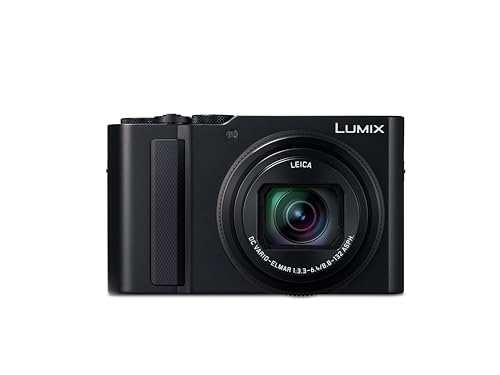
Fifteen times zoom on a 1-inch sensor is a rare pairing, and Panasonic still squeezes in an eye level viewfinder. Range spans 24 to 360mm equivalent, covering cathedral ceilings and distant rooftops on the same trip. Aperture drops to f/6.4 at full reach, so indoor telephoto frames climb the ISO scale quickly.
Pros
- 15x range handles most travel framing
- Built-in LVF beats a washed out screen outdoors
- 4K Photo and Post Focus pull stills from bursts
Cons
- Dim f/6.4 aperture at 360mm
- Rear screen is fixed, with no tilt

Canon PowerShot SX740 HS
Canon stretches 24 to 960mm equivalent from a 1/2.3-inch sensor, buying reach at the cost of low light quality. Daylight wildlife, school sports and stage performances are the natural fit. A screen that flips a full 180 degrees and 4K30 capture round out the package.
Pros
- 40x optical zoom in a pocket sized body
- Screen flips 180 degrees for self recording
- Wi-Fi and Bluetooth send frames to a phone
Cons
- Noise climbs past ISO 800
- No microphone input for video
Kodak PIXPRO FZ55
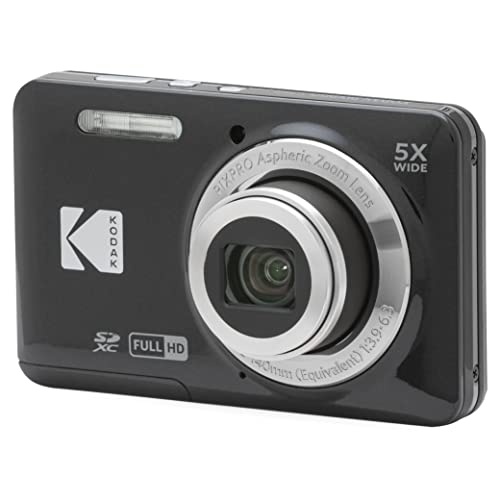
Kodak keeps the feature list short: 16MP, a 5x zoom, 1080p video and auto scene modes doing the thinking. It suits a child learning to shoot, a glovebox spare, or a trip where pulling out a phone invites trouble. Image quality tracks a mid range phone rather than beating one.
Pros
- Light enough to forget in a coat pocket
- Auto modes need no menu diving
- Rechargeable battery tops up over USB
Cons
- Tops out at 1080p with no viewfinder
- Noise rises quickly once you move indoors
Compared at a glance
| # | Model | Sensor | Best for | Score | Price |
|---|---|---|---|---|---|
| 1 | Canon PowerShot G7 X Mark III | 20.1MP 1-inch stacked CMOS | Best overall | 9.4 | Check price |
| 2 | Sony RX100 VII | 20.1MP 1-inch stacked CMOS | Best for moving subjects | 9.2 | Check price |
| 3 | Sony ZV-1 II | 20.1MP 1-inch CMOS | Best for vlogging | 9.0 | Check price |
| 4 | Ricoh GR IIIx | 24.2MP APS-C CMOS | Best for street photography | 8.7 | Check price |
| 5 | Panasonic Lumix ZS200D | 20.1MP 1-inch MOS | Best travel zoom | 8.5 | Check price |
| 6 | Canon PowerShot SX740 HS | 20.3MP 1/2.3-inch CMOS | Best value superzoom | 8.2 | Check price |
| 7 | Kodak PIXPRO FZ55 | 16MP 1/2.3-inch CCD | Best budget | 8.0 | Check price |
Questions worth asking
Are point and shoot cameras still better than phones?
For zoom, yes. Optical zoom keeps full resolution, while phone digital zoom crops and interpolates. Bigger sensors also render out-of-focus backgrounds more smoothly. Phones keep the lead on computational night modes and instant sharing.
What is the best point and shoot camera for beginners?
Canon PowerShot G7 X Mark III makes the easiest step up. Auto mode is dependable, the touchscreen mirrors phone gestures, and a bright lens forgives dim rooms. Kodak PIXPRO FZ55 fits anyone who wants full automatic and nothing to learn.
Which compact camera is best for travel?
Panasonic Lumix ZS200D covers the widest span of travel framing at 24 to 360mm and adds a viewfinder. Ricoh GR IIIx serves walkers who shoot cities wide and close. Decide by whether you photograph landmarks at a distance or streets underfoot.
Do you really need a 1-inch sensor?
Shoot indoors, at dusk, or for background separation and a 1-inch sensor earns its place. Daylight-only shooters live happily with 1/2.3-inch and gain far more zoom for the same size. Mixed use points back to 1-inch.
Canon G7 X Mark III vs Sony RX100 VII: which should you buy?
Canon brings a brighter lens and a microphone jack. Sony brings 200mm reach, a pop-up viewfinder and much stronger subject tracking. Pick Canon for video and low light, Sony for kids, pets and sport.
Can a point and shoot camera record 4K video?
Most current models do. Canon PowerShot G7 X Mark III and Sony ZV-1 II both record 4K30, and Canon does it without cropping the frame. Budget compacts such as Kodak PIXPRO FZ55 stop at 1080p.
How important is a viewfinder on a compact camera?
Outdoors it matters a lot. Rear screens wash out in direct sun, and an eye level finder braces the camera against your face for steadier frames. Sony RX100 VII and Panasonic Lumix ZS200D include one, while the G7 X Mark III does not.
Is a fixed lens compact camera worth it?
Only for a specific habit. Ricoh GR IIIx gives one focal length, forcing you to move your feet and speeding up every frame. Owners report that limit sharpens their street work. Anyone covering events or wildlife should keep a zoom.
What is the best compact camera for vlogging?
Sony ZV-1 II leads, thanks to an 18mm wide end, a side flip screen and a three capsule mic with a windscreen. Canon PowerShot G7 X Mark III is the alternative when you want a longer zoom and an external mic input.
How much optical zoom do you actually need?
Family, travel and street work rarely pass 100mm, which the G7 X Mark III covers. School sports and wildlife want 300mm or more, so the ZS200D or SX740 HS make sense. Buying reach you never use costs sensor size and low light quality.
The bottom line
Canon PowerShot G7 X Mark III earns the default slot, because a bright 24 to 100mm zoom and uncropped 4K cover stills and video from one pocket body. Parents shooting sport and pets get more from Sony RX100 VII, where 200mm reach and Eye AF outweigh aperture. Skip both if you shoot streets wide and fast, and carry the Ricoh GR IIIx instead.
Marcus Chen
Marcus covered consumer electronics for enthusiast tech publications for six years before joining ChoiceCrest. He specializes in translating manufacturer spec sheets into plain-language buying advice, with a focus on audio, computing accessories and smart-home gear.