Tire Dressing Applicators That Avoid Drips and Streaks
The Chemical Guys Tire Dressing Applicator Pad is the top pick, a foam pad with a handle that spreads dressing evenly without soaking hands in product. It suits most drivers doing a routine wash. Anyone wanting to skip kneeling at the wheel well should pick the EVO long-handle applicator instead.
The Chemical Guys Tire Dressing Applicator Pad leads this list because its foam face spreads dressing in a thin, even layer while the handle keeps hands away from the product, unlike applying dressing with a bare rag that soaks through quickly. Its main limitation is reach, since the handle is short enough that kneeling near the wheel well is still necessary on most vehicles.
We compared published pad material, handle length, coat control and cleaning method across each applicator rather than dressing a set of tires ourselves.
What matters most
What to look for in a tire dressing applicator Pad material affects how evenly dressing spreads and how much drips before it sets, with dense or fine-pore foam generally outperforming a plain rag. Handle design decides how much a user’s hands stay in contact with the product and, for long-handled options, how much kneeling is required. Coat control, meaning how consistently a pad releases product rather than dumping it in one spot, affects streaking. Cleaning method matters for how quickly a pad dries and whether it can be reused for the next wash.
Foam pads versus brush-style applicators Foam pads, used by most applicators in this list, work well on smooth or lightly textured sidewalls, spreading dressing in a consistent thin layer. A bristle brush, like the Carrand option, reaches into deeply textured lettering and tread shoulders better than flat foam can manage. Vehicles with heavily embossed sidewall branding benefit more from a brush, while smoother sidewalls do fine with a standard foam pad.
Handled applicators versus direct hand-held pads A handle, like the one on the Chemical Guys pad or the EVO long-handle option, keeps dressing off the hands and, in the long-handle case, avoids kneeling near the wheel well entirely. Hand-held pads without a handle, like the Adam’s Polishes or hex-grip options, give more direct control over pressure but put hands in closer contact with the product. Neither approach changes how well the dressing itself performs, just how the application process feels.
Reducing drips and streaks during application Open-cell foam holds less dressing against its surface than a microfiber-faced pad, which is why drips are more common with basic foam applicators. The Autofiber Saver pad’s microfiber face holds product more securely, releasing it gradually instead of letting it run down the sidewall. Overloading any applicator with too much dressing causes drips regardless of pad material, so applying a smaller amount more evenly tends to matter more than the pad choice alone.
The shortlist, ranked

Chemical Guys Tire Dressing Applicator Pad
A dense foam pad spreads tire dressing in a thin, even layer across the sidewall without oversaturating one spot, which is the usual cause of drips and streaks. A molded handle keeps dressing off the user’s hands during application. The foam rinses clean under running water and air-dries quickly for reuse.
Pros
- Dense foam spreads an even layer without oversaturating
- Molded handle keeps dressing off hands during use
- Rinses clean and dries quickly for repeat use
Cons
- Short handle still requires kneeling near the wheel well
- Foam can wear down faster than a microfiber-faced pad over heavy use

Adam’s Polishes Tire Dressing Applicator Pad
A finer pore structure in this foam pad than standard applicators spreads dressing more consistently across textured sidewall lettering and grooves. That evenness reduces the streaking that happens when thicker dressing pools in low spots on the tire. A flat design without a built-in handle lets the user control pressure directly by hand.
Pros
- Fine-pore foam spreads dressing consistently into grooves and lettering
- Reduces streaking from dressing pooling in low spots
- Direct hand control over pressure during application
Cons
- No handle means more direct hand contact with dressing
- Flat pad has less reach than a long-handled applicator
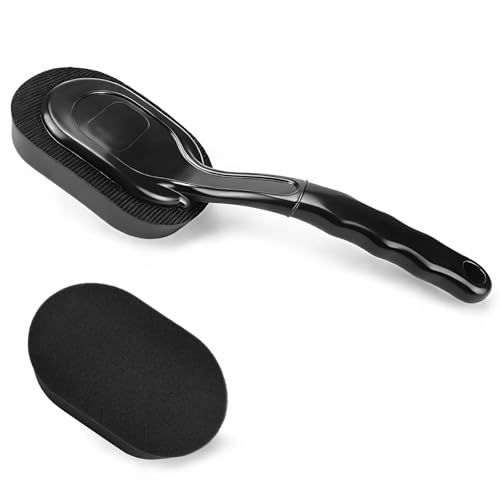
EVO Long-Handle Tire Dressing Applicator
An extended handle reaches the full sidewall from a standing position, avoiding the kneeling most short-handled pads require near the wheel well. The foam head still spreads dressing evenly despite the added handle length. This suits anyone with knee or back limitations, or simply wanting a faster routine across four tires.
Pros
- Extended handle avoids kneeling near the wheel well
- Removable head makes cleaning simpler
- Speeds up the routine across all four tires
Cons
- Longer handle is bulkier to store than a compact pad
- Less direct control over pressure than a hand-held pad

Carrand Tire Dressing Brush
Synthetic bristles work dressing into the textured lettering and tread shoulder better than a flat foam pad can on heavily textured sidewalls. The brush handle keeps a comfortable grip angle for working around the tire’s curve. Bristles hold a reservoir of dressing briefly, releasing it gradually rather than all at once like a saturated foam pad.
Pros
- Bristles reach into textured sidewall lettering better than flat foam
- Curved handle suits the angle of working around a tire
- Releases dressing gradually instead of all at once
Cons
- Bristles can flick small drips onto nearby paint if overloaded
- Less suited to smooth, non-textured sidewalls than a foam pad

Autofiber Saver Applicator Pad
A microfiber face holds dressing against the pad more securely than open-cell foam, reducing the drips that run down a sidewall before the product sets. The pad’s foam core still provides enough give to follow the tire’s curve during application. Microfiber also resists tearing better than foam alone over repeated washes.
Pros
- Microfiber face reduces dripping during application
- Resists tearing better than foam alone over repeated washing
- Foam core still flexes to follow the tire’s curve
Cons
- No handle, so hands stay in closer contact with dressing
- Microfiber face takes longer to dry than open-cell foam
Chemical Guys Hex Grip Foam Applicator
A hex-shaped foam block fits comfortably in hand without a separate handle, giving a secure grip even when the surface gets slick with dressing. The shape allows multiple flat faces to be used before fully saturating the pad, extending use between washes. This suits users who prefer direct hand control over a handled design.
Pros
- Hex shape stays grippy even when slick with dressing
- Multiple usable faces extend time between washes
- Direct hand control suits users who skip handled designs
Cons
- No handle keeps hands closer to the product than handled pads
- Hex shape may feel less natural to some users than a flat pad
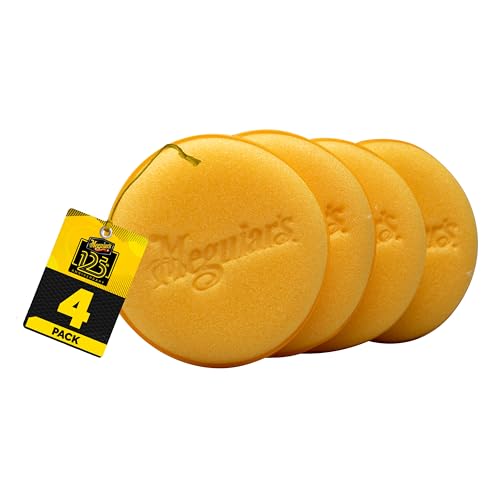
Meguiar’s Even Coat Tire Dressing Applicator
This pad covers the basic even-coat application function at a lower cost than premium microfiber or hex-grip designs. Standard foam spreads dressing adequately for routine use without specialized pore structure or added grip shaping. It suits occasional users who do not need a premium applicator.
Pros
- Lower cost than premium microfiber or hex-grip applicators
- Covers basic even-coat application for routine use
- Simple design with no handle to store separately
Cons
- Standard foam wears out faster than premium pads over heavy use
- No handle keeps hands in closer contact with dressing
The lineup, side by side
| # | Model | Pad Material | Best for | Score | Price |
|---|---|---|---|---|---|
| 1 | Chemical Guys Tire Dressing Applicator Pad | Dense foam | Best Overall | 8.8 | Check price |
| 2 | Adam’s Polishes Tire Dressing Applicator Pad | Fine-pore foam | Best Even Coating | 8.6 | Check price |
| 3 | EVO Long-Handle Tire Dressing Applicator | Foam head | Best for Reaching Without Kneeling | 8.3 | Check price |
| 4 | Carrand Tire Dressing Brush | Synthetic bristle brush | Best Brush-Style Applicator | 8.1 | Check price |
| 5 | Autofiber Saver Applicator Pad | Microfiber-faced foam core | Best Microfiber-Faced Pad | 8.2 | Check price |
| 6 | Chemical Guys Hex Grip Foam Applicator | Hex-shaped dense foam | Best Ergonomic Grip | 8.0 | Check price |
| 7 | Meguiar’s Even Coat Tire Dressing Applicator | Standard foam | Best Budget | 7.8 | Check price |
Good to know
What is the best way to apply tire dressing evenly?
A foam or microfiber-faced applicator pad spreads dressing in a thin, consistent layer better than a bare rag or glove, which tends to oversaturate one area.
Do I need a brush for textured tire sidewalls?
A bristle brush, like the Carrand applicator, reaches into deeply embossed lettering and tread shoulders better than a flat foam pad on heavily textured tires.
Can I use a sponge instead of a dedicated tire dressing applicator?
A household sponge can work in a pinch, but dedicated foam or microfiber pads are built to release dressing more evenly and resist breaking down from the product’s chemicals.
Why does tire dressing sometimes drip or streak?
Dripping usually happens when too much product is applied at once or when the applicator saturates one spot instead of spreading an even thin layer.
Are long-handled tire dressing applicators worth it?
They avoid kneeling near the wheel well, which some users find more comfortable, especially when working on all four tires in one session.
How do I clean a tire dressing applicator pad after use?
Most foam and microfiber pads rinse clean under running water and air-dry, though some microfiber faces can go through a gentle machine wash.
Can the same applicator be used for tire dressing and other detailing products?
Dedicated tire pads are usually kept separate from wax or paint applicators to avoid cross-contaminating silicone-based dressing onto paint surfaces.
Do foam applicators wear out over time?
Yes. Foam can break down or lose its even texture after repeated use, which is when a replacement pad or a more durable microfiber-faced option helps.
Is a handle necessary on a tire dressing applicator?
A handle keeps hands cleaner and, on long-handled designs, reduces kneeling, but many users prefer the direct control of a hand-held pad instead.
What applicator works best for a glossy wet-look tire dressing?
A dense foam pad, like the Chemical Guys applicator, spreads thicker gel-based dressings evenly without pooling, which matters more with glossier, heavier products.
Our take
Most drivers doing a routine wash should choose the Chemical Guys Tire Dressing Applicator Pad, since its foam face spreads dressing evenly while the handle keeps hands cleaner. Anyone who wants to skip kneeling near the wheel well should pick the EVO long-handle applicator instead. Owners of vehicles with heavily textured sidewall lettering get a more thorough application from the Carrand brush than from a flat foam pad alone.
Tony Russo
Tony trained as an automotive technician and spent years in service and parts retail before moving into writing. He focuses on garage tools, car care products and accessories from a hands-on maintenance perspective.