Through-the-Wall AC Units Compared for Sleeve Fit
Friedrich Uni-Fit UCT08B10A leads for fitting most existing wall sleeves without modification. GE AJCQ10ACG suits larger rooms needing more cooling capacity. For homes needing supplemental heat, LG LT1237HNR adds a heat pump function alongside 12,000 BTU cooling on a standard 230V circuit.
Friedrich Uni-Fit UCT08B10A tops this list since its cabinet dimensions match most existing wall sleeves without carpentry work. GE AJCQ10ACG steps up to 10,000 BTU for rooms larger than a standard bedroom. LG LT1237HNR adds heat pump function, cooling and warming the same room from one 230V unit.
Each wall sleeve has fixed outer dimensions that a replacement unit must match, so through-the-wall models are not interchangeable the way portable ACs are. Voltage matters too, since 115V models plug into a standard outlet while 230V units need a dedicated circuit. We compared BTU rating, stated voltage and sleeve dimensions, noise level in decibels, and heating capability, then weighed owner reports of installation fit, drainage, and winter draft.
Our top picks
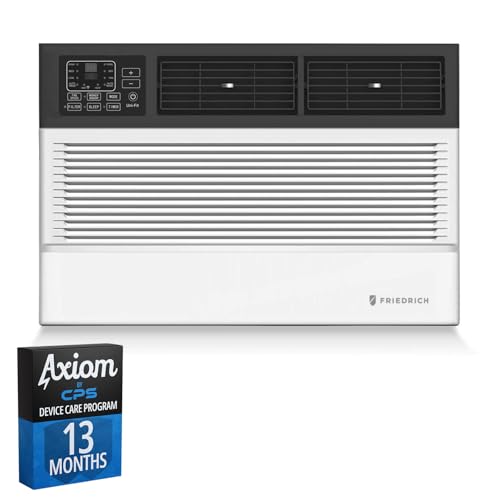
Friedrich Uni-Fit UCT08B10A
This unit’s cabinet matches the dimensions of most standard and slide-out chassis wall sleeves already installed in older homes. At 8,000 BTU on a 115V circuit, it cools a room up to roughly 350 square feet. Electronic controls include a digital thermostat and programmable timer.
Pros
- Fits most existing wall sleeves without modification
- Digital thermostat holds a steady temperature
- Programmable timer for scheduled cooling
Cons
- 115V circuit limits cooling capacity versus 230V units
- No built-in heat function
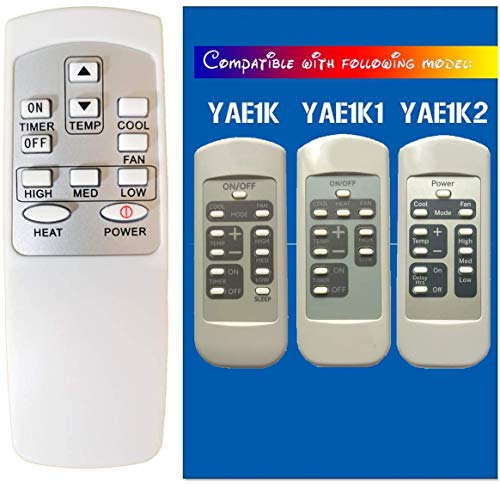
GE AJCQ10ACG
At 10,000 BTU on a 115V circuit, this GE unit covers larger living rooms or open layouts up to roughly 450 square feet. A washable air filter pairs with electronic controls and a remote. It fits GE and many universal wall sleeve dimensions.
Pros
- Higher BTU covers larger rooms on 115V power
- Washable filter cuts down on replacement cost
- Remote control included for adjustments
Cons
- Louder at high fan speed than smaller units
- Heavier cabinet makes installation a two person job

Koldfront WTC8001W
A standard 115V outlet powers this 8,000 BTU unit, which includes a remote control that some competitors reserve for pricier models. Bedrooms and small living spaces up to roughly 350 square feet suit it well. Sleep mode gradually raises the set temperature overnight to save energy.
Pros
- Remote control included at a lower price point
- Sleep mode adjusts temperature automatically overnight
- Dry mode useful for humid climates
Cons
- No heat function for cold months
- Fits a narrower range of sleeve dimensions than Friedrich

LG LT1237HNR
Cooling runs at 12,000 BTU and heating at roughly 11,200 BTU through a single heat pump, letting one unit handle both seasons. A dedicated 230V circuit powers it, which most through-the-wall installations already have wired. Auto restart resumes the last setting after a power outage.
Pros
- Heat pump adds warmth without a separate heater
- Higher BTU suits larger or open rooms
- Auto restart resumes settings after outages
Cons
- Requires a dedicated 230V circuit
- Heat pump loses efficiency in very cold weather
Frigidaire FFTA1233U2
Frigidaire’s standard wall sleeve dimensions guide this unit’s build, simplifying replacement for owners upgrading an older Frigidaire installation. A dedicated 230V circuit powers the 12,000 BTU compressor, and a washable filter cuts maintenance cost. Electronic controls display the set temperature on an LED readout.
Pros
- Direct fit for existing Frigidaire sleeves
- Higher BTU suited to larger rooms
- LED display shows set temperature clearly
Cons
- Sleeve compatibility narrower outside Frigidaire installations
- 230V circuit required, adding install cost if not present

Friedrich Chill Premier CCF08A10A
Friedrich rates this 8,000 BTU model among the quieter units in its class, with a lower minimum decibel level at low fan speed. Built-in WiFi lets owners adjust settings from a phone app instead of the unit’s control panel. A standard 115V circuit runs it.
Pros
- Quieter operation than most 115V units
- WiFi app control adds remote scheduling
- Fits standard through-the-wall sleeve dimensions
Cons
- Costs more than non-WiFi 8,000 BTU units
- App setup adds a step non-smart units skip
GE AJEQ10DCG
Cooling runs at 10,000 BTU while roughly 10,600 BTU of electric resistance heat adds warmth, useful in climates with mild winters. A dedicated 230V circuit powers the unit, and a full function remote handles adjustments. Three fan speeds and a sleep mode round out the controls.
Pros
- Electric heat covers mild winter climates
- Full function remote included
- Three fan speeds add flexibility
Cons
- Electric resistance heat costs more to run than a heat pump
- Requires 230V wiring if not already present
The lineup, side by side
| # | Model | Cooling capacity | Best for | Score | Price |
|---|---|---|---|---|---|
| 1 | Friedrich Uni-Fit UCT08B10A | 8,000 BTU | Best overall | 9.4 | Check price |
| 2 | GE AJCQ10ACG | 10,000 BTU | Best for larger rooms | 9.1 | Check price |
| 3 | Koldfront WTC8001W | 8,000 BTU | Best value | 8.9 | Check price |
| 4 | LG LT1237HNR | 12,000 BTU | Best with heat pump function | 8.6 | Check price |
| 5 | Frigidaire FFTA1233U2 | 12,000 BTU | Best for replacing a Frigidaire sleeve | 8.4 | Check price |
| 6 | Friedrich Chill Premier CCF08A10A | 8,000 BTU | Best for quiet operation | 8.2 | Check price |
| 7 | GE AJEQ10DCG | 10,000 BTU | Best for combined heating and cooling | 8.0 | Check price |
How to pick the right one
How a through-the-wall unit differs from a window AC A metal sleeve mounted permanently in an exterior wall holds a through-the-wall unit, unlike a window unit that sits in the window frame. This frees the window and gives a cleaner look from outside. Sleeve dimensions vary by brand, so a replacement unit generally needs to match the existing sleeve or come with a compatible one.
Matching BTU and voltage to room size Rooms up to about 350 square feet typically need 8,000 BTU on a 115V circuit, which plugs into a standard outlet. Larger rooms or open layouts up to 450 square feet or more usually call for 10,000 to 12,000 BTU, often requiring a dedicated 230V circuit. An undersized unit in a large room cycles the compressor more often, raising energy use without properly cooling the space.
Choosing a unit for mild winters vs separate heating Homes in mild climates benefit from a heat pump model like LG LT1237HNR, which cools and heats from one unit and one sleeve. Electric resistance heat, as in GE AJEQ10DCG, costs more to run than a heat pump but keeps working in colder outdoor temperatures where heat pumps lose efficiency. A home with a separate furnace or baseboard heat generally does not need the added heating function at all.
Edge cases: sleeve replacement, noise, and smart controls Replacing an aging unit narrows the choice to models built for that brand’s sleeve dimensions, like Frigidaire FFTA1233U2 in a Frigidaire sleeve, rather than a fresh install. Bedrooms and home offices benefit from a quieter model, since decibel levels vary noticeably between units at the same BTU rating. WiFi-enabled units like Friedrich Chill Premier add app control, useful for adjusting temperature before arriving home, though the feature costs more than a standard control panel.
Good to know
What is the difference between a through-the-wall AC and a window AC?
A through-the-wall unit mounts in a permanent metal sleeve built into the wall, while a window unit sits in the window frame and blocks natural light.
Do through-the-wall air conditioners need a 230V outlet?
It depends on the model. Units around 8,000 BTU typically run on 115V, while 12,000 BTU models like Frigidaire FFTA1233U2 often need a dedicated 230V circuit.
Can I replace a through-the-wall AC without changing the sleeve?
Often yes, if the new unit matches the existing sleeve’s outer dimensions. Frigidaire FFTA1233U2 is built to fit Frigidaire’s standard sleeve directly.
What size through-the-wall AC do I need for a bedroom?
Most bedrooms up to around 350 square feet are covered by an 8,000 BTU unit, such as Friedrich Uni-Fit UCT08B10A or Koldfront WTC8001W.
Do any through-the-wall AC units also provide heat?
Yes. LG LT1237HNR uses a heat pump for both cooling and heating, while GE AJEQ10DCG uses electric resistance heat as a supplemental option.
Heat pump vs electric heat in a through-the-wall unit, which is better?
A heat pump costs less to run but loses efficiency in very cold weather. Electric resistance heat costs more to operate but keeps working consistently in colder outdoor temperatures.
Are through-the-wall air conditioners loud?
Noise varies by model and fan speed. Friedrich Chill Premier CCF08A10A is rated for quieter operation at low fan speed than most standard units.
What is the best through-the-wall air conditioner for a large room?
GE AJCQ10ACG at 10,000 BTU or Frigidaire FFTA1233U2 at 12,000 BTU both suit rooms larger than a standard bedroom, around 450 square feet or more.
Is a WiFi-enabled through-the-wall AC worth the extra cost?
It depends on how often you adjust settings remotely. Friedrich Chill Premier lets owners precool a room before arriving home, which matters more for irregular schedules than for a room used on a fixed routine.
Can a through-the-wall AC be installed without an existing sleeve?
Yes, but it adds carpentry work to cut and frame an opening plus install a new sleeve. Most homeowners replacing an existing unit avoid this by matching the new unit to the sleeve already in place.
Our take
Friedrich Uni-Fit UCT08B10A fits the widest range of existing wall sleeves, making it the safest starting point for most replacements. Choose LG LT1237HNR if the room needs heat as well as cooling, or GE AJCQ10ACG for a larger space on standard 115V power.
Jake Monroe
Jake worked as a residential contractor for over a decade before shifting to full-time writing. He evaluates power tools, hand tools and workshop gear through the lens of someone who has actually used them on job sites, not just read the box.


