Floor Scrapers Compared for Tile, Glue and Paint Removal
Thick 11 gauge steel and a long fiberglass handle make the Bully Tools 91300 the strongest all around scraper. Warner’s 693 Big Blade covers most jobs for less. Stubborn tile and thinset call for the Bosch 11255VSR rotary hammer instead of hand tools.
General flooring removal calls for the Bully Tools 91300 Floor Bully, built with thick resharpenable steel and a long fiberglass handle that spares your back. Warner’s 693 Big Blade is the sensible lighter duty pick. Stubborn tile beds need a rotary hammer such as the Bosch 11255VSR fitted with a scraper chisel.
Scrapers that look identical online behave very differently once a blade meets old adhesive. Thin steel flexes and skips, short handles rob you of leverage, and a blade that can’t be resharpened dulls halfway through a room. We compared blade gauge and width, handle length and material, whether the edge can be refiled, and what owners report about long sessions on glue and thinset.
What we recommend

Bully Tools 91300 Floor Bully Flooring Scraper
Extra thick 11 gauge steel and a 58 inch triple wall fiberglass handle make this the scraper most flooring installers reach for first. Its edge refiles or grinds back to sharp, so one head lasts through repeated jobs instead of dulling out. Owners report it handles carpet, tack strip, vinyl sheet and dried adhesive without flexing.
Pros
- Blade resharpens with a file or grinder
- Stiff steel doesn’t flex under load
- Long handle keeps you upright
Cons
- Too wide for tight corners
- Heavier than budget scrapers overhead
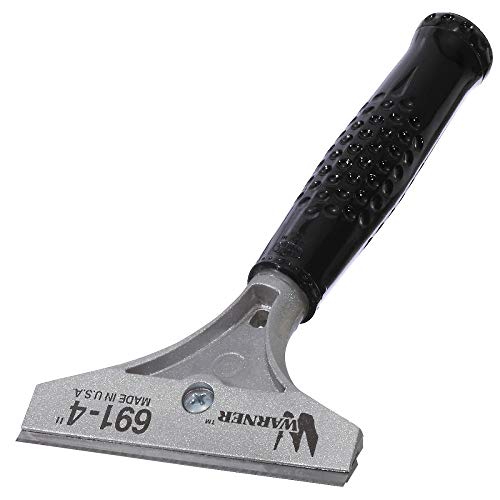
Warner 693 Big Blade Floor Scraper
A 4 inch blade on a 48 inch steel handle covers most household removal jobs without a big outlay. The narrower head concentrates force, which helps when chasing stubborn adhesive rather than lifting broad sheets. Owners report a good match for vinyl tile, underlay and paint splatter on concrete.
Pros
- Narrow blade concentrates pressure well
- Solid steel handle
- Blades are easy to source
Cons
- Steel handle transmits more shock
- Narrow head is slower over large areas
Bully Tools Big Bully Floor Scraper
This heavier duty sibling in the Bully Tools line suits full room tear outs where mass behind every push matters. A wider head clears more area per stroke on carpet and glued down sheet goods. It’s the wrong tool for fine work but hard to beat when a whole floor has to come up.
Pros
- Clears large areas quickly
- Very rigid under heavy load
- Doubles as an ice and debris scraper
Cons
- Heavy over a long day
- Awkward in small rooms

Warner 792 Strip N Clean Floor Scraper
Stripping and cleaning, not brute demolition, is the point of this 4 inch scraper on a 48 inch handle, and it shines on the residue left after flooring itself is gone. Blade angle stays flat to the substrate, so you shave adhesive instead of gouging it. Pair it with a heavier scraper as a second tool.
Pros
- Excellent on leftover glue and mastic
- Comfortable working angle
- Light enough for long sessions
Cons
- Not built for lifting tile
- Blade dulls quickly on abrasive concrete

Bates Choice Floor Scraper with Long Handle
A straightforward long handled scraper suits occasional jobs like pulling one room of carpet or clearing dried mud and plaster. Build quality sits a step below the trade options, but it does the work for a weekend project. Owners report it’s best kept to lighter materials rather than thinset beds.
Pros
- Easy entry point for one off jobs
- Comfortable grip
- Light to swing
Cons
- Thinner steel flexes on hard adhesive
- Not a daily trade tool

Warner 90662 ProGrip Stiff Scraper
A 3 inch stainless hand scraper with a hammer cap on the end handles perimeter work a long handled tool can’t reach. Tapping the cap drives the blade under stubborn tile edges and around door casings. Nearly every floor removal job ends up needing something like this.
Pros
- Reaches where long handles cannot
- Hammer cap adds real driving force
- Stainless blade resists rust
Cons
- Hand and wrist work is tiring
- Only practical for small areas

Bosch 11255VSR Bulldog Xtreme Rotary Hammer
Hand scraping stops being realistic once ceramic tile sits in a thick mortar bed. Fitted with an SDS-plus scraper or tile chisel, this rotary hammer breaks the bond and clears the substrate in a fraction of the time. It’s an investment, but owners report it turns a multi day tear out into an afternoon.
Pros
- Removes tile and thinset far faster
- Variable speed control
- Doubles as a drilling tool
Cons
- Chisels are sold separately
- Noisy and dusty work
The lineup, side by side
| # | Model | Blade | Best for | Score | Price |
|---|---|---|---|---|---|
| 1 | Bully Tools 91300 Floor Bully Flooring Scraper | 6 inch, 11 gauge steel | Best overall | 9.4 | Check price |
| 2 | Warner 693 Big Blade Floor Scraper | 4 inch | Best value | 9.1 | Check price |
| 3 | Bully Tools Big Bully Floor Scraper | Wide steel head | Best for heavy demolition | 8.9 | Check price |
| 4 | Warner 792 Strip N Clean Floor Scraper | 4 inch | Best for adhesive residue | 8.7 | Check price |
| 5 | Bates Choice Floor Scraper with Long Handle | Steel, replaceable | Best budget | 8.5 | Check price |
| 6 | Warner 90662 ProGrip Stiff Scraper | 3 inch stainless steel | Best for corners and edges | 8.3 | Check price |
| 7 | Bosch 11255VSR Bulldog Xtreme Rotary Hammer | SDS-plus rotary hammer | Best for tile and thinset | 8.0 | Check price |
What to look for
Which floor scraper works best for your flooring material? Carpet and tack strip come up with almost any long handled scraper. Glued sheet vinyl and vinyl composition tile need thicker steel that won’t flex. Ceramic tile set in a mortar bed usually calls for a rotary hammer with a chisel, since hand tools can’t break that bond efficiently.
Does handle length matter for a floor scraper? A 48 to 58 inch handle lets you drive with your legs and body weight instead of bending double. Fiberglass absorbs shock better than steel and stays lighter, though steel handles cost less and take abuse well. Taller users should favor the longer handles.
Should you buy a resharpenable floor scraper blade? Steel dulls fast against concrete and old adhesive. Blades that accept a file or grinder, like the Bully Tools heads, keep working through a whole job. Otherwise budget for replacement blades and swap them the moment the tool starts skating instead of cutting.
How do you remove old flooring safely? Old flooring adhesive and backing in homes built before the 1980s may contain asbestos, so have suspect material assessed before disturbing it. Wear eye protection, gloves and knee pads, keep the area ventilated, and clear debris with a HEPA vacuum rather than a broom.
Common questions
What is the best floor scraper for removing carpet glue?
A stiff, thick bladed long handled scraper such as the Bully Tools 91300 works best. Follow up with a lighter tool like the Warner 792 to shave the remaining residue.
Can a floor scraper remove ceramic tile?
It can lift loose or thinly set tile. Tile bedded in thick mortar realistically needs a rotary hammer with a tile or scraper chisel instead.
How do you sharpen a floor scraper blade?
Clamp the head and run a mill file along the existing bevel, or use a grinder with light passes to avoid overheating the steel. Keep the original angle throughout.
Should you choose a fiberglass or steel handle scraper?
Fiberglass is lighter and absorbs vibration, which matters on long jobs. Steel handles cost less and shrug off abuse but transmit more shock to your hands.
What blade width should a floor scraper have?
Wider blades of six inches or more clear area quickly on carpet and sheet goods. Narrower three to four inch blades concentrate force and work better on stubborn adhesive.
Do you still need knee pads with a long handled scraper?
Long handles let you work standing for most of a room, but corners, doorways and closets still mean kneeling. Knee pads are worth having either way.
Is asbestos a real concern with old flooring?
In homes built before the 1980s, older vinyl tile and its black adhesive can contain asbestos. Have material assessed by a qualified professional before removing it.
Can you use a floor scraper on a wood subfloor without damage?
Yes, if you keep the blade angle low and let the edge shave rather than dig. A sharp blade at a shallow angle is far less likely to gouge than a dull one forced hard.
The bottom line
The Bully Tools 91300 Floor Bully earns the top spot for its thick resharpenable steel and long fiberglass handle, which together make short work of carpet, vinyl and adhesive. The Warner 693 Big Blade suits occasional jobs better on price, and serious tile removal deserves a rotary hammer like the Bosch 11255VSR alongside a hand scraper for the edges.
Jake Monroe
Jake worked as a residential contractor for over a decade before shifting to full-time writing. He evaluates power tools, hand tools and workshop gear through the lens of someone who has actually used them on job sites, not just read the box.