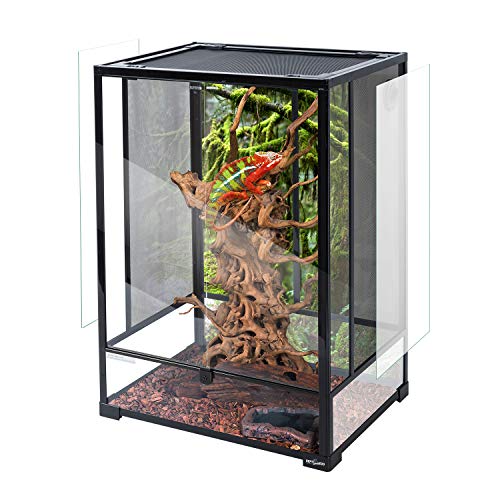
Finding the Right Terrarium Size for Your Small Pet
The Exo Terra Glass Terrarium leads with front-opening doors and secure ventilation, suiting most small pets. First-time owners do better with the Zoo Med ReptiHabitat 20 Gallon Kit, which bundles starter gear. Bioactive builders should look at the REPTI ZOO 40 Gallon Terrarium for its raised drainage floor.
The Exo Terra Glass Terrarium tops this list, since front-opening doors make daily feeding and cleaning easier than lifting a full lid. Geckos, snakes and frogs all fit comfortably inside its raised-frame design. Its weight climbs fast once substrate and decor go in, so larger sizes need two people to move.
Sizing trips up most buyers, since a 10 gallon tank suits a hatchling but crowds an adult within a year. We compared stated dimensions, door and lid design, ventilation, and owner reports on cracked seams or failed latches to rank these seven.
How to pick the right one
What Should You Look for in a Terrarium for a Small Pet? Four factors decide most terrarium purchases: size, material, access and ventilation. Size has to match the pet’s adult size, not the size it arrives at from a breeder. Material affects both weight and heat retention, since glass behaves differently than wood or plastic under a heat lamp. Access determines whether you lift an entire lid or open a front door without disturbing the setup inside, which makes humidity control easier to manage day to day.
Glass vs Plastic vs Wood: Which Terrarium Material Fits Your Pet? Glass terrariums show off the animal clearly and hold humidity well, though they weigh more and can crack at the seams if dropped. Wood enclosures, like tortoise houses, insulate heat better and suit species needing stable warm zones. Plastic and PVC-framed builds cost less and resist cracking, but scratch more easily after years of cleaning. Most keepers choose glass for display pets and wood for tortoises and larger ground dwellers.
How Much Space Does a Small Pet Actually Need? A 20 gallon tank suits many juvenile reptiles and small geckos, but check the adult size before buying just once. Ground-dwelling species like leopard geckos need floor space more than height, while arboreal species like crested geckos need vertical room to climb. Hermit crabs need enough substrate depth to fully bury themselves, ruling out shallow tanks. Sizing up early beats replacing a too-small enclosure within a year.
Best Terrarium Setup for Humidity-Sensitive or Arboreal Pets Tree frogs, crested geckos and mantises do better in a vertical terrarium than a long, low tank, since climbing space matters more than floor space for these species. A full screen top helps humidity-sensitive species avoid stagnant air, while a front vent strip on glass terrariums balances airflow without dropping humidity too fast. Live plants raise humidity naturally but need a drainage layer underneath to prevent root rot. Bioactive setups combine live plants, isopods and springtails to manage waste, working best in the taller, raised-bottom terrariums on this list.
Our top picks

Exo Terra Glass Terrarium
Double front doors swing open wide for feeding, decorating and handling, without lifting the entire top. A raised bottom frame leaves room for an under-tank heat mat. Owners running gecko, snake and frog setups report the locking doors hold against determined climbers.
Pros
- Front doors allow feeding without disturbing decor
- Raised bottom frame fits substrate heat mats
- Locking doors keep climbing escape artists contained
Cons
- Heavy once fully set up with substrate and decor
- Larger sizes need two people to move safely

Zoo Med ReptiHabitat 20 Gallon Terrarium Kit
Screen top, hide, thermometer and heat lamp arrive bundled with the tank, cutting down on separate purchases for a first setup. Its 20 gallon long footprint suits many juvenile reptiles straight out of the box. First-time keepers mention the included pieces saving a return trip to the store.
Pros
- Bundle removes guesswork for a first setup
- Screen top included so no separate lid purchase
- Sized right for many juvenile reptiles
Cons
- Included heat lamp is basic and often gets upgraded
- Kit contents vary by the species version ordered
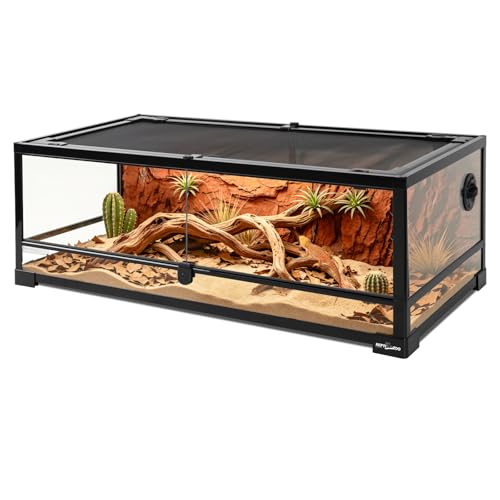
REPTI ZOO 40 Gallon Glass Terrarium
A raised bottom edge holds a drainage layer beneath live substrate, simplifying a bioactive build. Both height and floor space accommodate live plants and hardscape. Planted-setup owners mention the dual front doors allowing cleaning without a full teardown.
Pros
- Raised bottom simplifies a bioactive drainage layer
- Tall enough to support live plants and hardscape
- Dual doors ease cleaning without full teardown
Cons
- Full bioactive substrate adds significant weight
- Some buyers report packaging arriving with a cracked panel
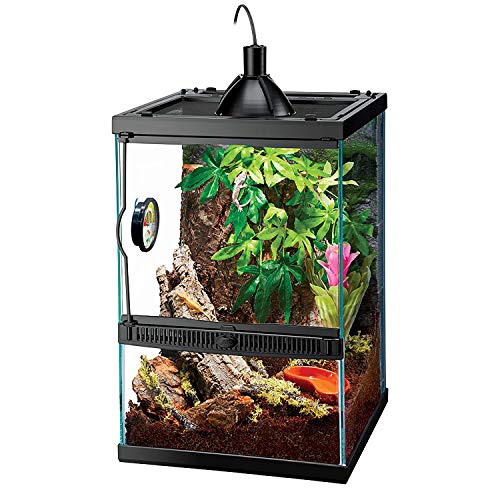
Zilla Vertical Terrarium
Height outranks floor space here, suiting tree frogs, crested geckos and climbing mantises better than a long, low tank. A wide hinged door opens for placing branches and live plants. Arboreal-species owners mention the extra vertical room letting animals claim natural territories.
Pros
- Vertical shape suits climbing species better than long tanks
- Hinged door opens wide for branch placement
- Mesh top supports live plant lighting
Cons
- Floor footprint is small for ground-dwelling pets
- Single door hinge sees heavy wear with daily use

Zoo Med Naturalistic Terrarium
This straightforward glass tank with a screen top lid costs less than front-opening cage designs. Front vent strips balance airflow against humidity loss. Owners buying a second or third enclosure mention reaching for this model when budget outweighs convenience features.
Pros
- Lower cost than front-opening cage designs
- Screen top keeps humidity and airflow balanced
- Widely stocked sizes fit most starter species
Cons
- No front door makes handling pets more disruptive
- Screen lid needs clips to stop determined escapees

REPTI ZOO 20 Gallon Terrarium
A smaller footprint than the 40 gallon models fits desks, shelves and apartments better. Its single front door still allows feeding and spot cleaning without lifting a lid. Juvenile-reptile and hermit crab owners mention it as a right-sized option before an animal outgrows it.
Pros
- Smaller footprint fits desks and shelves
- Front door still allows easy feeding access
- Lower cost than full-size 40 gallon tanks
Cons
- Limited floor space once decor and hides go in
- Front door latch feels less secure than larger models

Zoo Med Tortoise House Wood Enclosure
Melamine-coated wood panels replace glass on this open-top enclosure, built for tortoises and other species that never climb. Low walls give full overhead access for feeding and cleaning. Tortoise owners mention the wood retaining heat more evenly than a glass tank of the same size.
Pros
- Open top gives full overhead access for feeding and cleaning
- Wood panels insulate heat better than glass
- Low walls suit tortoises that do not climb
Cons
- Open top will not contain climbing or jumping pets
- Wood surfaces need sealing against humidity over time
Side by side
| # | Model | Dimensions | Best for | Score | Price |
|---|---|---|---|---|---|
| 1 | Exo Terra Glass Terrarium | 36 x 18 x 18 inches | Best overall | 9.4 | Check price |
| 2 | Zoo Med ReptiHabitat 20 Gallon Terrarium Kit | 20 gallon long tank | Best for beginners | 9.2 | Check price |
| 3 | REPTI ZOO 40 Gallon Glass Terrarium | 36 x 18 x 18 inches, 40 gallon | Best for bioactive setups | 9.0 | Check price |
| 4 | Zilla Vertical Terrarium | Vertical, taller than it is wide | Best for arboreal species | 8.7 | Check price |
| 5 | Zoo Med Naturalistic Terrarium | Glass with screen top lid | Best budget | 8.4 | Check price |
| 6 | REPTI ZOO 20 Gallon Terrarium | 24 x 12 x 16 inches, approx 20 gallon | Best for small or juvenile pets | 8.2 | Check price |
| 7 | Zoo Med Tortoise House Wood Enclosure | Melamine-coated wood panels | Best for tortoises and ground dwellers | 8.0 | Check price |
Common questions
What is the difference between a terrarium and a vivarium?
A terrarium is the physical enclosure itself, glass or otherwise. A vivarium describes a terrarium set up to mimic a natural habitat, complete with live plants, substrate layers and drainage. Every vivarium counts as a terrarium, but not every terrarium is built as a vivarium.
How big should a terrarium be for a small pet?
Match the tank to the species’ adult size, not its size at purchase. A 20 gallon tank suits many small reptiles as juveniles, while adults of larger species need 40 gallons or more. Species-specific care sheets settle the exact number before buying.
Can you keep multiple small pets in one terrarium?
It depends heavily on the species. Some social species, like certain hermit crabs, do fine in groups given enough space and resources. Many reptiles are territorial and fight or stress each other in a shared tank, so research the specific species first.
Do terrariums need a screen top?
Most do, for airflow and to prevent overheating under a heat lamp. Species needing very high humidity, like some tree frogs, sometimes do better with a mostly glass top and a small vent strip instead. Ventilation needs vary by species, so check before choosing a lid style.
Is glass or plastic better for a reptile terrarium?
Glass holds humidity more consistently and shows the animal clearly, which is why most display terrariums use it. Plastic and PVC-framed builds weigh less and resist cracking, mattering more for larger tanks that get moved occasionally. Weight becomes the deciding factor once a tank passes 40 gallons.
How do you clean a terrarium without stressing the pet?
Spot clean waste and uneaten food daily instead of waiting for a full teardown. Move the pet to a secure holding container during deep cleans, then rinse decor with hot water and a reptile-safe cleaner. Front-opening doors make daily spot cleaning far less disruptive than lifting a full screen lid.
What terrarium size works best for hermit crabs?
Hermit crabs need at least 4 to 6 inches of substrate depth to fully bury themselves during molting, ruling out shallow tanks regardless of floor space. A 20 gallon long tank suits a small group, though larger colonies need proportionally more space and depth.
Can a 20 gallon terrarium become a bioactive habitat?
Yes, with a drainage layer, substrate, live plants and a cleanup crew of isopods and springtails. A raised-bottom design, like the REPTI ZOO 40 Gallon Terrarium, simplifies that drainage layer, though a standard 20 gallon tank works with a false bottom added separately.
Which terrarium is best for a beginner reptile owner?
The Zoo Med ReptiHabitat 20 Gallon Kit bundles a screen top, hide, thermometer and heat lamp, removing the guesswork from a first setup. Upgrading the included heat lamp later is common once a keeper learns their species’ exact needs.
What terrarium suits a tortoise instead of a species that climbs?
Tortoises need an open-top enclosure with low walls for full overhead access, like the Zoo Med Tortoise House. Its melamine-coated wood panels insulate heat better than glass, though the open top will not contain a climbing or jumping species.
Our take
Front-opening access and reliable ventilation make the Exo Terra Glass Terrarium the strongest all-around pick for most small pets. First-time keepers unsure what extras they need should start with the Zoo Med ReptiHabitat 20 Gallon Kit instead, since it bundles the basics. Anyone building a live-plant bioactive setup gets more value from the REPTI ZOO 40 Gallon Terrarium and its raised drainage floor, even though it costs more upfront.
Olivia Hartley
Olivia spent several years working at an animal shelter and a pet-supply retailer before joining the editorial team. She researches pet gear with an emphasis on safety, comfort and the fine print that owners often miss.